


TAIEX rally hits a snag
The TAIEX closed marginally lower yesterday after rallying for six consecutive sessions, dragged down by the weak performance of electronics and petrochemical shares, dealers said.
The index opened slightly lower at 8,898.69 points and fluctuated between 8,862.49 and 8,929.06 before closing down 7.18 points, or 0.08 percent, at 8,894.54 on turnover of NT$127.98 billion (US$4.41 billion).
Tourism stocks outperformed on reports that Taiwan would soon open the market to independent Chinese tourists.
Among the eight major stock categories, cement posted the biggest gain of 1.9 percent amid strong demand in China.
A total of 2,235 stocks closed up, 2,103 finished down and 611 were unchanged.
No forex limits: central bank
The central bank yesterday denied a news report that it was restricting banks from buying and selling New Taiwan dollars and US dollars in the foreign exchange market.
Foreign exchange banks are mindful of restrictions imposed by the central bank, the Chinese-language Economic Daily News reported yesterday, without saying where it got the information.
The central bank said the report was misleading and resent a Feb. 9 press statement that said 37 banks conducted currency forwards valued at US$1.2 billion, and eight local banks did non-deliverable forwards transactions on Feb. 8.
Separately, the central bank sold NT$100 billion in 364-day certificates of deposit at an average interest rate of 0.935 percent at an auction yesterday.
Bank promises quick service
Standard Chartered Bank on Thursday introduced a new service pledge whereby the foreign lender promises to serve all customers in eight minutes or it will donate NT$5 for each delayed case.
Steve Bertamini, chief executive of global consumer banking, said the new service pledge reflected the bank’s resolve to strengthen its presence in Taiwan and outperform its peers.
Bertamini was in Taipei on Thursday to inaugurate the bank’s 90th branch.
Taiwan is one of the top five markets for the London-based bank in terms of global consumer banking business, he said.
“We still see growth opportunity although the market here is well developed,” he said.
Trade mission attracts business
A Taiwanese trade mission generated an estimated US$15.82 million in potential business during a recent visit to Hungary, the Taiwan External Trade Development Council (TAITRA, 外貿協會) said yesterday.
The mission, led by TAITRA vice chairman Wu Wen-ya (吳文雅), included representatives of 56 Taiwanese manufacturers of information and communications products, hand tools, hardware, machinery, textiles, and electronic parts and components.
The delegates held 640 one-on-one sessions with 218 Hungarian buyers during a trade event on Tuesday in Budapest — the first leg of the mission’s tour through central and eastern Europe that will also take it to Russia, Belarus and Turkey, TAITRA said.
The delegation received US$3.17 million in orders on the spot and an estimated US$12.65 million in potential orders over the next year, TAITRA said.
Energy consumption up 3.7%
Energy consumption in February rose 3.7 percent from a year earlier, the Energy Bureau said in an e-mailed statement yesterday.
Coal imports increased 14 percent to 5.11 million tonnes, while imports of liquefied natural gas climbed 30 percent to 950 million cubic meters, the bureau said.
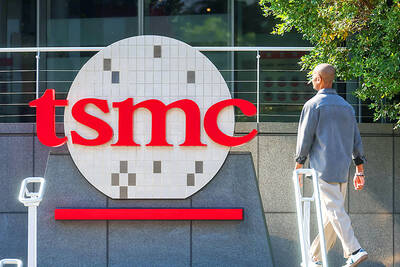
Shares of contract chipmaker Taiwan Semiconductor Manufacturing Co (TSMC, 台積電) came under pressure yesterday after a report that Apple Inc is looking to shift some orders from the Taiwanese company to Intel Corp. TSMC shares fell NT$55, or 2.4 percent, to close at NT$2,235 on the local main board, Taiwan Stock Exchange data showed. Despite the losses, TSMC is expected to continue to benefit from sound fundamentals, as it maintains a lead over its peers in high-end process development, analysts said. “The selling was a knee-jerk reaction to an Intel-Apple report over the weekend,” Mega International Investment Services Corp (兆豐國際投顧) analyst Alex Huang
Taiwan Semiconductor Manufacturing Co (TSMC, 台積電) is expected to remain Apple Inc’s primary chip manufacturing partner despite reports that Apple could shift some orders to Intel Corp, industry experts said yesterday. The comments came after The Wall Street Journal reported on Friday that Apple and Intel had reached a preliminary agreement following more than a year of negotiations for Intel to manufacture some chips for Apple devices. Taiwan Institute of Economic Research (台灣經濟研究院) economist Arisa Liu (劉佩真) said TSMC’s advanced packaging technologies, including integrated fan-out and chip-on-wafer-on-substrate, remain critical to the performance of Apple’s A-series and M-series chips. She said Intel and Samsung
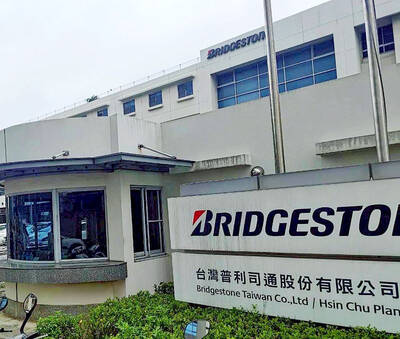
TRANSITION: With the closure, the company would reorganize its Taiwanese unit to a sales and service-focused model, Bridgestone said Bridgestone Corp yesterday announced it would cease manufacturing operations at its tire plant in Hsinchu County’s Hukou Township (湖口), affecting more than 500 workers. Bridgestone Taiwan Co (台灣普利司通) said in a statement that the decision was based on the Tokyo-based tire maker’s adjustments to its global operational strategy and long-term market development considerations. The Taiwanese unit would be reorganized as part of the closure, effective yesterday, and all related production activities would be concluded, the statement said. Under the plan, Bridgestone would continue to deepen its presence in the Taiwanese market, while transitioning to a sales and service-focused business model, it added. The Hsinchu
Taiwan Semiconductor Manufacturing Co (TSMC, 台積電) has approved a capital budget of US$31.28 billion for production expansion to meet long-term development needs during the artificial intelligence (AI) boom. The company’s board meeting yesterday approved the capital appropriation plan for purposes such as the installation of advanced technology capacity and fab construction, the world’s largest contract chipmaker said in a statement. At an earnings conference last month, TSMC forecast that its capital expenditure for this year would be at the higher end of the US$52 billion to US$56 billion range it forecast in January in response to robust demand for 5G, AI and


 RSS
RSS