


Global companies from semiconductor makers to shipbuilders faced disruptions to operations after the earthquake and tsunami in Japan destroyed vital infrastructure and knocked out factories producing everything from high-tech components to steel.
Thousands of people have been killed and millions have been left without water, electricity, homes or heat after Friday’s magnitude 8.9 quake triggered a massive tsunami that tore across a wide swathe of coastline north of Tokyo.
The earthquake has forced many firms to suspend production and shares in some of Japan’s biggest companies tumbled yesterday, with Toyota Corp and Sony Corp falling 8 percent and 9 percent respectively.
With initial damage assessments still being made, companies and analysts said it was too early to accurately gauge how long disruptions might last.
“It will take quite some time until investors’ confidence in Japanese manufacturers returns. When we look back at the Kobe earthquake, it took about a week to get an overall picture of the magnitude of the damage,” said Toshihiko Matsuno, senior strategist at SMBC Friend Securities, referring to the 1995 earthquake that killed more than 6,400 people.
“At this point, it’s absolutely unclear how the power cut will affect manufacturers’ production and businesses,” he said.
Rolling power blackouts are likely to affect Tokyo and surrounding areas over the next few weeks, adding to the existing challenge of inspecting and repairing plants in the north amid continuing aftershocks and the threat of major radiation leaks from damaged nuclear power reactors.
Japan is a major electronics manufacturer, accounting for 14 percent of the global production of computers, consumer electronics and communications gear last year, research consultancy IHS iSuppli said.
EFFECT ON TAIWAN
Taiwan Semiconductor Manufacturing Corp (TSMC, 台積電), the world’s largest contract maker of semiconductors, said there was no immediate threat to supplies.
“For raw materials like raw wafers, gases and chemicals and spare parts, we have enough inventories to keep things running for at least 30 days,” TSMC spokesman Michael Kramer said.
Other high-tech producers, including Taiwanese smartphone maker HTC (宏達電), said operations and components supply had not been affected, but they would be talking to alternative suppliers and monitoring the situation in Japan.
The earthquake also raised risks of lower production from Japanese manufacturers of polysilicon and wafers — materials found in solar panels that convert sunlight into electricity.
Credit Suisse expects supply problems at solar wafer maker M Setek Co — a unit of AU Optronics (友達光電) whose plant is situated near the town of Sendai, close to the epicenter of the earthquake.
US solar panel maker SunPower Corp could be vulnerable to wafer supply disruption as it relies on M Setek for up to 20 percent of its supplies or about 200 megawatts, Credit Suisse said.
An AU Optronics spokesman said that initial assessment at the M Setek plant showed no major damage, but it was unclear when production would resume.
S KOREAN FIRMS HIT
Companies in South Korea, which depend heavily on Japan supplies such as LCD glass, chip equipment, silicon wafers and other products to produce semiconductors, were some of the most affected.
Hynix Semiconductor, the world’s No. 2 memory chipmaker and a rival of Japan’s quake-hit Toshiba Corp and Elpida Memory, said it was concerned the quake may weaken consumer demand further and disrupt supplies of chip components.
“It could give a boost to battered chip prices but that’s a short-term impact from disrupted supplies by Japanese companies,” Hynix chief financial officer Kim Min-chul said. “Longer term we are more concerned about the quake reducing overall consumer demand and disrupting supplies of chip components and equipment, which could interrupt our production as well.”
Toshiba, which supplies more than one-third of the NAND memory chips used worldwide in devices such as Apple’s iPad, said it was starting the process of restarting a chip factory in Iwate, Japan.
Japan’s Shin-Etsu , the world’s top producer of silicon wafers used to make semiconductors and polyvinyl chloride (PVC), suspended operations at its Shirakawa plant over the weekend.
“We see a strong possibility that it may be some time before operations resume,” analysts at Nomura said in a note.
“As this plant accounts for just over half of Japan’s production of 300mm wafers for semiconductors, a protracted stoppage could have a substantial impact on the semiconductor industry,” they wrote.
Spot prices for DRAM chips, mostly used in PCs, had started rising in China, chip price tracker DRAMeXchange said.
STEELMAKERS
Companies reliant on Japanese steel such as South Korean shipbuilders were also expected to face supply constraints or higher prices due to disruptions caused by the quake and its aftermath.
South Korea houses the world’s top three shipbuilders — Hyundai Heavy Industries, Daewoo Shipbuilding and Marine and Samsung Heavy Industries.
“The earthquake has reportedly affected around 20 percent of the Japanese steel production capacity,” Hyundai Securities analyst Kim Hyun-tae said in Seoul. “It will disrupt production in Japan, one of the major steel producers exporting 40 percent of its output. In contrast, steel demand will rise for damage restoration.”
Nippon Steel Corp, the world’s No. 4 steelmaker, said on Sunday shipments from all its steel plants except its Kaimishi facility in the north had resumed.
Rival JFE Holdings said yesterday it was forced to stop shipments at one plant near Tokyo because of a power outage.
JFE Steel Corp, the world’s No. 5 steelmaker, halted production at a plant near Tokyo.
“If there is a 10 percent rise in steel plates, it can result in a 1.5 percent fall in the operating profit margin for shipbuilders,” said SK Securities analyst Lee Ji-hoon, adding that about 15 percent of steel plate supplies for South Korean shipbuilders come from Japan.
South Korean steelmaker POSCO was expected to benefit from tighter supplies and pressure on prices.
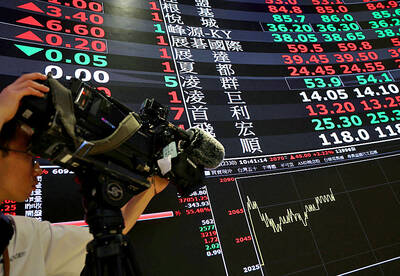
After several years flying high as Asia’s best Nvidia Corp proxy, Taiwan Semiconductor Manufacturing Co (TSMC, 台積電) is increasingly vying with other artificial intelligence (AI) stocks for investor attention. Stock traders are chasing a wider array of beneficiaries as mainstream usage of AI creates demand for hardware beyond the most-advanced chips TSMC makes for Nvidia. Subthemes from the deepening memory crunch to advances in robotics are also luring bids. At the same time, investment caps on single stocks are pushing funds to diversify, while retail investors long familiar with TSMC through its US depositary receipts are being offered a broader set of
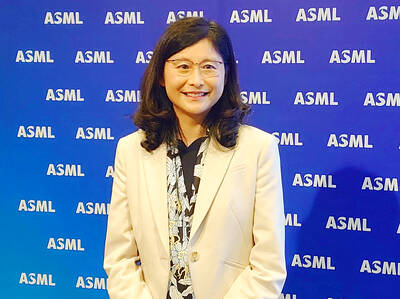
Netherlands-based semiconductor equipment supplier ASML Holding NV yesterday said that it is planning to hire an additional 1,000 people in Taiwan this year in response to growing demand from clients. ASML had previously planned to recruit 600 people this year, but that the plan has been adjusted upward, ASML vice president and ASML Taiwan general manager Grace Wang (汪佳慧) told reporters. ASML has a workforce of more than 4,500 in Taiwan, accounting for about 10 percent of its global total, Wang said. This year’s recruitment campaign would focus on adding people in the customer support, manufacturing and supply chain domains to assist ASML
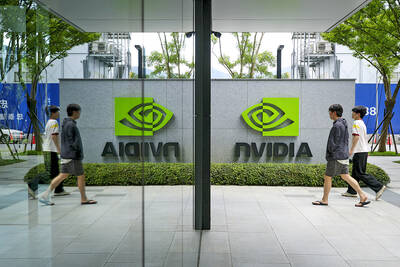
UNDER MICROSCOPE: Taiwan detained three people who allegedly conspired to buy servers in Taiwan and export them using fraudulent documentation, prosecutors said Nvidia Corp chief executive officer Jensen Huang (黃仁勳) on Saturday urged Super Micro Computer Inc to tighten up on compliance after Taiwan detained three people this week for allegedly making fraudulent declarations about artificial intelligence (AI) servers made by its US partner. The development marked the nation’s first crackdown on semiconductor smuggling, which grew after the US slapped restrictions on exports of high-end chips such as Nvidia AI accelerators to China. Nvidia is “rigorous” in explaining regulations to all of its partners, Huang told reporters after arriving in Taipei. “Ultimately Super Micro has to run their own company,” he said in response to

Nvidia Corp yesterday announced that CEO Jensen Huang (黃仁勳) would attend an employee meeting in Taipei tomorrow to celebrate the launch of the company’s Taiwan headquarters project. Huang would attend a gathering at the site of Nvidia’s planned headquarters in Beitou Shilin Technology Park (北投士林科技園區), the company said in a statement. After arriving in Taiwan on Saturday last week, Huang told reporters that he plans to meet with Quanta Computer Inc (廣達) chairman Barry Lam (林百里) and Taiwan Semiconductor Manufacturing Co (TSMC, 台積電) chairman C.C. Wei (魏哲家), and would attend the groundbreaking ceremony for Nvidia’s Taiwan headquarters tomorrow. Nvidia has not yet applied


 RSS
RSS