


South Korea is looking to build a strategic grain reserve and is planning to buy cargoes of corn and other staples, joining similar efforts by other Asian nations worried about high food prices and social unrest.
The reserve would be for grains other than rice, such as wheat and corn, and total about 12 percent of annual consumption.
Spiraling food prices, which have leapt to two-year highs, have spooked Asian governments, which fear a repeat of widespread unrest in 2008 when fears of grain shortages sent prices soaring and unleashed panic buying.
Prices of US corn, soybeans and wheat have soared since last year because of bad weather damaging crops and rising demand from China and India. This has created problems for South Korea, the world’s third-largest corn buyer.
Agriculture ministry sources said yesterday that Asia’s No.4 economy was seeking to buy 552,000 tonnes of corn, wheat and soybeans this year at basis prices over the Chicago Board of Trade futures with US grain sellers.
The cost was estimated at about 200 billion won (US$180.2 million), but excludes storage charges, they added.
“This move is to hedge,” one agriculture ministry source said, adding that the grain procurement would likely be in the US — the main grain exporter to South Korea.
Another source said the amount was based on the UN Food and Agriculture Organisation’s recommendation of stockpiling 12 to 17 percent of annual consumption.
Bangladesh is importing 200,000 tonnes of Thai parboiled rice in a government-to-government deal, sources said last week, part of a plan it announced last month to triple imports to boost stockpiles.
Indonesia last month surprised the market by buying 820,000 tonnes of Thai rice, nearly five times the volume initially sought. The country this month also announced it would boost rice stockpiles to 2 million tonnes from 1.5 million tonnes.
Sources at the South Korean ministries of agriculture and finance said the detailed grain procurement and storage plan could be finalized in March and they were looking at various options, such as building or borrowing storage sites in South Korea.
The government was also looking at a third option. It would only import grains if prices rally after signing futures contracts as a way to hedge against higher prices.
However, if grain prices remained flat, the government could resell the grains to a third party rather than taking delivery.
Local media reported on Saturday the country’s first-ever move to stockpile grains other than rice and equivalent to one-and-a-half months’ consumption. Media said the cost was about 10 billion won.
Agriculture ministry sources said the amount was the estimated deposit cost of the 200 billion won of grain purchases.
The government and industry sources, however, argued that it might be hard for the government to maintain such large grain inventories because of management costs and quality issues.
South Korea produces only 5 percent of food grains, excluding rice.
While the country imports some rice, any move to expand imports would be politically sensitive because the country has a production surplus and persistently weak rice prices.
Some private firms and traders, however, say the government’s lack of experience in buying on the international market could mean uncompetitive purchase prices.
“I doubt who among private firms would be willing to buy grains procured by the government, which might be more costly than their own imports as private firms usually have more expertise in such business,” a Seoul-based grain trader said.

Cairo’s new monorail slices across the city skyline, running above the familiar chaos of blaring horns and aging buses’ exhaust fumes that mark rush hour below. The US$4.5 billion monorail, opened this month, is among Egypt’s most prominent new transport projects, part of a debt-funded infrastructure drive criticized for sapping state finances while bringing limited benefits to most of the country’s 109 million people. “It feels like you’re in a different country,” said Ramy Sayed, a restaurant manager, aboard a driverless Innovia 300 train. “No noise, no traffic, we’re not used to this.” The eastern line runs 56km from the bustling middle-class

Taiwanese firms have increased investment in the Philippines in recent years as Manila’s ties with Washington deepen and global supply chains continue to shift away from China, an expert at the Chung-Hua Institution for Economic Research (CIER, 中華經濟研究院) said yesterday. The Philippines had not been among Taiwanese investors’ top choices in Southeast Asia, CIER Taiwan ASEAN Studies Center director Kristy Hsu (徐遵慈) said at a seminar in Taipei. However, Taiwan’s investment in the country has grown significantly since the COVID-19 pandemic, reaching US $257 million last year, a high in recent years, she said. Although Taiwan’s total investment in the Philippines still lags
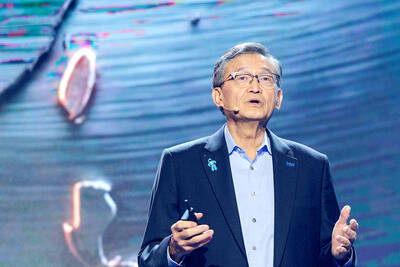
Intel Corp regards Taiwan Semiconductor Manufacturing Co (TSMC, 台積電) as a longstanding partner, as the US chipmaker would continue outsourcing production of advanced chips to TSMC, Intel chief executive officer Lip-Bu Tan (陳立武) said yesterday. “I don’t look at people as competitors. I look at the collaboration... Nvidia is also, you know, a good friend,” Tan told a news conference following his keynote speech at the Computex trade show in Taipei. “It’s a very trusted partnership for us... We are a big, top customer for them, and we’re going to continue doing that,” he said, referring to TSMC, the world’s largest foundry

Artificial intelligence (AI) agents would supplant smartphones as the center of people’s digital lives, fundamentally reshaping personal devices and driving a major computing upgrade cycle, Qualcomm Inc CEO Cristiano Amon said yesterday. In his keynote speech for this year’s Computex trade show in Taipei, Amon said that the rise of "agentic AI" — AI systems capable of reasoning, planning and carrying out tasks autonomously — would transform how people interact with technology across phones, PCs, vehicles and wearable devices. Describing the technology as the next major evolution in computing, Amon said that "2026 is the year of agents.” For decades, smartphones have sat


 RSS
RSS