


On a Monday last month in -Myeongdong, a popular downtown shopping haven in Seoul, the pedestrian walkways were slippery from the previous day’s snowfall. Despite the chilly minus-7?C, the district was abuzz with life as shoppers flocked to the stores looking for good bargains.
The most prominent sight was the cosmetics and beauty stores that beckoned shoppers in nearly every street.
Brands including the Etude House, the Face Shop, Tony Moly, Missha, Nature Republic, Skin Food and Laneige were all vying for shoppers’ attention. Conversing in fluent Mandarin and Japanese, promoters were busy dishing out free samples to usher in customers at the store fronts.
Among these prominent brands was a rising force, AmorePacific Corp — the largest cosmetic enterprise in South Korea that owns more than 20 brands of cosmetics, personal care and healthcare products.
Its cosmetics include skin care, make-up and fragrances. Its personal care products consist of shampoos and toothpastes; while green tea and mineral water are examples of its other goods.
AmorePacific’s well-known cosmetic brands are Hera, Mamonde, Sulhwasoo, Laneige and Iope, to name a few.
The company’s stocks closed at 1,077,000 won (US$970) on Jan 28, beating tech giant Samsung Electronics Co’s 1,010,000 won. Since that day, AmorePacific’s 52-week high was 1,223,000 won, while that of Samsung was 1,014,000 won.
At the end of last year, AmorePacific enjoyed a dominant position in South Korean’s beauty care market with a 39 percent share, ahead of its local rival LG Household & Health Care Ltd’s 17 percent (whose brands include the Face Shop), AmorePacific international strategy team's manager Park Nam-ki said in an interview at the firm’s Seoul headquarters late last month.
However, the company — which prides itself on its corporate philosophy of being an “Asian Beauty Creator” — isn’t content just with success on its home turf.
It has a rather ambitious vision: By 2015, it aims to be among the world’s top 10 cosmetic brands in terms of revenues. Overseas sales would make up about 30 percent of total sales by then, up from 12 percent last year.
AmorePacific ranked No. 20 in 2009 in the global beauty care industry. It had US$1.8 billion in revenues in 2009, up 20.7 percent from 2008.
Top firm L’Oreal Group of France reported flat sales of US$24.4 billion in 2009, while No. 2 Procter & Gamble Co of the US saw sales dip 6 percent to US$18.6 billion. The British-Dutch brand Unilever took the No. 3 spot with US$15.4 billion in sales, up 4.1 percent from 2008.
The only two Asian brands in the top 10 were Shiseido Co at No. 6 and Kao Corp at No. 8 — both from Japan.
“AmorePacific has the know-how to achieve success. We are the most established cosmetic firm in South Korea and we own the biggest pool of R&D [research and development] staff,” the firm’s public relations specialist Lee Yoon-ah said.
The company has more than 350 researchers studying red ginseng, green tea, bamboo sap and other botanical ingredients in Asia for use in its entire portfolio of products, she said.
AmorePacific, which was founded in 1945, opened the first lab in the history of South Korean cosmetic industry in August 1954.
It unveiled its first R&D center in October 1978, and its second facility, called “Mizium,” became operational in September last year.
Mizium is located in Yongin, about one-and-a-half hours drive from Seoul. It houses spacious labs and public spaces that encourage interaction among staff. It also has a 320-seat cafeteria and an exercise space.
AmorePacific is pouring 3.5 percent of total sales into R&D each year in a bid to make sure its products keep abreast with the changing consumer needs and the latest technology, according to Lee.
And the key to increasing its overseas sales to 30 percent of it overall sales — an equivalent of 1.2 trillion won — by 2015 lies in China, Park added.
AmorePacific’s overseas revenues were 337 billion won last year, up from 283 billion won a year ago. China alone took up the bulk, or 58 percent, of total overseas sales last year, compared with 31 percent from France and 4 percent from the US, the company’s statistics showed.
The company forecast that China — which contributed more than 160 billion won to last year’s sales — would see sales advance to 204 billion won this year and 850 billion won by 2015.
To ensure it is on the right track, AmorePacific is set to unveil its third brand — Sulhwasoo — in China next month. The luxury brand will have seven counters at major department stores in Beijing and Shanghai by the end of this year, Lee said.
AmorePacific currently carries two brands in China: the premium Laneige and the down-market Mamonde.
“We didn’t have a complete cosmetic portfolio in China. These additional brands will help us strengthen the brand,” Park said, adding that if these brands gain ground, AmorePacific would rank among China’s top 5 skincare brands by 2015.
In Taiwan, AmorePacific made its entry in 1989 by selling Laneige and Iope brands through a joint venture. Iope is a cosmeceutical brand that targets those in their mid-20s to mid-30s.
As a result of the great success of Laneige, AmorePacific established a separate, wholly-owned subsidiary for the brand in Taiwan in 2004.
Laneige currently operates 18 counters in Taiwan’s major department stores, including Pacific Sogo Department Stores Co (太平洋崇光百貨) and Far Eastern Department Stores (遠東百貨), according to Park.
“Pending successful results of both the Laneige and Iope brands in 2011, AmorePacific is planning to enhance store and brand marketing operations in Taiwan,” he added.
While determined to grow in existing markets, AmorePacific has plans for new market development in the next few years.
These possible markets include Brazil, India, the Middle East and Australia, Park said.
Shares of contract chipmaker Taiwan Semiconductor Manufacturing Co (TSMC, 台積電) came under pressure yesterday after a report that Apple Inc is looking to shift some orders from the Taiwanese company to Intel Corp. TSMC shares fell NT$55, or 2.4 percent, to close at NT$2,235 on the local main board, Taiwan Stock Exchange data showed. Despite the losses, TSMC is expected to continue to benefit from sound fundamentals, as it maintains a lead over its peers in high-end process development, analysts said. “The selling was a knee-jerk reaction to an Intel-Apple report over the weekend,” Mega International Investment Services Corp (兆豐國際投顧) analyst Alex Huang
Taiwan Semiconductor Manufacturing Co (TSMC, 台積電) is expected to remain Apple Inc’s primary chip manufacturing partner despite reports that Apple could shift some orders to Intel Corp, industry experts said yesterday. The comments came after The Wall Street Journal reported on Friday that Apple and Intel had reached a preliminary agreement following more than a year of negotiations for Intel to manufacture some chips for Apple devices. Taiwan Institute of Economic Research (台灣經濟研究院) economist Arisa Liu (劉佩真) said TSMC’s advanced packaging technologies, including integrated fan-out and chip-on-wafer-on-substrate, remain critical to the performance of Apple’s A-series and M-series chips. She said Intel and Samsung
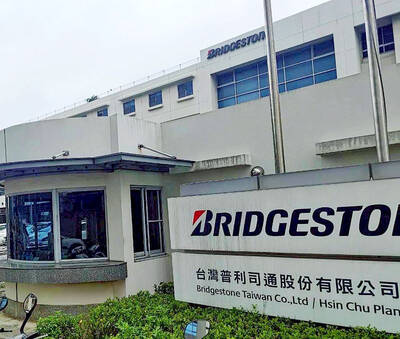
TRANSITION: With the closure, the company would reorganize its Taiwanese unit to a sales and service-focused model, Bridgestone said Bridgestone Corp yesterday announced it would cease manufacturing operations at its tire plant in Hsinchu County’s Hukou Township (湖口), affecting more than 500 workers. Bridgestone Taiwan Co (台灣普利司通) said in a statement that the decision was based on the Tokyo-based tire maker’s adjustments to its global operational strategy and long-term market development considerations. The Taiwanese unit would be reorganized as part of the closure, effective yesterday, and all related production activities would be concluded, the statement said. Under the plan, Bridgestone would continue to deepen its presence in the Taiwanese market, while transitioning to a sales and service-focused business model, it added. The Hsinchu
Taiwan Semiconductor Manufacturing Co (TSMC, 台積電) has approved a capital budget of US$31.28 billion for production expansion to meet long-term development needs during the artificial intelligence (AI) boom. The company’s board meeting yesterday approved the capital appropriation plan for purposes such as the installation of advanced technology capacity and fab construction, the world’s largest contract chipmaker said in a statement. At an earnings conference last month, TSMC forecast that its capital expenditure for this year would be at the higher end of the US$52 billion to US$56 billion range it forecast in January in response to robust demand for 5G, AI and


 RSS
RSS