


Massey Energy Co, struggling with losses after an explosion that killed 29 workers at a West Virginia coal mine last spring, agreed on Saturday to be taken over by Alpha Natural Resources Inc.
Alpha is paying US$7.1 billion in cash and stock for Massey, the US’ fourth-largest coal producer by revenue. Massey operates 19 mining complexes in Virginia, West Virginia and Kentucky, including the Upper Big Branch mine where the April 5 disaster occurred.
Alpha is offering 1.025 share of its stock for each share of Massey, plus US$10 per share in cash. Together, that represents a bid of US$69.33 per share, a 21 percent premium over Massey’s closing share price on Friday.
In an interview, Alpha CEO Kevin Crutchfield said the acquisition would offer greater access to international markets. Shortages of coal for making steel have driven up prices around the world, a trend Alpha hopes to capitalize on.
“We sell into 20-some countries now and that will increase significantly,” Crutchfield said.
Asked about safety concerns at Massey’s operations, Crutchfield said: “We try to let our performance speak for itself. Nobody is perfect, but we have a very good record regarding safety and a good working relationship with regulators.”
A sale of Richmond, Virginia-based Massey was expected even before the sudden retirement last month of Don Blankenship, the company’s CEO. He was the strongest advocate on the board for -remaining an independent company.
The company’s losses since the disaster were another factor leading to its sale. Massey lost a total of US$130 million in the second and third quarters of last year. It has not yet released fourth-quarter results. Alpha expects the deal will help the combined company cut costs by at least US$150 million a year.
Recent reports have suggested Massey was also being sought by global steel conglomerate ArcelorMittal SA.
Alpha, based in Abingdon, Virginia, is the leading US producer of metallurgical coal — the kind used to make steel as opposed to electricity — while ArcelorMittal already owns several metallurgical coal mines in Appalachia. Demand from steelmakers allows coal producers to charge premium prices of US$200 or more a tonne, more than double the price of Appalachian coal sold to power plants.
About 1.3 billion tonnes of Massey’s 2.9 billion tonnes of coal reserves is metallurgical coal. Under Blankenship, the company increased coal exports and opened important inroads to India, which is seen as the next big industrial market by some in the coal industry.
The April explosion, the worst US mining disaster in 40 years, is the subject of civil and criminal investigations. The proposed sale won’t affect the investigation into the explosion, said Davitt McAteer, who was asked by former West Virginia governor Joe Manchin to conduct a separate investigation.
“Hopefully the purchase by Alpha would be helpful in adopting a new culture that would establish safer operating procedures at these mines operated by Massey,” -McAteer said.
The companies said the deal was expected to close by mid-year. It must be approved by regulators and Alpha and Massey shareholders. If approved, it will create a company with combined annual revenue of roughly US$7 billion and more than 12,000 employees.

Greek tourism student Katerina quit within a month of starting work at a five-star hotel in Halkidiki, one of the country’s top destinations, because she said conditions were so dire. Beyond the bad pay, the 22-year-old said that her working and living conditions were “miserable and unacceptable.” Millions holiday in Greece every year, but its vital tourism industry is finding it harder and harder to recruit Greeks to look after them. “I was asked to work in any department of the hotel where there was a need, from service to cleaning,” said Katerina, a tourism and marketing student, who would
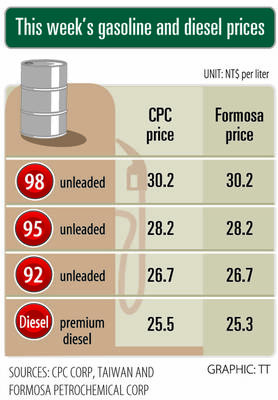
i Gasoline and diesel prices at fuel stations are this week to rise NT$0.1 per liter, as tensions in the Middle East pushed crude oil prices higher last week, CPC Corp, Taiwan (台灣中油) and Formosa Petrochemical Corp (台塑石化) said yesterday. International crude oil prices last week rose for the third consecutive week due to an escalating conflict between Israel and Iran, as the market is concerned that the situation in the Middle East might affect crude oil supply, CPC and Formosa said in separate statements. Front-month Brent crude oil futures — the international oil benchmark — rose 3.75 percent to settle at US$77.01

Merida Industry Co (美利達) has seen signs of recovery in the US and European markets this year, as customers are gradually depleting their inventories, the bicycle maker told shareholders yesterday. Given robust growth in new orders at its Taiwanese factory, coupled with its subsidiaries’ improving performance, Merida said it remains confident about the bicycle market’s prospects and expects steady growth in its core business this year. CAUTION ON CHINA However, the company must handle the Chinese market with great caution, as sales of road bikes there have declined significantly, affecting its revenue and profitability, Merida said in a statement, adding that it would
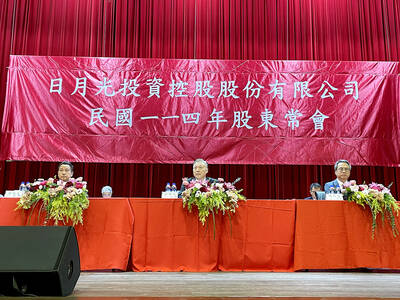
UNCERTAINTIES: The world’s biggest chip packager and tester is closely monitoring the US’ tariff policy before making any capacity adjustments, a company official said ASE Technology Holding Inc (日月光投控), the world’s biggest chip packager and tester, yesterday said it is cautiously evaluating new advanced packaging capacity expansion in the US in response to customers’ requests amid uncertainties about the US’ tariff policy. Compared with its semiconductor peers, ASE has been relatively prudent about building new capacity in the US. However, the company is adjusting its global manufacturing footprint expansion after US President Donald Trump announced “reciprocal” tariffs in April, and new import duties targeting semiconductors and other items that are vital to national security. ASE subsidiary Siliconware Precision Industries Co (SPIL, 矽品精密) is participating in Nvidia


 RSS
RSS