


A high-level delegation representing the Chinese TV manufacturing industry yesterday said it had arranged its first visit to local LED companies and hoped to seek help from Taiwanese LED component makers to fend off growing competition from global TV brands.
In addition to the routine visits to their TV panel suppliers in Taiwan, the China Video Industry Association (中國電子視像行業協會) planned to meet officials from the nation’s major LED chip packagers and makers such as Epistar Corp (晶電), the nation’s top LED chipmaker, as LED TVs become increasingly popular globally.
FAST GROWTH
“LED TV will be one of the fast-growing areas in the future as industry experts foresee the trend of using power-saving LED chips to replace CCFL [cold cathode fluorescent lamps] as the backlight source for LCD TV panels,” deputy director of the association Bai Weimin (白為民) said.
“We found that the supplies of some LED components from Chinese firms have been unable to catch up with demand because of some technological barriers. And Taiwanese firms are superior in the LED industry,” Bai said.
She added that the association had visited local LED chip packager Everlight Electronics Co (億光) yesterday. Members of the association included top Chinese TV makers TCL and Haier (海爾),
The association expected LED TVs to comprise more than 30 percent of the 38 million overall units of LCD TVs sold in China this year, rather than 20 percent as it had estimated previously. Last year, LED TVs accounted for a mere 15 percent of total LCD TV sales.
COMPETITION
The fast-growing LED TV market has also meant rising competition from global TV brands as Chinese TV makers are lagging behind top global TV brands such as Samsung Electronics Co and Sony Corp in deploying the ultra-slim and energy-efficient TVs, said Locke Chang (張小彪), a flat-panel analyst with Taipei-based TrendForce Corp (集邦科技).
“I believe the delegation is trying to seek a stable supply of LED components like flat panels and LED chips from Taiwanese suppliers as South Korean and Japanese component makers will prioritize their brand-name TV business for supply,” Chang said.
Separately, Bai said she was confident that Chinese TV makers would buy US$5.3 billion worth of LCD panels from the nation’s top three LCD panel suppliers — AU Optronics Corp (友達光電), Chimei Innolux Corp (奇美電子) and Chunghwa Picture Tubes Ltd (中華映管) — based on the memorandums of understanding signed in January.
INVENTORY
“The LCD TV market is still growing very fast, and inventories at Chinese TV makers are on the decline after [local] governments resumed bidding to buy LCD TVs to support the [government policy] of subsidizing TV purchases [in rural and urban areas],” Bai said.
This year, China is set to become the world’s largest LCD TV manufacturer by producing more than 80 million LCD TVs, up 21 percent from 66 million units last year, Bai said.
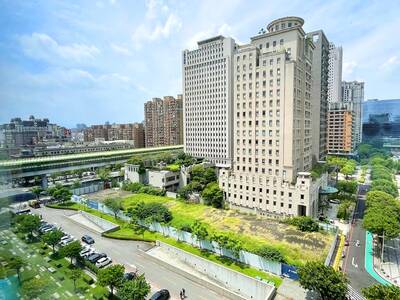
Taichung reported the steepest fall in completed home prices among the six special municipalities in the first quarter of this year, data compiled by Taiwan Realty Co (台灣房屋) showed yesterday. From January through last month, the average transaction price for completed homes in Taichung fell 8 percent from a year earlier to NT$299,000 (US$9,483) per ping (3.3m²), said Taiwan Realty, which compiled the data based on the government’s price registration platform. The decline could be attributed to many home buyers choosing relatively affordable used homes to live in themselves, instead of newly built homes in the city’s prime property market, Taiwan Realty
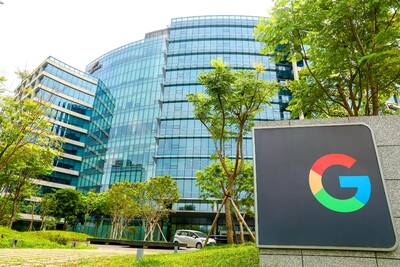
The government yesterday approved applications by Alphabet Inc’s Google to invest NT$27.08 billion (US$859.98 million) in Taiwan, the Ministry of Economic Affairs said in a statement. The Department of Investment Review approved two investments proposed by Google, with much of the funds to be used for data processing and electronic information supply services, as well as inventory procurement businesses in the semiconductor field, the ministry said. It marks the second consecutive year that Google has applied to increase its investment in Taiwan. Google plans to infuse NT$25.34 billion into Charter Investments Ltd (特許投資顧問) through its Singapore-based subsidiary Fructan Holdings Singapore Pte Ltd, and

JET JUICE: The war on Iran’s secondary effects have seen fuel prices skyrocket, knocking flight schedules down to earth in return as airlines struggle with costs Airline passengers should brace for more irritation in the next few months as carriers worldwide cancel flights and ground planes to cope with stratospheric increases in jet-fuel prices. Dutch flag carrier KLM is the latest company to cut its schedule, saying on Thursday that it would scrap 80 return flights at Amsterdam’s Schiphol Airport in the coming month. That puts it in the same league as United Airlines Holdings Inc, Deutsche Lufthansa AG and Cathay Pacific Airways Ltd, which have all pruned itineraries to mitigate costs. Global capacity for next month has been reduced by about 3 percentage points, with all

The US said it plans to help build a first-of-its-kind industrial hub in the Philippines to boost production of inputs crucial to US supply chains. The 4,000-acre hub is intended to be “a purpose-built platform for allied manufacturing” and “an investment acceleration hub where the specific industrial activities are shaped by market demand,” the US Department of State said on Thursday. The project — touted as an “economic security zone” — would be within the Luzon Economic Corridor, a flagship economic project backed by the US and Japan on the main Philippine island. The project was also described as “the first artificial intelligence


 RSS
RSS