


AU Optronics Corp (AUO, 友達光電), the nation’s No. 2 LCD panel supplier, yesterday voiced its disappointment at the US government for charging six of its executives and staff with price-fixing and said it would continue defending the firm against the allegations.
The indictment against AU Optronics is part of a broader anti-trust probe into LCD panel price fixing launched in December 2006 by the US Department of Justice.
AU Optronics is one of few companies under investigation that have refused to plead guilty, after six companies — including Taiwan’s Chimei Innolux Corp (奇美電子) and Chunghwa Picture Tubes Ltd (中華映管) agreed to settle and were ordered to pay more than US$860 million in fines.
AU Optronics vice chairman Chen Hsuan-bin (陳炫彬), CEO Chen Lai-juh (陳來助) and board member Hui Hsiung (熊暉), along with other three employees, have been charged with price-fixing, according to a US Department of Justice statement released on Thursday.
“The facts of the case do not warrant such charges. We will actively defend the company,” AU Optronics spokesperson Hsiao Ya-wen (蕭雅文) said by telephone.
Stiff competition has caused steep price declines over the past years, which has benefited a large base of consumers, AU Optronics said in a statement released yesterday. The firm makes and sells LCD panels used in TVs and computers.
“The suit does not have immediate, or material impact on the company’s operation,” Hsiao said.
AU Optronics set aside NT$10 billion in the fourth quarter of last year to defend against anti-trust lawsuits in the US and Europe.
The anti-trust charges did not affect AU Optronics shares yesterday. The stock closed 3.05 percent higher at NT$30.40, beating the benchmark TAIEX, which advanced 1.64 percent.
A federal grand jury in San Francisco indicted AU Optronics executives for participating in a conspiracy to fix prices of TFT-LCD panels sold worldwide during the period between Sept. 14, 2001, and Dec. 1, 2006, the justice department said in the statement.
Including this indictment, 17 executives have been charged to date in the department’s ongoing price-fixing investigation, it said.
If convicted, violators face a maximum of 10 years in prison, a US$1 million fine for individuals and US$100 million fine for corporations, the statement said.
The maximum fines may be increased to twice the gain derived from the crime or twice the loss suffered by the victims of the crime, if either of those amounts is greater than the statutory maximum fine, it added.
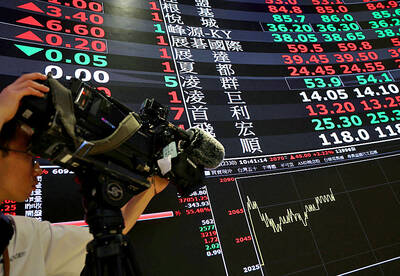
After several years flying high as Asia’s best Nvidia Corp proxy, Taiwan Semiconductor Manufacturing Co (TSMC, 台積電) is increasingly vying with other artificial intelligence (AI) stocks for investor attention. Stock traders are chasing a wider array of beneficiaries as mainstream usage of AI creates demand for hardware beyond the most-advanced chips TSMC makes for Nvidia. Subthemes from the deepening memory crunch to advances in robotics are also luring bids. At the same time, investment caps on single stocks are pushing funds to diversify, while retail investors long familiar with TSMC through its US depositary receipts are being offered a broader set of
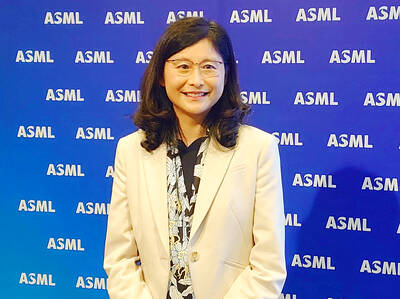
Netherlands-based semiconductor equipment supplier ASML Holding NV yesterday said that it is planning to hire an additional 1,000 people in Taiwan this year in response to growing demand from clients. ASML had previously planned to recruit 600 people this year, but that the plan has been adjusted upward, ASML vice president and ASML Taiwan general manager Grace Wang (汪佳慧) told reporters. ASML has a workforce of more than 4,500 in Taiwan, accounting for about 10 percent of its global total, Wang said. This year’s recruitment campaign would focus on adding people in the customer support, manufacturing and supply chain domains to assist ASML
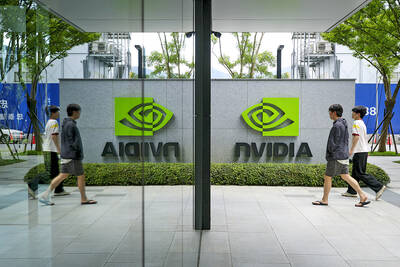
UNDER MICROSCOPE: Taiwan detained three people who allegedly conspired to buy servers in Taiwan and export them using fraudulent documentation, prosecutors said Nvidia Corp chief executive officer Jensen Huang (黃仁勳) on Saturday urged Super Micro Computer Inc to tighten up on compliance after Taiwan detained three people this week for allegedly making fraudulent declarations about artificial intelligence (AI) servers made by its US partner. The development marked the nation’s first crackdown on semiconductor smuggling, which grew after the US slapped restrictions on exports of high-end chips such as Nvidia AI accelerators to China. Nvidia is “rigorous” in explaining regulations to all of its partners, Huang told reporters after arriving in Taipei. “Ultimately Super Micro has to run their own company,” he said in response to
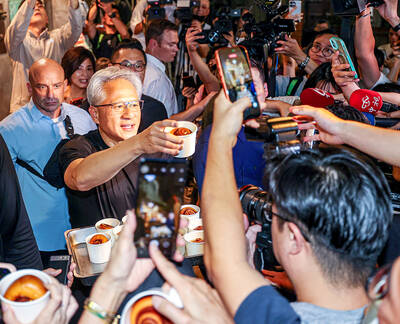
Nvidia Corp yesterday announced that CEO Jensen Huang (黃仁勳) would attend an employee meeting in Taipei tomorrow to celebrate the launch of the company’s Taiwan headquarters project. Huang would attend a gathering at the site of Nvidia’s planned headquarters in Beitou Shilin Technology Park (北投士林科技園區), the company said in a statement. After arriving in Taiwan on Saturday last week, Huang told reporters that he plans to meet with Quanta Computer Inc (廣達) chairman Barry Lam (林百里) and Taiwan Semiconductor Manufacturing Co (TSMC, 台積電) chairman C.C. Wei (魏哲家), and would attend the groundbreaking ceremony for Nvidia’s Taiwan headquarters tomorrow. Nvidia has not yet applied


 RSS
RSS