


The EU threatened to impose tariffs against Iran, Pakistan and the United Arab Emirates on a material used in plastic bottles, saying EU producers may be victims of subsidies and price undercutting.
The EU opened investigations into whether Iranian, Pakistani and UAE manufacturers of polyethylene terephthalate (PET) receive trade-distorting government aid and sell in the 27-nation bloc below cost. The product is also used in plastic films and fibers.
In 2007, the EU prolonged for five years anti-dumping duties on PET from India, Indonesia, Malaysia, South Korea, Thailand and Taiwan to protect European producers including La Seda de Barcelona SA in Europe’s 3 billion euro (US$4.3 billion) market. PET users include plastic-bottle mold makers such as Resilux NV and bottlers including Coca-Cola Co.
The new investigations will determine whether EU producers of PET have suffered “injury” as a result of any unfair Iranian, Pakistani and UAE competition, the European Commission, the EU’s trade authority in Brussels, said yesterday in the Official Journal.
The EU commission can impose provisional anti-subsidy duties for four months and provisional anti-dumping levies for six months. The EU’s national governments can turn those measures into “definitive” five-year duties at the same or different rates.
The commission has nine months from the start of an investigation to decide on provisional measures.
EU governments have 13 months from the beginning of a probe to impose five-year anti-subsidy duties and 15 months to impose definitive anti-dumping measures.
In addition to imposing anti-dumping duties on PET from India, Indonesia, Malaysia, South Korea, Thailand and Taiwan, the EU applies anti-subsidy levies on the product from India. Last month it decided to keep in place anti-dumping duties on PET from China.
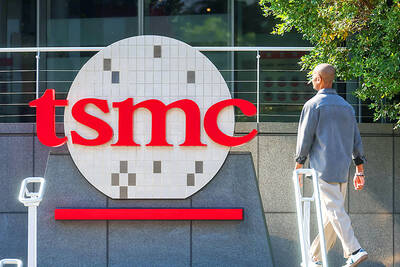
Shares of contract chipmaker Taiwan Semiconductor Manufacturing Co (TSMC, 台積電) came under pressure yesterday after a report that Apple Inc is looking to shift some orders from the Taiwanese company to Intel Corp. TSMC shares fell NT$55, or 2.4 percent, to close at NT$2,235 on the local main board, Taiwan Stock Exchange data showed. Despite the losses, TSMC is expected to continue to benefit from sound fundamentals, as it maintains a lead over its peers in high-end process development, analysts said. “The selling was a knee-jerk reaction to an Intel-Apple report over the weekend,” Mega International Investment Services Corp (兆豐國際投顧) analyst Alex Huang
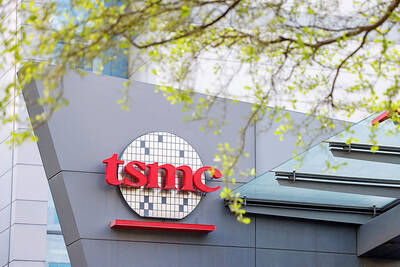
Taiwan Semiconductor Manufacturing Co (TSMC, 台積電) is expected to remain Apple Inc’s primary chip manufacturing partner despite reports that Apple could shift some orders to Intel Corp, industry experts said yesterday. The comments came after The Wall Street Journal reported on Friday that Apple and Intel had reached a preliminary agreement following more than a year of negotiations for Intel to manufacture some chips for Apple devices. Taiwan Institute of Economic Research (台灣經濟研究院) economist Arisa Liu (劉佩真) said TSMC’s advanced packaging technologies, including integrated fan-out and chip-on-wafer-on-substrate, remain critical to the performance of Apple’s A-series and M-series chips. She said Intel and Samsung
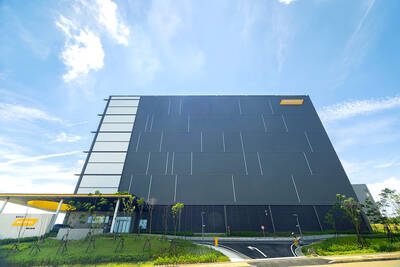
POWER BUILDUP: Powered by Nvidia’s B200 Blackwell chips, the data center would support MediaTek’s computing power demand and business growth, the company said Smartphone chip designer MediaTek Inc (聯發科) yesterday launched a new artificial intelligence (AI) data center with a maximum capacity of 45 megawatts to meet its rising demand for computing power required to develop new advanced chips for AI applications. The company has completed the first-phase computing power buildup at the data center in Miaoli County’s Tongluo Township (銅鑼), providing 15 megawatts of capacity to support its research and development (R&D) capabilities, despite an industrywide shortage of key components, MediaTek said. Supply constraints have plagued a wide range of key components, including memory chips, solid-state drives, power supply units and central
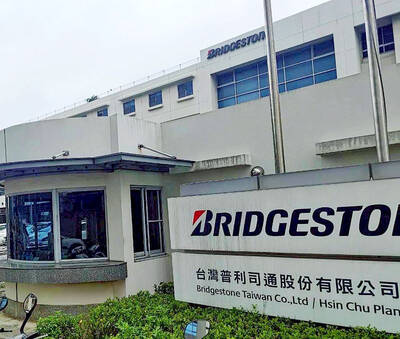
TRANSITION: With the closure, the company would reorganize its Taiwanese unit to a sales and service-focused model, Bridgestone said Bridgestone Corp yesterday announced it would cease manufacturing operations at its tire plant in Hsinchu County’s Hukou Township (湖口), affecting more than 500 workers. Bridgestone Taiwan Co (台灣普利司通) said in a statement that the decision was based on the Tokyo-based tire maker’s adjustments to its global operational strategy and long-term market development considerations. The Taiwanese unit would be reorganized as part of the closure, effective yesterday, and all related production activities would be concluded, the statement said. Under the plan, Bridgestone would continue to deepen its presence in the Taiwanese market, while transitioning to a sales and service-focused business model, it added. The Hsinchu


 RSS
RSS