


■HOUSING
Taiwan rental prices drop
The average price of apartments in Taiwan fell to the lowest in almost two years last month, with replacement demand from home owners ebbing as the country’s economy enters recession. Housing prices declined 7.8 percent to an average NT$228,700 (US$6,800) per ping (3.3m²), the lowest since March 2007, said Stanley Su, senior researcher at Sinyi Realty Co, Taiwan’s only listed property broker. Prices in the capital Taipei averaged NT$368,800, he said. “Dwindling replacement demand is the main reason prices fell,” Su said yesterday. “Home owners who wish to move into nicer apartments in better locations are holding back as the recession deepens.”
■EMPLOYMENT
Cabinet to create jobs
The Cabinet expects to create more jobs this year to help combat the rising number of unemployed, an economic planning official said on Friday. Vice chairman of the Council for Economic Planning and Development San Gee (單驥) said the number of created jobs would be increased to 330,000 this year, from 150,000 jobs estimated previously. To help solve the unemployment problem for college graduates, the government will offer 35,000 internships in local enterprises for unemployed college graduates who got their degrees between 2006 and last year, at a monthly salary ranging from NT$22,000 to NT$35,000, San said. The Ministry of Economic Affairs and the National Science Council would offer the same monthly pay to college graduates serving as assistants in research projects.
■CONSUMING
Ma La Sun sold in China
The “Ma La Sun” millet wine made famous by Taiwan’s blockbuster movie Cape No. 7 has made inroads into China’s market even before the movie opens there next Saturday. The millet wine producer, the Shinyi Hsiang Farmers’ Association from Nantou County, has already begun exporting the liquor to a Xiamen-based trading company that is serving as its exclusive distributor in China. Jin Jun (金君), the deputy general manager of the trading company, said yesterday that the Ma La Sun millet wine went on sale in China on Jan. 8.
■OIL
Offshore Group bought
Colombia and South Korea’s state oil companies announced on Friday their US$900 million purchase of US-based Offshore International Group Inc, whose main asset is the oil developer Petro-Tech Peruana SA. Ecopetrol SA and Korean National Oil Corp will each have a 50 percent interest in Petro-Tech, which has 11 blocks in Peru — one in production and the rest in exploration. Petro-Tech has been operating on the country’s northern coast since 1994, producing nearly 12,000 barrels of crude daily and has more than 100 million barrels in reserves, Ecopetrol said in statement issued in Bogota.
■PHARMACEUTICALS
Glaxo eyes Piramal
British drug developer GlaxoSmithKline PLC is reportedly in talks to buy Indian generic drug developer Piramal Healthcare Ltd for about US$1.5 billion. Late on Friday, the Wall Street Journal reported that people familiar with the potential deal said the companies are at an early stage of talks. GlaxoSmithKline said it would not comment and Piramal could not be reached for comment. In December, GlaxoSmithKline agreed to buy Bristol-Myers Squibb Pakistan Ltd and certain associated trademarks for about US$36.5 million, adding an emerging market to its business.


Taiwanese firms have increased investment in the Philippines in recent years as Manila’s ties with Washington deepen and global supply chains continue to shift away from China, an expert at the Chung-Hua Institution for Economic Research (CIER, 中華經濟研究院) said yesterday. The Philippines had not been among Taiwanese investors’ top choices in Southeast Asia, CIER Taiwan ASEAN Studies Center director Kristy Hsu (徐遵慈) said at a seminar in Taipei. However, Taiwan’s investment in the country has grown significantly since the COVID-19 pandemic, reaching US $257 million last year, a high in recent years, she said. Although Taiwan’s total investment in the Philippines still lags
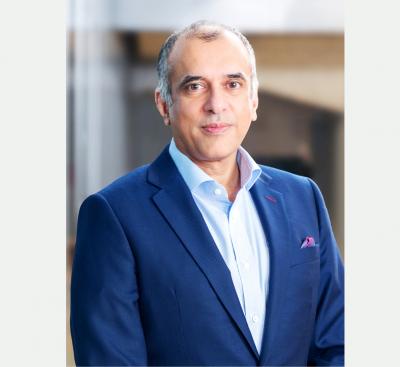
HSBC Holdings PLC is deepening its commitment to Taiwan as the economy emerges as one of the bank’s fastest-growing markets globally, driven by an artificial intelligence (AI) investment boom, expanding cross-border trade, and rising wealth creation. “The advantage that Taiwan has is a growth story linked to the semiconductor and broader AI industries, strong underlying corporate performance, and wealth creation,” said Surendra Rosha, HSBC’s co-chief executive for Asia and the Middle East, in an exclusive interview with the Taipei Times on June 2, during this year’s HSBC Taiwan Conference. That combination has helped HSBC cement its position as the most profitable international

Intel Corp regards Taiwan Semiconductor Manufacturing Co (TSMC, 台積電) as a longstanding partner, as the US chipmaker would continue outsourcing production of advanced chips to TSMC, Intel chief executive officer Lip-Bu Tan (陳立武) said yesterday. “I don’t look at people as competitors. I look at the collaboration... Nvidia is also, you know, a good friend,” Tan told a news conference following his keynote speech at the Computex trade show in Taipei. “It’s a very trusted partnership for us... We are a big, top customer for them, and we’re going to continue doing that,” he said, referring to TSMC, the world’s largest foundry

Hon Hai Precision Industry Co (鴻海精密) yesterday said it would work with US chipmaker Intel Corp to jointly develop and deploy next-generation artificial intelligence (AI) infrastructure and intelligent computing platforms in a move to capture booming demand for AI computing systems. Hon Hai, also known as Foxconn Technology Group (富士康), said in a statement that the partnership would combine its global manufacturing scale, system integration expertise and AI data center deployment capabilities with Intel’s strengths in processor architecture, silicon technologies and software ecosystem. The companies said they plan to work on equipment used in AI data centers, including server racks powered by


 RSS
RSS