


Thailand’s parliament early yesterday passed a US$3.35 billion stimulus package aimed at boosting the flagging economy after months of street protests and last year’s crippling airport seizures.
After 11 hours of debate between the Democrat Party-led government and the opposition, lawmakers voted just after midnight for the 116.7 billion baht (US$3.35 billion) supplementary budget for this fiscal year.
Thai House speaker Chai Chidchob said 238 lawmakers out of a total of 455 voted in favor of the bill, which now has to go through two more readings — largely a formality — before taking effect.
The package is a mixture of cash handouts for low earners, tax cuts, education loans, and subsidies for transport and utilities, which the government’s finance team says will stimulate consumer spending.
The Bank of Thailand has forecast economic growth at zero to 2 percent this year, with the weeklong shuttering of Bangkok’s two airports by protesters late last year and the global financial crisis taking a toll.
Critics of the stimulus package including ousted prime minister Thaksin Shinawatra have decried the plan as a short-term fix to a long-term problem.
Chalerm Yoobamrung, opposition lawmaker with the Thaksin-linked Puea Thai party, called the 2,000 baht handouts “advance vote buying” and said the package would not reach all sectors.
“The 16 policies to stimulate the economy — especially the 2,000 baht which will cover 9.2 million people — is advance vote buying. It is not true that other countries use these kind of measures,” he told the house.
The Democrat Party led by Thai Prime Minister Abhisit Vejjajiva came to power in a parliamentary vote last month after a court dissolved the Thaksin-linked People Power Party (PPP) less than a year after it won elections.
The court ruling brought an end to more than six months of protests against the PPP, which peaked with the Nov. 25 through Dec. 3 siege of Bangkok’s two airports, which battered tourism and the economy.

Taiwanese firms have increased investment in the Philippines in recent years as Manila’s ties with Washington deepen and global supply chains continue to shift away from China, an expert at the Chung-Hua Institution for Economic Research (CIER, 中華經濟研究院) said yesterday. The Philippines had not been among Taiwanese investors’ top choices in Southeast Asia, CIER Taiwan ASEAN Studies Center director Kristy Hsu (徐遵慈) said at a seminar in Taipei. However, Taiwan’s investment in the country has grown significantly since the COVID-19 pandemic, reaching US $257 million last year, a high in recent years, she said. Although Taiwan’s total investment in the Philippines still lags
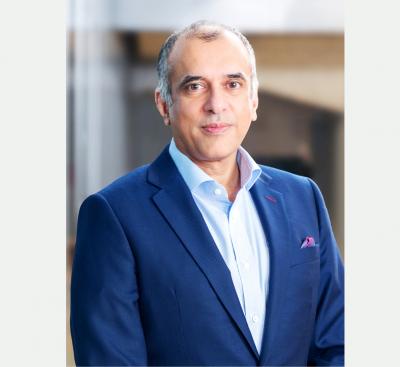
HSBC Holdings PLC is deepening its commitment to Taiwan as the economy emerges as one of the bank’s fastest-growing markets globally, driven by an artificial intelligence (AI) investment boom, expanding cross-border trade, and rising wealth creation. “The advantage that Taiwan has is a growth story linked to the semiconductor and broader AI industries, strong underlying corporate performance, and wealth creation,” said Surendra Rosha, HSBC’s co-chief executive for Asia and the Middle East, in an exclusive interview with the Taipei Times on June 2, during this year’s HSBC Taiwan Conference. That combination has helped HSBC cement its position as the most profitable international

Intel Corp regards Taiwan Semiconductor Manufacturing Co (TSMC, 台積電) as a longstanding partner, as the US chipmaker would continue outsourcing production of advanced chips to TSMC, Intel chief executive officer Lip-Bu Tan (陳立武) said yesterday. “I don’t look at people as competitors. I look at the collaboration... Nvidia is also, you know, a good friend,” Tan told a news conference following his keynote speech at the Computex trade show in Taipei. “It’s a very trusted partnership for us... We are a big, top customer for them, and we’re going to continue doing that,” he said, referring to TSMC, the world’s largest foundry

Hon Hai Precision Industry Co (鴻海精密) yesterday said it would work with US chipmaker Intel Corp to jointly develop and deploy next-generation artificial intelligence (AI) infrastructure and intelligent computing platforms in a move to capture booming demand for AI computing systems. Hon Hai, also known as Foxconn Technology Group (富士康), said in a statement that the partnership would combine its global manufacturing scale, system integration expertise and AI data center deployment capabilities with Intel’s strengths in processor architecture, silicon technologies and software ecosystem. The companies said they plan to work on equipment used in AI data centers, including server racks powered by


 RSS
RSS