


A group of Chinese businesses from Fujian Province yesterday signed a NT$1.32 billion (US$13.1 million) deal with Taichung-based property developer Shining Group (鄉林集團) to purchase 12 luxury residential units and one commercial unit in central Taiwan, marking the nation’s first real estate investment by Chinese businessmen after the March 22 presidential election.
Including the Desire Star (China) Tea Industry Co (星願中國茶葉公司) and Greattown Estate (名城企業集團), the 10 Chinese investors will acquire the pre-sold property units, each exceeding 202 ping (666m2), for more than NT$88 million apiece, a Shining official said yesterday.
The investment came after a delegation of nine Chinese business tycoons visited several places in Taiwan last month to gain first-hand information about the local property market.
During their trip, they were hounded by the local press and photographers wherever they went, but finally completed no firm deals.
“We have no doubt that these Chinese investors can really place their money in Taiwan’s real estate market because they are businesses registered in either Hong Kong or Singapore, which enables them to circumvent current cross-strait legal restrictions,” said Fred Ying (應致德), vice president of Taichung-based construction firm Shining Group (鄉林集團), in a telephone interview.
Desire Star (China) Tea Industry booked the pre-sold commercial unit as the company plans to establish a flagship store to distribute its tea in Taiwan, Ying said.
Shining is still in discussions with its customers about the details of the purchase, but the deal signaled a bullish atmosphere in the nation’s property market, Ying said.
“The growth of Taiwan’s property market has been suppressed for so long because of the tense cross-strait relationship in the past,” Ying said. “We expect more transactions will come after the new administration takes office on May 20, as Chinese investors are likely to invest in Taiwan’s office buildings, shopping malls, recreational parks and hotels in a bid to diversify their assets.”
The expected capital inflows from Chinese businessmen have recently invited warnings from local scholars that the nation’s property was already overpriced by some 30 percent and a property bubble was emerging in the Taipei market.
Such inflows are also likely to further worsen the housing affordability problem in Taiwan at a time when most middle-income families have experienced slow growth in annual disposable incomes in the past few years, they said.
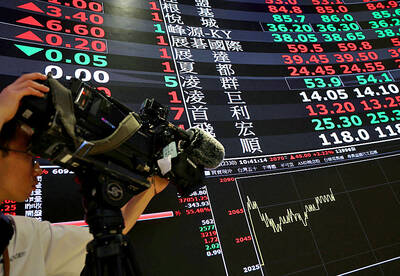
After several years flying high as Asia’s best Nvidia Corp proxy, Taiwan Semiconductor Manufacturing Co (TSMC, 台積電) is increasingly vying with other artificial intelligence (AI) stocks for investor attention. Stock traders are chasing a wider array of beneficiaries as mainstream usage of AI creates demand for hardware beyond the most-advanced chips TSMC makes for Nvidia. Subthemes from the deepening memory crunch to advances in robotics are also luring bids. At the same time, investment caps on single stocks are pushing funds to diversify, while retail investors long familiar with TSMC through its US depositary receipts are being offered a broader set of
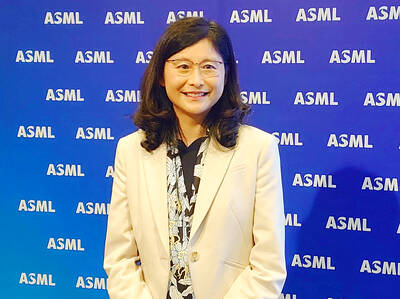
Netherlands-based semiconductor equipment supplier ASML Holding NV yesterday said that it is planning to hire an additional 1,000 people in Taiwan this year in response to growing demand from clients. ASML had previously planned to recruit 600 people this year, but that the plan has been adjusted upward, ASML vice president and ASML Taiwan general manager Grace Wang (汪佳慧) told reporters. ASML has a workforce of more than 4,500 in Taiwan, accounting for about 10 percent of its global total, Wang said. This year’s recruitment campaign would focus on adding people in the customer support, manufacturing and supply chain domains to assist ASML
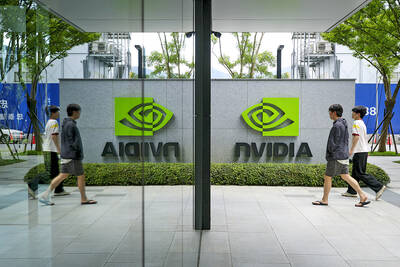
UNDER MICROSCOPE: Taiwan detained three people who allegedly conspired to buy servers in Taiwan and export them using fraudulent documentation, prosecutors said Nvidia Corp chief executive officer Jensen Huang (黃仁勳) on Saturday urged Super Micro Computer Inc to tighten up on compliance after Taiwan detained three people this week for allegedly making fraudulent declarations about artificial intelligence (AI) servers made by its US partner. The development marked the nation’s first crackdown on semiconductor smuggling, which grew after the US slapped restrictions on exports of high-end chips such as Nvidia AI accelerators to China. Nvidia is “rigorous” in explaining regulations to all of its partners, Huang told reporters after arriving in Taipei. “Ultimately Super Micro has to run their own company,” he said in response to

Nvidia Corp yesterday announced that CEO Jensen Huang (黃仁勳) would attend an employee meeting in Taipei tomorrow to celebrate the launch of the company’s Taiwan headquarters project. Huang would attend a gathering at the site of Nvidia’s planned headquarters in Beitou Shilin Technology Park (北投士林科技園區), the company said in a statement. After arriving in Taiwan on Saturday last week, Huang told reporters that he plans to meet with Quanta Computer Inc (廣達) chairman Barry Lam (林百里) and Taiwan Semiconductor Manufacturing Co (TSMC, 台積電) chairman C.C. Wei (魏哲家), and would attend the groundbreaking ceremony for Nvidia’s Taiwan headquarters tomorrow. Nvidia has not yet applied


 RSS
RSS