


The container handling volume at Kaohsiung Port reached a total of 10.26 million twenty-feet equivalent units (TEU) last year, a 4.9 percent increase from the volume in 2006, Kaohsiung Harbor Bureau said yesterday.
"This is the first time we have broke the 10 million TEU benchmark," bureau deputy director-general Huang Kuo-ying (
On a monthly basis, container handling last month topped 915,000 TEUs, a new monthly record for the southern port.
Huang said that export and import containers accounted for approximately 50 percent of the total volume. Compared with 2006, the total number of export and import containers last year increased by about 516,000 TEUs, or 11.2 percent.
Huang said that growth could be attributed to rising demand for raw materials, including millet and corn, from China and India.
Rotterdam continued to beat Kaohsiung in terms of container volume, Huang said.
Last year, Rotterdam announced that it had topped 10 million TEUs in November, whereas Kaohsiung did not reach the benchmark until the end of last month, he said.
A stronger euro prompted a large number of "businesses to purchase a large quantity of raw materials from Asia," he said. "Nearly all the container ships heading to Europe were fully loaded."
Kaohsiung also faces strong competition from Dubai, which now serves as a vital trading port in the Mediterranean sea route.
For this year, Huang said Kaohsiung Port had set a container volume target of 10.5 million TEUs.
Meanwhile, Keelung Port reported that container handling totaled 2.22 million TEUs last year, up 4.1 percent from 2006.
Despite the increase in container volume, officials had warned that Kaohsiung's global ranking would continue to slide.
A report published in the Chinese-language Commercial Times last year, quoting Kaohsiung Port director general Shieh Ming-huei (謝明輝), said that Kaohsiung was likely to be outranked by Rotterdam and Dubai to the eighth largest trading port in the world, down from No. 6.
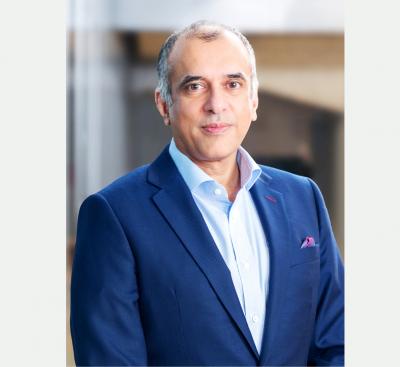
HSBC Holdings PLC is deepening its commitment to Taiwan as the economy emerges as one of the bank’s fastest-growing markets globally, driven by an artificial intelligence (AI) investment boom, expanding cross-border trade, and rising wealth creation. “The advantage that Taiwan has is a growth story linked to the semiconductor and broader AI industries, strong underlying corporate performance, and wealth creation,” said Surendra Rosha, HSBC’s co-chief executive for Asia and the Middle East, in an exclusive interview with the Taipei Times on June 2, during this year’s HSBC Taiwan Conference. That combination has helped HSBC cement its position as the most profitable international

Taiwanese firms have increased investment in the Philippines in recent years as Manila’s ties with Washington deepen and global supply chains continue to shift away from China, an expert at the Chung-Hua Institution for Economic Research (CIER, 中華經濟研究院) said yesterday. The Philippines had not been among Taiwanese investors’ top choices in Southeast Asia, CIER Taiwan ASEAN Studies Center director Kristy Hsu (徐遵慈) said at a seminar in Taipei. However, Taiwan’s investment in the country has grown significantly since the COVID-19 pandemic, reaching US $257 million last year, a high in recent years, she said. Although Taiwan’s total investment in the Philippines still lags
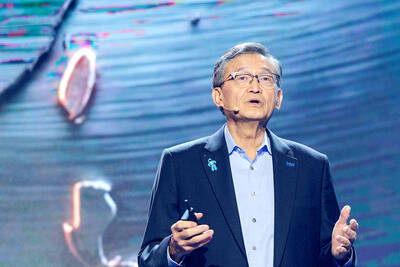
Intel Corp regards Taiwan Semiconductor Manufacturing Co (TSMC, 台積電) as a longstanding partner, as the US chipmaker would continue outsourcing production of advanced chips to TSMC, Intel chief executive officer Lip-Bu Tan (陳立武) said yesterday. “I don’t look at people as competitors. I look at the collaboration... Nvidia is also, you know, a good friend,” Tan told a news conference following his keynote speech at the Computex trade show in Taipei. “It’s a very trusted partnership for us... We are a big, top customer for them, and we’re going to continue doing that,” he said, referring to TSMC, the world’s largest foundry
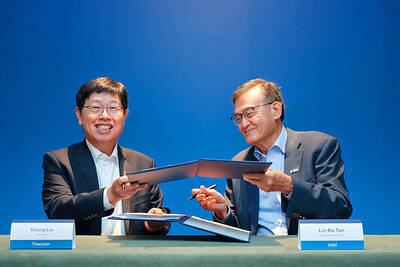
Hon Hai Precision Industry Co (鴻海精密) yesterday said it would work with US chipmaker Intel Corp to jointly develop and deploy next-generation artificial intelligence (AI) infrastructure and intelligent computing platforms in a move to capture booming demand for AI computing systems. Hon Hai, also known as Foxconn Technology Group (富士康), said in a statement that the partnership would combine its global manufacturing scale, system integration expertise and AI data center deployment capabilities with Intel’s strengths in processor architecture, silicon technologies and software ecosystem. The companies said they plan to work on equipment used in AI data centers, including server racks powered by


 RSS
RSS