


Vietnam's economy expanded last year at its fastest pace since 1996, led by manufacturing and services, after the Southeast Asian country joined the WTO.
GDP rose 8.5 percent last year after rising 8.2 percent in 2006, the General Statistics Office said in a statement in Hanoi yesterday. That was the fastest since the economy grew 9.3 percent 11 years ago.
Foreign direct investment jumped to more than US$20 billion last year from US$12 billion in 2006, with companies including Hon Hai Precision Industry Co(
"The government is quite committed to its economic reforms," said Prakriti Sofat, an economist at HSBC Holdings Plc in Singapore. "It's basically industrial growth, and the manufacturing sector is obviously doing very well."
Industry and construction account for almost 42 percent of Vietnam's GDP. Manufacturing grew 12.8 percent, construction rose 12 percent and the hotel and restaurant sector expanded 12.7 percent, according to today's release.
"Going forward, Vietnam has a lot of potential for tourism," Sofat said.
HSBC expects Vietnam's economy to expand 8.5 percent this year. The bank had a full-year forecast of 8.3 percent growth for last year.
Vietnam's accession last year to the WTO released it from US quotas on textile exports and detailed market access to be given to overseas companies, helping economic growth. The value of GDP increased to US$71 billion from US$61 billion in 2006, according to the General Statistics Office.
The government is targeting economic expansion of about 9 percent this year. The economy grew 9.5 percent in 1995, the year after a US trade embargo was lifted.
"Vietnam is an economy with much development potential and an attractive destination for international investors," Prime Minister Nguyen Tan Dung said in a speech on Dec. 6 at an annual meeting between the government and international organizations.
To shore up growth, the government needs to press ahead with its sales of stakes in state-owned banks in order to improve efficiency in the banking system and boost the equity market, Sofat said.
The government raised 10.5 trillion dong (US$656 million) last week by selling a 6.5 percent stake in Joint-Stock Commercial Bank for Foreign Trade of Vietnam, paving the way for telephone and beer companies to sell shares this year.
The benchmark VN Index rose 23 percent last year, rounding out a fourth yearly gain. The rally in the equity market has improved sentiment among the 85 million Vietnamese, boosting the domestic economy, Sofat said. Income per capita has increased to US$833 from US$720 in 2006, according to a Ministry of Planning and Investment statement last week.
Economic growth may have been hampered by low production capacity, increases in prices of imported goods and natural disasters, according to yesterday's General Statistics Office statement.
"There have been a number of shortcomings and weaknesses in our economy," it said. "Prices of important imported raw materials such as petroleum, gasoline, steel, fertilizer [and] plastic have been rising quickly in the world market."
Faster economic growth has spurred inflation, with consumer prices rising 12.6 percent last month from a year earlier, the biggest gain since 1995.
The government also let the dong gain for the first year since 1995 to ease prices of imported goods.
Shares of contract chipmaker Taiwan Semiconductor Manufacturing Co (TSMC, 台積電) came under pressure yesterday after a report that Apple Inc is looking to shift some orders from the Taiwanese company to Intel Corp. TSMC shares fell NT$55, or 2.4 percent, to close at NT$2,235 on the local main board, Taiwan Stock Exchange data showed. Despite the losses, TSMC is expected to continue to benefit from sound fundamentals, as it maintains a lead over its peers in high-end process development, analysts said. “The selling was a knee-jerk reaction to an Intel-Apple report over the weekend,” Mega International Investment Services Corp (兆豐國際投顧) analyst Alex Huang
Taiwan Semiconductor Manufacturing Co (TSMC, 台積電) is expected to remain Apple Inc’s primary chip manufacturing partner despite reports that Apple could shift some orders to Intel Corp, industry experts said yesterday. The comments came after The Wall Street Journal reported on Friday that Apple and Intel had reached a preliminary agreement following more than a year of negotiations for Intel to manufacture some chips for Apple devices. Taiwan Institute of Economic Research (台灣經濟研究院) economist Arisa Liu (劉佩真) said TSMC’s advanced packaging technologies, including integrated fan-out and chip-on-wafer-on-substrate, remain critical to the performance of Apple’s A-series and M-series chips. She said Intel and Samsung
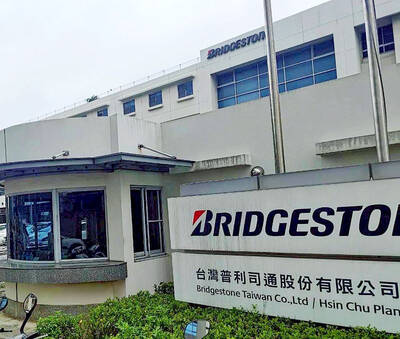
TRANSITION: With the closure, the company would reorganize its Taiwanese unit to a sales and service-focused model, Bridgestone said Bridgestone Corp yesterday announced it would cease manufacturing operations at its tire plant in Hsinchu County’s Hukou Township (湖口), affecting more than 500 workers. Bridgestone Taiwan Co (台灣普利司通) said in a statement that the decision was based on the Tokyo-based tire maker’s adjustments to its global operational strategy and long-term market development considerations. The Taiwanese unit would be reorganized as part of the closure, effective yesterday, and all related production activities would be concluded, the statement said. Under the plan, Bridgestone would continue to deepen its presence in the Taiwanese market, while transitioning to a sales and service-focused business model, it added. The Hsinchu
Taiwan Semiconductor Manufacturing Co (TSMC, 台積電) has approved a capital budget of US$31.28 billion for production expansion to meet long-term development needs during the artificial intelligence (AI) boom. The company’s board meeting yesterday approved the capital appropriation plan for purposes such as the installation of advanced technology capacity and fab construction, the world’s largest contract chipmaker said in a statement. At an earnings conference last month, TSMC forecast that its capital expenditure for this year would be at the higher end of the US$52 billion to US$56 billion range it forecast in January in response to robust demand for 5G, AI and


 RSS
RSS