


Rising oil prices and an increasing awareness of environmental issues are attracting a growing number of local electronics companies to diversify into the green energy industry, aiming to make money from the yet-to-boom market.
Memory chip vendor Mosel Vitelic Inc (茂矽) is one company that has suffered from slimming margins in the chip industry and has placed its hopes on the potential of green energy.
Unlike other companies that have diversified, Mosel is also in a struggle for survival following financial scandals involving its ex-chairman Hu Hung-chiu (胡洪九).
To give the firm a makeover, the Mosel board decided to diversify into the solar cell industry late last year in the wake of an executive reshuffle.
"We have invested approximately NT$500 million to NT$600 million in a solar cell production line, which is much lower than the tens of billions of dollars investment needed to build a new chip plant, and we will enjoy approximately a 20 percent margin in return afterwards," Jou Chung-hsun (周崇勳), a vice president of Mosel, told the Taipei Times in an interview last week.
The estimate of a 20 percent margin is very impressive, although industry watchers remain skeptical. By contrast, local contract notebook computer makers normally make all efforts to secure a 5 percent or 6 percent gross margin.
"Because of low technological and financial thresholds, companies at a crossroads will certainly want to give it a try. The risk in solar cell investment is much lower than in the semiconductor and flat-panel industries," said Arthur Hsu (胥嘉政), a solar industry analyst with the Taipei-based Topology Research Institute (拓墣產業研究所).
Local solar cell manufacturers are expected to triple their revenues to NT$60 billion this year, compared to NT$20 billion last year, with most of their products being exported to Europe and the US markets, Hsu said.
Moving out of the highly volatile DRAM industry, Mosel started producing a small volume of solar cells this month and aims to ramp up production to an annual capacity of 30 megawatts by the end of the year.
The company is considering building a second solar cell production line early next year, Jou said.
Mosel has received a thumbs up from investors as its shares have risen over 60 percent to NT$55 since the beginning of the year, outperforming the benchmark TAIEX's 13 percent gain. This is compared to a historical low of NT$1.49 for Mosel shares in May, 2003.
The same corporate strategy was recently applied by CMC Magnetics Corp (中環), the world's second largest maker of recordable compact discs, and computer printed circuit board maker Unitech Printed Circuit Board Corp (燿華).
CMC, which is striving to eke profits amid a free fall in disc prices, has invested NT$700 million in a new solar cell company, Sunwell Technology Corp (富陽光電).
The Kueishan (龜山), Taoyuan County-based Sunwell, which expected to have an annual output of 100 megawatts, is looking to start production early next year, CMC said last month after it signed an agreement to buy thin-film solar module production line equipment from Swiss-based firm Oerlikon Solar.
Sunwell began the construction of its production lines two weeks ago, while Unitech just last week set up a solar cell production line with an annual capacity of 30 megawatts. Tucheng (土城), Taipei County-based Unitech plans to invest NT$945 million in its solar cell business.
Shares of CMC have increased 40 percent to NT$16 since early this year, while Unitech closed at NT$31.80 on the Taiwan Stock Exchange last Friday, a rise of 76 percent since the start of this year.
"Stocks of solar wafer makers and cell makers are investors' favorites when the oil price spikes, and this has also helped boost the shares of solar cell start-ups," said Kevin Chung (鐘國忠), a deputy manager at Jih Sun Securities Investment Consulting Co (日盛投顧).
A recent decline in the oil price from its peak in June and intensifying competition due to growing entrants in the industry, however, would limit the upside of solar shares, he said.
"I wouldn't advise investors to buy or hold solar cell shares at the moment, especially solar cell makers such as Motech Industries Inc (茂迪) and E-Ton Solar Tech Co (益通光能), which have thinner margins than solar wafer makers," Chung said.
Motech shares closed at NT$312 last Friday, a decline of more than 23 percent since the beginning of this year. E-Ton shares have also fallen more than 30 percent to NT$387.
Topology's Hsu said that it was easy for companies to make inroads into the market, but it would be more challenging to sustain their growth due to constant supply constraints of raw materials, silicon wafers and high technological barriers when attempting to increase their solar cells' power conversion efficiency rate.
"It is very difficult to lift the conversion efficiency rate by a mere 1 percent," Hsu said.
Shenkeng (
To secure sufficient supplies of silicon wafers, Motech has signed long-term supply agreements with global suppliers, such as Swiss Wafer AG.
Hsu said the high price of silicon wafers would cast a shadow over the profitability of the nation's solar cell manufacturers in the foreseeable future.


Taiwanese firms have increased investment in the Philippines in recent years as Manila’s ties with Washington deepen and global supply chains continue to shift away from China, an expert at the Chung-Hua Institution for Economic Research (CIER, 中華經濟研究院) said yesterday. The Philippines had not been among Taiwanese investors’ top choices in Southeast Asia, CIER Taiwan ASEAN Studies Center director Kristy Hsu (徐遵慈) said at a seminar in Taipei. However, Taiwan’s investment in the country has grown significantly since the COVID-19 pandemic, reaching US $257 million last year, a high in recent years, she said. Although Taiwan’s total investment in the Philippines still lags
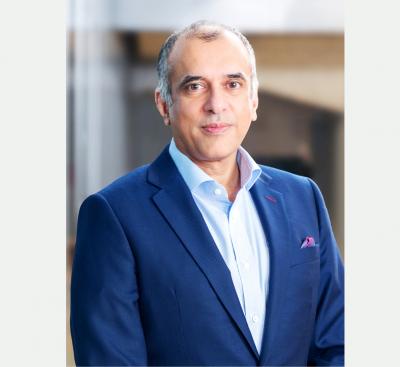
HSBC Holdings PLC is deepening its commitment to Taiwan as the economy emerges as one of the bank’s fastest-growing markets globally, driven by an artificial intelligence (AI) investment boom, expanding cross-border trade, and rising wealth creation. “The advantage that Taiwan has is a growth story linked to the semiconductor and broader AI industries, strong underlying corporate performance, and wealth creation,” said Surendra Rosha, HSBC’s co-chief executive for Asia and the Middle East, in an exclusive interview with the Taipei Times on June 2, during this year’s HSBC Taiwan Conference. That combination has helped HSBC cement its position as the most profitable international

Intel Corp regards Taiwan Semiconductor Manufacturing Co (TSMC, 台積電) as a longstanding partner, as the US chipmaker would continue outsourcing production of advanced chips to TSMC, Intel chief executive officer Lip-Bu Tan (陳立武) said yesterday. “I don’t look at people as competitors. I look at the collaboration... Nvidia is also, you know, a good friend,” Tan told a news conference following his keynote speech at the Computex trade show in Taipei. “It’s a very trusted partnership for us... We are a big, top customer for them, and we’re going to continue doing that,” he said, referring to TSMC, the world’s largest foundry
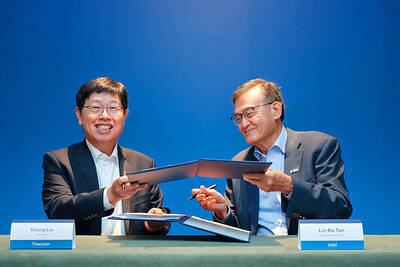
Hon Hai Precision Industry Co (鴻海精密) yesterday said it would work with US chipmaker Intel Corp to jointly develop and deploy next-generation artificial intelligence (AI) infrastructure and intelligent computing platforms in a move to capture booming demand for AI computing systems. Hon Hai, also known as Foxconn Technology Group (富士康), said in a statement that the partnership would combine its global manufacturing scale, system integration expertise and AI data center deployment capabilities with Intel’s strengths in processor architecture, silicon technologies and software ecosystem. The companies said they plan to work on equipment used in AI data centers, including server racks powered by


 RSS
RSS