


State-controlled Chang Hwa Bank (彰化銀行) incurred the highest amount of bad debts among the nation's lenders that were stricken by the recent defaulted loans crisis, according to data disclosed yesterday.
The Financial Supervisory Commission (FSC) announced on March 1 that all banks were required to publicly identify customers who have defaulted on loans exceeding NT$100 million (US$3 million) as of last June on their Web sites yesterday.
The total amount of bad debts was NT$370 billion (US$11.2 billion) defaulted by no more than 1,500 accounts shared by 42 local banks and 33 foreign lenders in Taiwan, the FSC said.
Chang Hwa posted bad debts amounting to NT$52 billion defaulted by 183 debtors as of last June, making it the bank with the worst record for bad loans.
It is followed by state-controlled Mega International Commercial Bank's (兆豐國際商銀) NT$33 billion from 103 accounts, and the state-run Bank of Taiwan's (台灣銀行) NT$32.1 billion from 98 accounts, the figures showed.
Most state-controlled lenders incurred defaulted loans exceeding NT$10 billion, including Taiwan Cooperative Bank's (
Mega International's figures were a combination of its predecessors, China International Commercial Bank (中國國際商銀) and Chiao Tung Bank (交通銀行), which merged last year.
"The disclosure was made in response to public opinion against malicious bad debtors," said Jong Huey-jen (鍾慧貞), deputy director-general of the Banking Bureau.
For companies or individuals, the disclosure by the banks showed that Chinese Automobile Co (
These debts also included bad debts of NT$7.35 billion at An Feng Steel (安鋒鋼鐵), NT$4.899 billion at Chen An Steel (振安鋼鐵) and NT$3.957 billion at Feng An Metal Co (峰安金屬). All were owned by former Kaohsiung City councilor Chu An-hsiung (朱安雄).
Ever Fortune Industrial Co (
Some of the management or people in charge of debt-ridden firms, such as Chu
and Chen, are on the run abroad.
The disclosure would spark public condemnation of these people, FSC chairman
Hu Sheng-cheng (胡勝正) said earlier yesterday.
The government will try to resort to “other measures” to bring them to
justice, Hu said without further elaborating.
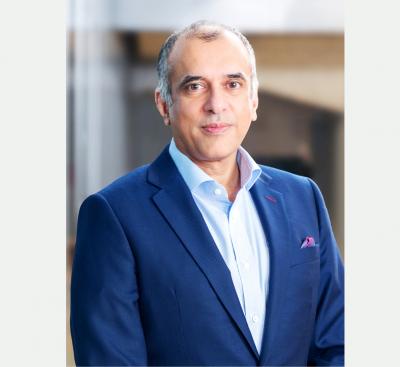
HSBC Holdings PLC is deepening its commitment to Taiwan as the economy emerges as one of the bank’s fastest-growing markets globally, driven by an artificial intelligence (AI) investment boom, expanding cross-border trade, and rising wealth creation. “The advantage that Taiwan has is a growth story linked to the semiconductor and broader AI industries, strong underlying corporate performance, and wealth creation,” said Surendra Rosha, HSBC’s co-chief executive for Asia and the Middle East, in an exclusive interview with the Taipei Times on June 2, during this year’s HSBC Taiwan Conference. That combination has helped HSBC cement its position as the most profitable international

Taiwanese firms have increased investment in the Philippines in recent years as Manila’s ties with Washington deepen and global supply chains continue to shift away from China, an expert at the Chung-Hua Institution for Economic Research (CIER, 中華經濟研究院) said yesterday. The Philippines had not been among Taiwanese investors’ top choices in Southeast Asia, CIER Taiwan ASEAN Studies Center director Kristy Hsu (徐遵慈) said at a seminar in Taipei. However, Taiwan’s investment in the country has grown significantly since the COVID-19 pandemic, reaching US $257 million last year, a high in recent years, she said. Although Taiwan’s total investment in the Philippines still lags

Intel Corp regards Taiwan Semiconductor Manufacturing Co (TSMC, 台積電) as a longstanding partner, as the US chipmaker would continue outsourcing production of advanced chips to TSMC, Intel chief executive officer Lip-Bu Tan (陳立武) said yesterday. “I don’t look at people as competitors. I look at the collaboration... Nvidia is also, you know, a good friend,” Tan told a news conference following his keynote speech at the Computex trade show in Taipei. “It’s a very trusted partnership for us... We are a big, top customer for them, and we’re going to continue doing that,” he said, referring to TSMC, the world’s largest foundry

Hon Hai Precision Industry Co (鴻海精密) yesterday said it would work with US chipmaker Intel Corp to jointly develop and deploy next-generation artificial intelligence (AI) infrastructure and intelligent computing platforms in a move to capture booming demand for AI computing systems. Hon Hai, also known as Foxconn Technology Group (富士康), said in a statement that the partnership would combine its global manufacturing scale, system integration expertise and AI data center deployment capabilities with Intel’s strengths in processor architecture, silicon technologies and software ecosystem. The companies said they plan to work on equipment used in AI data centers, including server racks powered by


 RSS
RSS