


When it comes to saxophones, most people think of the sound of jazz drifting through the streets of New Orleans, or the popular Grammy-winning artist Kenny G. But they would be surprised to know that many of the best-selling saxophone records, ranging from classics to modern, were performed using instruments made in Taiwan, home of one-third of the world's saxophones.
In Houli (
"It's a family tradition, and I'll be proud to pass it on to my children," said Chang Chun-jei (
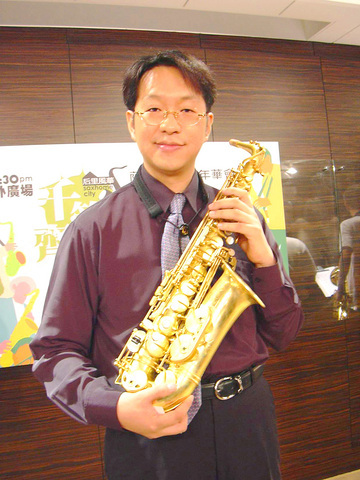
PHOTO: JESSIE HO
Relationship
The relationship between Houli and saxophones can be traced back to 1947, when a group of young music lovers, including Chang Lien-chang (
As musical instruments were luxuries at the time, Chang decided to make his own replacement saxophone.
After years of research and tests, he developed the first saxophone to be made in Taiwan. Though he lost his right eye during the process, Chang started the production of Western musical instruments in Taiwan, and now he shares his skills with people who have a passion for saxophones.
Out of the 25 musical instrument manufacturers in Taiwan, 15 are based in Houli, with annual production of about 30,000 saxophones, Chang Chun-jei said. These companies are also authorized to produce musical instruments by many global famous musical instrument companies as their original equipment manufactures (OEMs), he said.
The OEM business faced its first challenge in 1998, as at the time many of their main customers decided to switch orders to China, where the price was around half that of Taiwan, Chang said. The orders were back the next year, however, as the companies found that the quality of the Chinese instruments, like their prices, was much lower.
"Nevertheless, we still need to be alert, as our Chinese competitors will probably catch up with us within five years," Chang noted.
Challenges
Like the high-tech sector in Taiwan, the charismatic local industry is eager to transform in order to meet upcoming challenges. Making their own brand names and adding more value is one solution.
Thanks to help from the Ministry of Economic Affairs' Industrial Development Bureau and the government-funded Industrial Technology Research Institute (ITRI,
ITRI started a "Houli Saxhome Family" project to revive the industry in July last year.
Besides creating a brand for made-in-Taiwan saxophones, the institute plans to inject NT$25 million (US$750,000) into the project over three years, said Thomas Chang (
Quality control
The project aims to introduce industrialized production technology to achieve standardization and improve the key production processes. By introducing standard inspection procedures, intelligent tuning technology and timbre (pitch and volume) matching, saxophone makers can greatly improve their quality control, which can help them to decrease costs and enhance competitiveness, Chang said.
"We expect the project to create an economic value equal to over ten times the original investment amount," he said.
Promoting the project is not easy, given that the different manufacturers have different manufacturing procedures and skills, which makes it difficult to integrate technology, especially as many of the older masters are headstrong and refuse to change old traditions in the family business, Chang said.
Fortunately, the second generation of manufacturers is willing to change, especially after seeing the threat posed by China, which is now the largest saxophone exporter in the world with a market share of 50 percent, he said.
Another significant result of the project is an experimental home-made saxophone, which applied ITRI technology to improve the sound quality, and was redesigned to cater to Asian physical features -- particularly the size of hands, length of fingers and proportions.
Yen Ching-shyan (顏慶賢), a Taiwanese saxophonist who has started a saxophone course at National Taiwan University of Arts and is a leader of the project, said the quality of the preliminary finished product is approaching that of Selmer, a French brand that produces the world's top-graded professional musical instruments.
The new model of saxophone is forecast to enter mass production within the next two years, Yen said.
"Now all we need is a great marketing strategy to enable the world to listen to the sound of Taiwan," Yen said.
To demonstrate the results of this fruitful project, the saxophone manufacturers are planning to showcase their products sometime later this month.

Shares of contract chipmaker Taiwan Semiconductor Manufacturing Co (TSMC, 台積電) came under pressure yesterday after a report that Apple Inc is looking to shift some orders from the Taiwanese company to Intel Corp. TSMC shares fell NT$55, or 2.4 percent, to close at NT$2,235 on the local main board, Taiwan Stock Exchange data showed. Despite the losses, TSMC is expected to continue to benefit from sound fundamentals, as it maintains a lead over its peers in high-end process development, analysts said. “The selling was a knee-jerk reaction to an Intel-Apple report over the weekend,” Mega International Investment Services Corp (兆豐國際投顧) analyst Alex Huang
Taiwan Semiconductor Manufacturing Co (TSMC, 台積電) is expected to remain Apple Inc’s primary chip manufacturing partner despite reports that Apple could shift some orders to Intel Corp, industry experts said yesterday. The comments came after The Wall Street Journal reported on Friday that Apple and Intel had reached a preliminary agreement following more than a year of negotiations for Intel to manufacture some chips for Apple devices. Taiwan Institute of Economic Research (台灣經濟研究院) economist Arisa Liu (劉佩真) said TSMC’s advanced packaging technologies, including integrated fan-out and chip-on-wafer-on-substrate, remain critical to the performance of Apple’s A-series and M-series chips. She said Intel and Samsung
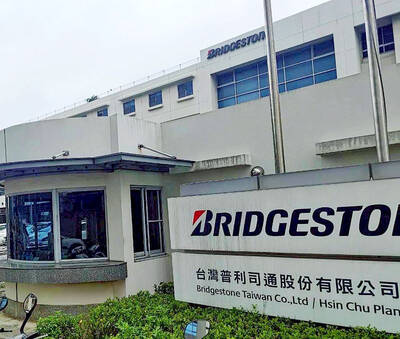
TRANSITION: With the closure, the company would reorganize its Taiwanese unit to a sales and service-focused model, Bridgestone said Bridgestone Corp yesterday announced it would cease manufacturing operations at its tire plant in Hsinchu County’s Hukou Township (湖口), affecting more than 500 workers. Bridgestone Taiwan Co (台灣普利司通) said in a statement that the decision was based on the Tokyo-based tire maker’s adjustments to its global operational strategy and long-term market development considerations. The Taiwanese unit would be reorganized as part of the closure, effective yesterday, and all related production activities would be concluded, the statement said. Under the plan, Bridgestone would continue to deepen its presence in the Taiwanese market, while transitioning to a sales and service-focused business model, it added. The Hsinchu
Taiwan Semiconductor Manufacturing Co (TSMC, 台積電) has approved a capital budget of US$31.28 billion for production expansion to meet long-term development needs during the artificial intelligence (AI) boom. The company’s board meeting yesterday approved the capital appropriation plan for purposes such as the installation of advanced technology capacity and fab construction, the world’s largest contract chipmaker said in a statement. At an earnings conference last month, TSMC forecast that its capital expenditure for this year would be at the higher end of the US$52 billion to US$56 billion range it forecast in January in response to robust demand for 5G, AI and


 RSS
RSS