


In the beginning, there was the search engine. You typed in a search term, clicked Search, and were presented with tens of thousands of links. It was good.
But not good enough. No one has time to look through tens of thousands of links. So search engines have been scrambling to provide innovations that get you information faster, more precisely, and more enjoyably than ever before. Some are succeeding, and some are just innovating, coming up with new twists on search technology that, at worst, are interesting and, at best, give you a compelling way to find exactly what you're looking for in the least amount of time. The best innovations are downright addictive.
Take Answers.com (www.answers.com), for instance. Instead of providing you with a list of links, Answers.com gives you "answers." You are given intelligent results from actual Web pages based upon your search words -- and you don't have to click any links to get the results.
Let's say you're looking for information about Ernest Hemingway. Type the search term "Ernest Hemingway" into Answers.com, click Go, and almost immediately you'll get an overview of Hemingway's life, his writings, important dates, a photograph, and biographical selections from several sources on the Internet. All of the information is presented stylishly, too, in a form that's appealing to the eye. Each section of information is annotated at the end with links for further material on the Internet. And to get this information, you've had to click no links.
Search engine newcomer Clusty (www.clusty.com), operated by Vivisimo, offers Web site previews when you click on a magnifying glass image under each returned link. Clusty believes that it can dramatically improve search by doing the work of organizing, or clustering, search results for you.
In Clusty, a search for French philosopher and author Albert Camus, for instance, results in your usual list of links.
But alongside those links, a "cluster panel" appears with topics such as "existentialism," "quotes," "bibliography," and "myth of Sisyphus." You can cluster any search term by topic, source, or URL (Web address).
With the amount of innovation occurring in the search engine field these days, you'd never know that the dot-com boom supposedly came to an end just after 2000. And the best news for Internet users everywhere is that while Google and Yahoo are still far and away the most popular search engines, smaller newcomers are providing head-turning functionality that's sure to keep the leaders looking over their shoulders.

Taichung reported the steepest fall in completed home prices among the six special municipalities in the first quarter of this year, data compiled by Taiwan Realty Co (台灣房屋) showed yesterday. From January through last month, the average transaction price for completed homes in Taichung fell 8 percent from a year earlier to NT$299,000 (US$9,483) per ping (3.3m²), said Taiwan Realty, which compiled the data based on the government’s price registration platform. The decline could be attributed to many home buyers choosing relatively affordable used homes to live in themselves, instead of newly built homes in the city’s prime property market, Taiwan Realty
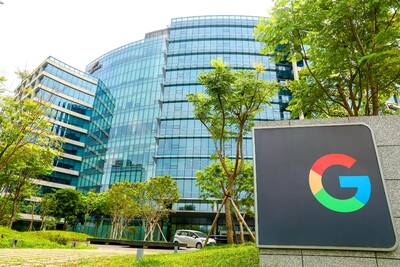
The government yesterday approved applications by Alphabet Inc’s Google to invest NT$27.08 billion (US$859.98 million) in Taiwan, the Ministry of Economic Affairs said in a statement. The Department of Investment Review approved two investments proposed by Google, with much of the funds to be used for data processing and electronic information supply services, as well as inventory procurement businesses in the semiconductor field, the ministry said. It marks the second consecutive year that Google has applied to increase its investment in Taiwan. Google plans to infuse NT$25.34 billion into Charter Investments Ltd (特許投資顧問) through its Singapore-based subsidiary Fructan Holdings Singapore Pte Ltd, and

Micron Technology Inc is a driving force pushing the US Congress to pass legislation that would put new export restrictions on equipment its Chinese competitors use to make their chips, according to people familiar with the matter. A US House of Representatives panel yesterday was to vote on the “MATCH Act,” a bill designed to close gaps in restrictions on chipmaking equipment. It would also pressure foreign companies that sell equipment to Chinese chipmaking facilities to align with export curbs on US companies like Lam Research Corp and Applied Materials Inc. The bill targets facilities operated by China’s ChangXin Memory Technologies Inc

Singapore-based ride-hailing and delivery giant Grab Holdings’ planned acquisition of Foodpanda’s Taiwan operations has yet to enter the formal review stage, as regulators await supplementary documents, the Fair Trade Commission (FTC) said yesterday. Acting FTC Chairman Chen Chih-min (陳志民) told the legislature’s Economics Committee that although Grab submitted its application on March 27, the case has not been officially accepted because required materials remain incomplete. Once the filing is finalized, the FTC would launch a formal probe into the deal, focusing on issues such as cross-shareholding and potential restrictions on market competition, Chen told lawmakers. Grab last month announced that it would acquire


 RSS
RSS