


At the opening of a press conference at the Taiwan Stock Exchange Corp (TSE) on the afternoon of Sept. 2, David Lu (
When Lu, 38, founder and former chairman of the scandal-ridden Infodisc Technology Co (
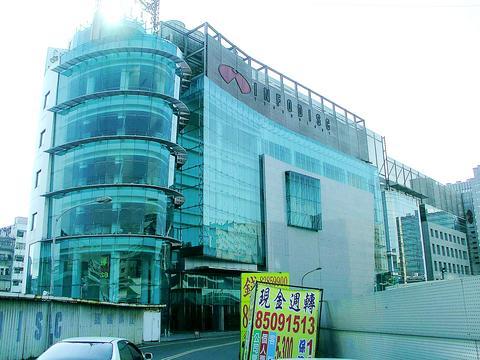
TAIPEI TIMES FILE PHOTO
He denied any wrongdoing but admitted a decision to invest in Mediacopy Texas Inc in the US had been a mistake. The company was forced to write off NT$4.28 billion (US$127 million) in losses this year related to the investment.

TAIPEI TIMES FILE PHOTO
From January to June, Infodisc reported a pretax loss of NT$4.31 billion, or net negative earnings per share (EPS) of NT$6.93, on revenues of NT$865 million. Last year, the pre-recorded DVD maker reported pretax profits of NT$193 million on revenues of NT$2.82 billion.
"I will take full responsibility for making the decision [to invest in Mediacopy] and resign as chairman," he said at the time.
Lu had actually resigned from his post a day earlier, after submitting the company's six-month financial report to the TSE.
Infodisc acquired Mediacopy in 2001 for US$100 million via a holding company, Infodisc Global Holdings Inc. The purchase was intended to help the company land pre-recorded digital versatile disc (DVD) orders from Hollywood studios, mainly Metro-Goldwyn-Mayer Inc.
Over the last four years, however, Infodisc has seen no earnings from Mediacopy, and has instead written off nearly NT$9 billion in losses related to the El Paso, Texas-based firm.
In the face of the losses, Lu vowed to reorganize Infodisc, implement job cuts at Mediacopy and consolidate overseas subsidiaries. Investor confidence began to weaken, however, amid these problems. Lu's failure to present solid proof to the Taiwan Stock Exchange of a US$77.75 million (NT$2.62 billion) investment in the Gold Target Fund, registered in the Cayman Islands, has further eroded investor trust.
More criticism and doubt came over Lu's failure to explain what happened to US$110 million the company raised in June 2002 from selling bonds convertible into its own shares.
Amid speculation about possible embezzlement and concerns over alleged insider trading, Lu defended himself at another press conference on Sept. 6, saying he was innocent. He also outlined plans to close offices in South Korea and Germany, and sell company properties valued at NT$3.5 billion to cover losses.
But Lu is also no stranger to allegations of securities fraud.
Great heights, spectacular fall
Smart and fluent in English, Lu's beginnings were not humble, but he is a self-made man.
Born in 1966, Lu is the son of Lu Tien-shih (
In those days, Tailung Steel dominated the local steel market and the Lu family was a well-known political powerhouse in Chungho, Taipei Country.
But Lu, after receiving business and public administration diplomas from the University of Southern California in 1986, refused to succeed to his father's wealth and steel kingdom.
Instead, targeting the market potential of CDs, which were well positioned to become a mainstream product, Lu established Infodisc with NT$250,000 in 1995.
Although Lu's academic background was not directly related to the high-tech industry, his daring and sophisticated social network helped him to secure huge orders from big-name customers.
In 1998, Infodisc obtained authorization from Warner Advanced Multimedia Operations to produce pre-recorded DVDs for Warner Brothers Records. The deal kick-started the boom in the nation's pre-recorded DVD business.
Infodisc's annual capacity rose to 15 million units, the highest in the industry.
The accomplishment made Lu one of Taiwan's most famous business tycoons. In June 2000 Infodisc's shares shot up to NT$512, just four months after debuting at NT$60 on the Gretai Securities Market in February of that year.
Crowned king of the market, Lu, at the age of 35, was selected as the youngest millionaire in the high-tech industry by the Chinese-language Business Weekly in 2001.
The luster soon faded. Infodisc's shares tumbled dramatically. Drastic fluctuations followed, and the volatility prompted suspicions of stock manipulation.
In 2001, Lu was indicted by the Panchiao District Prosecutors Office on allegations of insider trading. He was indicted for selling 7 million Infodisc shares before the company announced a downward revision to a financial forecast in 2000. The sale netted him about NT$1.2 billion.
In March last year, the Taiwan High Court found Lu guilty of the charges and sentenced him to one year and six months in jail, or a fine of NT$2.5 million, for insider trading. Lu has since filed an appeal.
In April last year, Lu was again indicted by prosecutors for insider trading, for which he allegedly raked in another NT$1.5 billion.
Prosecutors also claimed his wife and several close relatives had sold shares before the company announced a lowered financial forecast. Lu is now restricted from leaving the country and is under investigation.
The stock exchange, meanwhile, on Sept. 8 halted margin trading of Infodisc shares. Over the past two weeks the shares have plunged by the daily 7 percent down-limit. Shares were trading at NT$1.97 on the TSE on Friday.
Lu bristles at Infodisc being likened to Procomp Infomatics Ltd (
"We are not another Procomp," Lu said harshly to a packed room of reporters at the TSE on Sept. 6.
"All our operations are normal and the net value of our shares are still as high as NT$15 per share," he said.
The meeting had been required by regulators to clear doubts over the US$77.75 million investment in the Cayman Island registered fund. Lu told reporters that documents related to the investment had been filed with regulators, but regulators did not agree, and therefore halted margin trading of the share.
While Lu was chastizing the TSE and rejecting comparisons with Procomp, investigators were meanwhile searching his house and the company's headquarters for evidence -- much as they had done with Procomp's chairwoman Sophia Yeh (葉素菲) in late June.
Lu is facing yet another crisis. His 23 creditor banks may tighten lending after Infodisc bounced two checks totaling NT$28.5 million issued to Entie Commercial Bank (
Too much ambition
Speaking on Sept. 6, Lu said that his ambition should be blamed for the company's problems. He was referring to a decision to expand into the US, Germany, Japan and South Korea over a short period, and a failure to see that the market was becoming flooded with cheap Chinese competitors. Chinese makers have staged brutal price wars, eroding the huge profits of Taiwanese companies.
"My high self-esteem and arrogance were behind the biggest mistake of my life," Lu said.
The market for optical storage media products such as recordable compact discs (CD-Rs) and recordable DVDs (DVD-Rs) is very competitive and highly cyclical. Prices of DVD-Rs, which generate higher gross margins than CD-Rs, face pressure as manufacturers are continuing to expand capacity.
Similarly, Lu made another mistake by acquiring Mediacopy on the presumption that the US firm would help secure orders from Metro-Goldwyn-Mayer. The dream vanished after MGM decided not to extend its cooperation with Mediacopy earlier this year.
Infodisc invested heavily to stop the bleeding at Mediacopy, using the proceeds from selling convertible bonds to invest NT$6.7 billion in the company during the 2002-2003 period. Despite this, the subsidiary's market value was less than NT$350 million, according to a company filing to the TSE on Sept. 6.
When Infodisc was at its peak, Lu said the best thing he'd ever done was to make his company a success without a penny from his father.
Now, however, it seems he will need to draw on greater wisdom and courage to regain this success.

Singapore-based ride-hailing and delivery giant Grab Holdings Ltd has applied for regulatory approval to acquire the Taiwan operations of Germany-based Delivery Hero SE's Foodpanda in a deal valued at about US$600 million. Grab submitted the filing to the Fair Trade Commission on Friday last week, with the transaction subject to regulatory review and approval, the company said in a statement yesterday. Its independent governance structure would help foster a healthy and competitive market in Taiwan if the deal is approved, Grab said. Grab, which is listed on the NASDAQ, said in the filing that US-based Uber Technologies Inc holds about 13 percent of

The domestic unit of the Chinese-owned, Dutch-headquartered chipmaker Nexperia BV will soon be able to produce semiconductors locally within China, according to two company sources. Nexperia is at the center of a global tug-of-war over critical semiconductor technology, with a Dutch court in February ordering a probe into alleged mismanagement at the company. The geopolitical tussle has disrupted supply chains, with some carmakers reportedly forced to cut production due to chip shortages. Local production would allow Nexperia’s domestic arm, Nexperia Semiconductors (China) Ltd (安世半導體中國), to bypass restrictions in place since October on the supply of silicon wafers — etched with tiny components to

Taiwan Semiconductor Manufacturing Co (TSMC, 台積電) yesterday received government approval to deploy its advanced 3-nanometer (3nm) process at its second fab currently under construction in Japan, the Ministry of Economic Affairs said in a news release. The ministry green-lit the plan for the facility in Kumamoto, which is scheduled to start installing equipment and come online in 2028 with a monthly production capacity of 15,000 12-inch wafers, the ministry said. The Department of Investment Review in June 2024 authorized a US$5.26 billion investment for the facility, slated to manufacture 6- to 12nm chips, significantly less advanced than 3nm process. At a meeting with

Taiwan’s food delivery market could undergo a major shift if Singapore-based Grab Holdings Ltd completes its planned acquisition of Delivery Hero SE’s Foodpanda business in Taiwan, industry experts said. Grab on Monday last week announced it would acquire Foodpanda’s Taiwan operations for US$600 million. The deal is expected to be finalized in the second half of this year, with Grab aiming to complete user migration to its platform by the first half of next year. A duopoly between Uber Eats and Foodpanda dominates Taiwan’s delivery market, a structure that has remained intact since the Fair Trade Commission (FTC) blocked Uber Technologies Inc’s


 RSS
RSS