


The government should further deregulate China-bound investment activities and allow local businesses to make more use of the cheap labor and resources in China, a leading industrialist said yesterday.
"The government always says it wants to boost the economy, but in fact, that is the business of businesspeople like me," said Hsu Wen-long (許文龍), chairman of the nation's second-largest manufacturer of flat panels, Chi Mei Optoelectronics Corp (奇美電子).
"What the government can do is to lift the bans restricting certain investments and give companies as much freedom as possible to expand their business," Hsu said.
Hsu, a national policy adviser to President Chen Shui-bian (陳水扁), made the remarks in a speech to a gathering held by the Taiwan Economy and Industry Association (台灣產經建研社), a Democratic Progressive Party think tank.
The 76-year-old tycoon said the government should not be afraid of industry migrating across the Taiwan Strait.
The government has tended to restrain businesspeople from investing in China out of concern that such migration might hollow out Taiwan's industries and slash its competitiveness. Businesses that plan to invest NT$1.7 billion (US$51.6 million) or more in China are required to register with the Ministry of Economic Affairs.
The ministry's Investment Commission approved 10,105 China-bound investment projects worth US$7.7 billion last year. It greenlighted 554 applications worth US$1.29 billion in the first three months of this year, a 16 percent increase from the same period last year.
Hsu's call for loosening restrictions on China-bound investment could be a hint that his Tainan-based conglomerate is seeking to expand some of its business in China.
Chi Mei has previously said that it was looking for a location in China to set up an assembly plant.
Chi Mei's rivals, including South Korea's Samsung Electronics Co, AU Optronics Corp (友達光電) and Chunghwa Picture Tubes Ltd (中華映管) have already done so.
Angus Liang (梁志豪), an anal-yst with Capital Securities Corp (群益證券) said in terms of cost considerations, Chi Mei has to jump on the China bandwagon.
"Although Chi Mei is doing good business now, it can save more by moving its downstream operations to China," Liang said. "I think that if it were not for political considerations, Hsu would have taken action already."
Hsu yesterday also urged the government to help cultivate more talent for the thin-fil transistor liquid-crystal display (TFT-LCD) sector, which he said is an exceptionally important industry to the nation.
Despite the huge business potential for flat-panel displays, Hsu said he wasn't interested in creating his own brand of LCD TVs.
"Our advantage is in manufacturing quality products for internationally renowned brand names such as Sony," Hsu said. "This is the core business that we will still focus on."
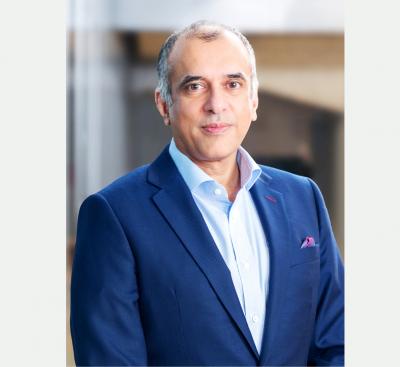
HSBC Holdings PLC is deepening its commitment to Taiwan as the economy emerges as one of the bank’s fastest-growing markets globally, driven by an artificial intelligence (AI) investment boom, expanding cross-border trade, and rising wealth creation. “The advantage that Taiwan has is a growth story linked to the semiconductor and broader AI industries, strong underlying corporate performance, and wealth creation,” said Surendra Rosha, HSBC’s co-chief executive for Asia and the Middle East, in an exclusive interview with the Taipei Times on June 2, during this year’s HSBC Taiwan Conference. That combination has helped HSBC cement its position as the most profitable international

Taiwanese firms have increased investment in the Philippines in recent years as Manila’s ties with Washington deepen and global supply chains continue to shift away from China, an expert at the Chung-Hua Institution for Economic Research (CIER, 中華經濟研究院) said yesterday. The Philippines had not been among Taiwanese investors’ top choices in Southeast Asia, CIER Taiwan ASEAN Studies Center director Kristy Hsu (徐遵慈) said at a seminar in Taipei. However, Taiwan’s investment in the country has grown significantly since the COVID-19 pandemic, reaching US $257 million last year, a high in recent years, she said. Although Taiwan’s total investment in the Philippines still lags

Intel Corp regards Taiwan Semiconductor Manufacturing Co (TSMC, 台積電) as a longstanding partner, as the US chipmaker would continue outsourcing production of advanced chips to TSMC, Intel chief executive officer Lip-Bu Tan (陳立武) said yesterday. “I don’t look at people as competitors. I look at the collaboration... Nvidia is also, you know, a good friend,” Tan told a news conference following his keynote speech at the Computex trade show in Taipei. “It’s a very trusted partnership for us... We are a big, top customer for them, and we’re going to continue doing that,” he said, referring to TSMC, the world’s largest foundry
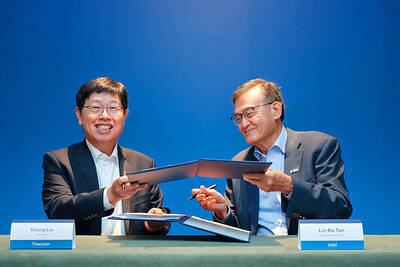
Hon Hai Precision Industry Co (鴻海精密) yesterday said it would work with US chipmaker Intel Corp to jointly develop and deploy next-generation artificial intelligence (AI) infrastructure and intelligent computing platforms in a move to capture booming demand for AI computing systems. Hon Hai, also known as Foxconn Technology Group (富士康), said in a statement that the partnership would combine its global manufacturing scale, system integration expertise and AI data center deployment capabilities with Intel’s strengths in processor architecture, silicon technologies and software ecosystem. The companies said they plan to work on equipment used in AI data centers, including server racks powered by


 RSS
RSS