


As its economy grows rapidly, China should pay more attention to its internal copyright infringements and abolish unfair trade policies that undermine the ability of other developing countries to attract investment, analysts said yesterday.
"Even though the economies of some Chinese cities are highly developed, many of its trade policies are still in line with those of developing countries, creating unfair competition with other developing countries," Chen Po-chih (陳博志), chairman of Taiwan Thinktank (台灣智庫), said yesterday at a seminar organized by the Taiwan Institute of Economic Research (TIER, 台經院).
Chen said he saw nothing wrong with Taiwanese manufacturing investments in China but that high import tariffs in China added unnecessary costs for some Taiwanese multinationals, which tried to contribute to their home country by importing equipment and raw materials to their China-based production lines.
For example, Formosa Petrochemical Corp (
Chen, an economic adviser to the Presidential Office and former chairman of the Council for Economic Planning and Development, urged countries that suffer as a result of China's economic policies to join forces and pressure Beijing to end its unfair trade practices.
Richard Koo (
"The whole world has to get together and think about what to do with China," Koo said at the seminar. Koo is also an economic adviser to the Japanese Cabinet.
Although China's entrance into world markets creates greater global competition, the country is a smart trade player whose markets are "too big to fail" should the rest of the world economy falter, Koo said.
As well as keeping high trade barriers, China maintains an under-valued yuan, Chen said. Beijing should allow the yuan to appreciate, which would also cause most Asian currencies to appreciate, creating a level playing field for Asian exporters, Chen said in his speech on the impact of globalization.
Chen also criticized the US for asking China to unpeg its currency from the greenback. Floating the yuan may not result in its appreciation, he said.
In a speech entitled "The world economy's fight against balance-sheet recession," Koo said Japan's decade-long economic recession was a result of the collapse of asset prices, which forced Japanese companies to move away from profit maximization to debt minimization.
As a solution, Japan embarked on numerous public construction projects instead of concentrating on monetary policies to stimulate its economy, Koo said, adding that Japan's money supply in the past 10 years was mostly the result of government borrowing.
Therefore Taiwan may experience a similar recession triggered by the collapse of asset prices, Koo said, adding that he supported the government's recent policy initiatives to launch major infrastructure projects.
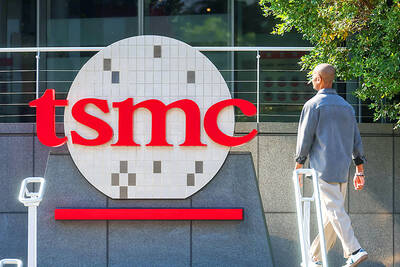
Shares of contract chipmaker Taiwan Semiconductor Manufacturing Co (TSMC, 台積電) came under pressure yesterday after a report that Apple Inc is looking to shift some orders from the Taiwanese company to Intel Corp. TSMC shares fell NT$55, or 2.4 percent, to close at NT$2,235 on the local main board, Taiwan Stock Exchange data showed. Despite the losses, TSMC is expected to continue to benefit from sound fundamentals, as it maintains a lead over its peers in high-end process development, analysts said. “The selling was a knee-jerk reaction to an Intel-Apple report over the weekend,” Mega International Investment Services Corp (兆豐國際投顧) analyst Alex Huang
Taiwan Semiconductor Manufacturing Co (TSMC, 台積電) is expected to remain Apple Inc’s primary chip manufacturing partner despite reports that Apple could shift some orders to Intel Corp, industry experts said yesterday. The comments came after The Wall Street Journal reported on Friday that Apple and Intel had reached a preliminary agreement following more than a year of negotiations for Intel to manufacture some chips for Apple devices. Taiwan Institute of Economic Research (台灣經濟研究院) economist Arisa Liu (劉佩真) said TSMC’s advanced packaging technologies, including integrated fan-out and chip-on-wafer-on-substrate, remain critical to the performance of Apple’s A-series and M-series chips. She said Intel and Samsung
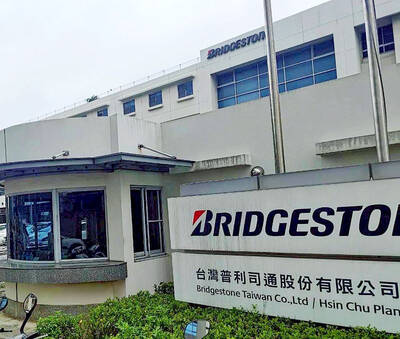
TRANSITION: With the closure, the company would reorganize its Taiwanese unit to a sales and service-focused model, Bridgestone said Bridgestone Corp yesterday announced it would cease manufacturing operations at its tire plant in Hsinchu County’s Hukou Township (湖口), affecting more than 500 workers. Bridgestone Taiwan Co (台灣普利司通) said in a statement that the decision was based on the Tokyo-based tire maker’s adjustments to its global operational strategy and long-term market development considerations. The Taiwanese unit would be reorganized as part of the closure, effective yesterday, and all related production activities would be concluded, the statement said. Under the plan, Bridgestone would continue to deepen its presence in the Taiwanese market, while transitioning to a sales and service-focused business model, it added. The Hsinchu
Taiwan Semiconductor Manufacturing Co (TSMC, 台積電) has approved a capital budget of US$31.28 billion for production expansion to meet long-term development needs during the artificial intelligence (AI) boom. The company’s board meeting yesterday approved the capital appropriation plan for purposes such as the installation of advanced technology capacity and fab construction, the world’s largest contract chipmaker said in a statement. At an earnings conference last month, TSMC forecast that its capital expenditure for this year would be at the higher end of the US$52 billion to US$56 billion range it forecast in January in response to robust demand for 5G, AI and


 RSS
RSS