


Thailand will bar protests during an Asia-Pacific summit attended by US President George W. Bush and other world leaders later this month, the country's prime minister said yesterday.
"I would like to ask all NGOs (non-governmental organizations) not to hold demonstrations during the APEC meeting," Prime Minister Thaksin Shinawatra said on his weekly radio program.
Thailand will host the 21-member Asia-Pacific Economic Cooperation (APEC) summit on Oct. 20 Oct. 21. Thaksin said the ban on protests by local and foreign groups was for security reasons.
"I would like to urge all Thais not to cooperate or join any foreign demonstrations during the summit," he said.
Falun gong
Thai officials said on Friday members of the Falun Gong spiritual movement, banned in China, were in the country and would be ordered to leave.
Falun Gong members staged protests during last year's APEC meeting in Mexico.
"Two to three key members of the Falun Gong religious cult have entered Thailand to protest against China," Interior Minister Wan Muhamad Nor Matha told reporters.
"We name this group as a warning to other groups not to indulge in behavior which may be detrimental to Thailand," he said.
Security concerns
Thailand is mounting its biggest security operation during the summit, with thousands of soldiers and police assigned to summit venues, the airport, and hotels.
There have been persistent suggestions that Thai security is not up to the job of keeping the leaders safe, but Thaksin has declared the country ready for any threat.
Just this week, a Thai newspaper quoted an unidentified police source as saying the hunt was on for six surface-to-air missiles believed to have been smuggled in from Cambodia.
Thaksin said the rumor had turned out to be just that.
Thailand is surrounded by formerly-war-torn countries and is believed to be a transit point for arms smuggling to rebels in various Asian nations, including Indonesia and Sri Lanka.
In August, a joint CIA-Thai operation north of Bangkok led to the capture of Hambali, believed to be the operations chief of the Southeast Asian militant network Jemaah Islamiah and al Qaeda's main man in the region.


Taiwanese firms have increased investment in the Philippines in recent years as Manila’s ties with Washington deepen and global supply chains continue to shift away from China, an expert at the Chung-Hua Institution for Economic Research (CIER, 中華經濟研究院) said yesterday. The Philippines had not been among Taiwanese investors’ top choices in Southeast Asia, CIER Taiwan ASEAN Studies Center director Kristy Hsu (徐遵慈) said at a seminar in Taipei. However, Taiwan’s investment in the country has grown significantly since the COVID-19 pandemic, reaching US $257 million last year, a high in recent years, she said. Although Taiwan’s total investment in the Philippines still lags
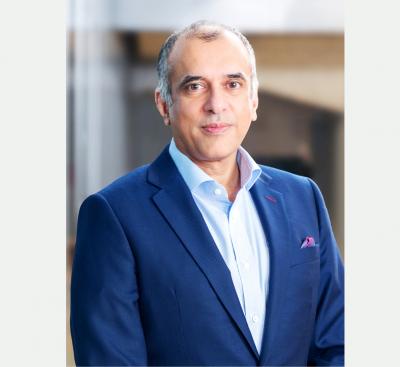
HSBC Holdings PLC is deepening its commitment to Taiwan as the economy emerges as one of the bank’s fastest-growing markets globally, driven by an artificial intelligence (AI) investment boom, expanding cross-border trade, and rising wealth creation. “The advantage that Taiwan has is a growth story linked to the semiconductor and broader AI industries, strong underlying corporate performance, and wealth creation,” said Surendra Rosha, HSBC’s co-chief executive for Asia and the Middle East, in an exclusive interview with the Taipei Times on June 2, during this year’s HSBC Taiwan Conference. That combination has helped HSBC cement its position as the most profitable international

Intel Corp regards Taiwan Semiconductor Manufacturing Co (TSMC, 台積電) as a longstanding partner, as the US chipmaker would continue outsourcing production of advanced chips to TSMC, Intel chief executive officer Lip-Bu Tan (陳立武) said yesterday. “I don’t look at people as competitors. I look at the collaboration... Nvidia is also, you know, a good friend,” Tan told a news conference following his keynote speech at the Computex trade show in Taipei. “It’s a very trusted partnership for us... We are a big, top customer for them, and we’re going to continue doing that,” he said, referring to TSMC, the world’s largest foundry
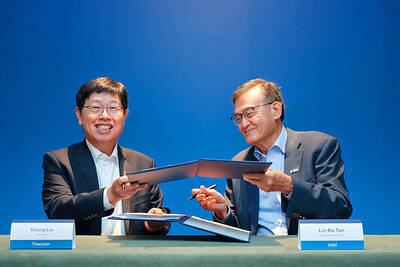
Hon Hai Precision Industry Co (鴻海精密) yesterday said it would work with US chipmaker Intel Corp to jointly develop and deploy next-generation artificial intelligence (AI) infrastructure and intelligent computing platforms in a move to capture booming demand for AI computing systems. Hon Hai, also known as Foxconn Technology Group (富士康), said in a statement that the partnership would combine its global manufacturing scale, system integration expertise and AI data center deployment capabilities with Intel’s strengths in processor architecture, silicon technologies and software ecosystem. The companies said they plan to work on equipment used in AI data centers, including server racks powered by


 RSS
RSS