


A group of professors and research assistants from the Massachusetts Institute of Technology (MIT) in the US shared the latest artificial-intelligence technology with researchers from Taiwan last week.
The four-day Oxygen Alliance workshop held at Acer Inc's Aspire Park in Taoyuan County -- the first time the research group has met outside the US -- ended on Friday.
Thirty-two participants took part in the workshops, learning about at least three new speech and face recognition technologies.
Launched in June 2000, the Oxygen Alliance is a US$50 million five-year project that intends to increase computer use and make their operation more human, creating technologies to replace desktop computers and keyboards with smaller, portable electronic devices. The group is also developing voice-controlled devices that can be hidden inside the walls of buildings and structures, making computers ultimately invisible to the majority of users.
MIT delegates at the workshop shared Galaxy, SpeechBuilder, and a face and speech recognition technology with participants, teaching them how to install and make enhancements to the technologies so that they can create their own branded products. Galaxy allows technicians to integrate speech technologies into devices to create conversational language systems. SpeechBuilder is a means to allow engineers unfamiliar with speech and language processing to create their own speech-based applications.
Security applications
MIT's face and speech-recognition technology allows a face snapshot to be taken and sent to a face-detection and face-recognition server wirelessly. Participants also learned about other technologies for use in digital personal organizers and tablet PCs.
A total of 250 researchers are involved in the Oxygen Alliance, which includes two MIT laboratories, Taiwan's Acer Group and Delta Electronics Inc (
"Acer has long cooperated with world class companies to conduct research into technologies designed to fit people's most natural and practical needs, and to drive innovation in a knowledge-based economy," said a statement from the company issued during the workshop last week.
Two examples of how Acer is developing artificially intelligent technologies were given in the statement. iRobot Corp, a joint venture between Acer and MIT, launched the automatic vacuum cleaner "Roomba" last September. The pizza-sized device uses intelligent navigation technology to clean hardwood, carpet or tiled floors without the need for human direction.
SensAble Technologies, also an Acer-MIT joint venture, made the first transatlantic handshake over the Internet in October 2002, using a computer and small robotic arm in the US and the UK.
Acer launched the Acer Value Lab in October last year as part of the Oxygen Alliance project. The primary objective of Acer Value Lab "is not only to create new technologies, but also to find practical ways to implement them to the best benefit of users," Acer's written statement said.
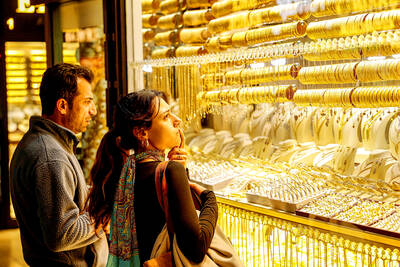
In Italy’s storied gold-making hubs, jewelers are reworking their designs to trim gold content as they race to blunt the effect of record prices and appeal to shoppers watching their budgets. Gold prices hit a record high on Thursday, surging near US$5,600 an ounce, more than double a year ago as geopolitical concerns and jitters over trade pushed investors toward the safe-haven asset. The rally is putting undue pressure on small artisans as they face mounting demands from customers, including international brands, to produce cheaper items, from signature pieces to wedding rings, according to interviews with four independent jewelers in Italy’s main

Japanese Prime Minister Sanae Takaichi has talked up the benefits of a weaker yen in a campaign speech, adopting a tone at odds with her finance ministry, which has refused to rule out any options to counter excessive foreign exchange volatility. Takaichi later softened her stance, saying she did not have a preference for the yen’s direction. “People say the weak yen is bad right now, but for export industries, it’s a major opportunity,” Takaichi said on Saturday at a rally for Liberal Democratic Party candidate Daishiro Yamagiwa in Kanagawa Prefecture ahead of a snap election on Sunday. “Whether it’s selling food or
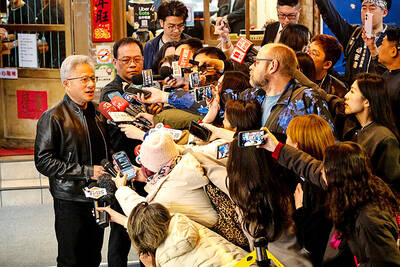
CONCERNS: Tech companies investing in AI businesses that purchase their products have raised questions among investors that they are artificially propping up demand Nvidia Corp chief executive officer Jensen Huang (黃仁勳) on Saturday said that the company would be participating in OpenAI’s latest funding round, describing it as potentially “the largest investment we’ve ever made.” “We will invest a great deal of money,” Huang told reporters while visiting Taipei. “I believe in OpenAI. The work that they do is incredible. They’re one of the most consequential companies of our time.” Huang did not say exactly how much Nvidia might contribute, but described the investment as “huge.” “Let Sam announce how much he’s going to raise — it’s for him to decide,” Huang said, referring to OpenAI
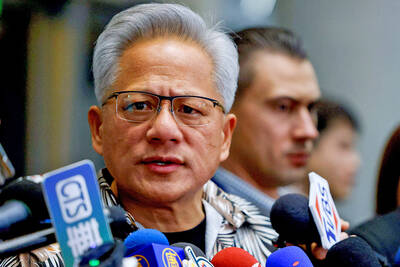
Nvidia Corp’s negotiations to invest as much as US$100 billion in OpenAI have broken down, the Wall Street Journal (WSJ) reported, exposing a potential rift between two of the most powerful companies in the artificial intelligence (AI) industry. The discussions stalled after some inside Nvidia expressed concerns about the transaction, the WSJ reported, citing unidentified people familiar with the deliberations. OpenAI makes the popular chatbot ChatGPT, while Nvidia dominates the market for AI processors that help develop such software. The companies announced the agreement in September last year, saying at the time that they had signed a letter of intent for a strategic


 RSS
RSS