


Nokia Oyj, whose sales slid for the first time in a decade last year, plans to boost revenue this year at Nintendo Co's expense. It's a battle Nokia, the No. 1 mobile-phone maker, may lose, analysts said.
The Finnish company said in November it will start selling a hand-held game player that doubles as a phone this year. It was scheduled to give details about the gadget, called the N-Gage, in London yesterday.
Nokia, which controls more than a third of the mobile-phone market, is expanding into games as demand for mobile phones and wireless networks sputters. It may find its image as a game company isn't strong enough to take on Nintendo, whose Game Boy dominates the portable player market, analysts said.
"Nokia may not succeed in breaking into the game market," said Jussi Uskola, an analyst at Nordea Securities, who rates the stock:"buy."
"It doesn't have a strong brand in the game business," Uskola said.
Nokia's sales have slowed since 2000 as mobile-phone markets in Europe and the US became saturated and debt-laden phone companies pared spending, delaying new services that were expected to spark demand. Nokia last month said its first-quarter sales and profit may decline from the year-earlier period.
Nokia's challenge is to steal market share from Nintendo, which has been in the games business since 1989. The Kyoto, Japan-based company has sold more than 110 million units worldwide since it introduced the Game Boy in 1989.
To make it even more difficult for Nokia, Nintendo said last month it will bring out a new version of its player with a brighter screen to maintain its dominance.
Nintendo is the world's No. 2 maker of video consoles, sand-wiched between market leader Sony Corp and Microsoft Corp.
Nintendo's new player, Game Boy Advance SP, will debut in the US, Europe and Australia in March. The maker of "Pokemon" and "Super Mario" games plans to sell 2 million players in the first month. Nokia declined to say when its device will go on sale or what expectations the company has for it, spokeswoman Miia Puoskari said.
Mobile-phone games aren't a new phenomenon. Many cellular phones already come with games and companies also provide downloadable games for handsets. These aren't as sophisticated as the games that run on dedicated players such as the Game Boy.
Nokia's N-Gage is the first gadget that combines advanced games with a phone.
As Nokia tries to lure customers from two user groups -- gamers and mobile-phone users -- it may fail to appeal to either, according to analysts at market researcher Strategy Analytics.
The N-Gage's screen may be too small for gamers used to Nintendo's player. Yet the gadget looks "less aesthetic" than most mobile phones and thus may not attract buyers, Strategy Analytics analyst Nites Patel wrote in a research note last month.
Furthermore, N-Gage weighs nearly twice what Nokia's 6100 model does.
Another problem may be the gadget's price. Analysts expect it to cost more than three times as much as Nintendo's new player, which will sell for about US$100. Nokia has yet to reveal the price for the N-Gage.
"The price may be too high" given that the device's target group is teenagers, said Erkki Vesola, an analyst at Mandatum Stockbrokers.
"It's fighting for the very same group of customers with Nin-tendo," Vesola said.
Nokia's previous expansion out-side traditional handsets isn't encouraging. N-Gage resembles the 5510, which flopped. That model was also designed for two-handed text messaging and gaming.
"The 5510 was doomed to fail from the beginning," Nordea's Uskola said. "A phone is first and foremost for communication."
Rivals' expansions to the industry haven't enjoyed much better success. Sales of Microsoft's Xbox game console trailed ana-lysts' forecasts in November, according to research firm NPD Group Inc, even after the company included free games and a controller.

Taiwanese firms have increased investment in the Philippines in recent years as Manila’s ties with Washington deepen and global supply chains continue to shift away from China, an expert at the Chung-Hua Institution for Economic Research (CIER, 中華經濟研究院) said yesterday. The Philippines had not been among Taiwanese investors’ top choices in Southeast Asia, CIER Taiwan ASEAN Studies Center director Kristy Hsu (徐遵慈) said at a seminar in Taipei. However, Taiwan’s investment in the country has grown significantly since the COVID-19 pandemic, reaching US $257 million last year, a high in recent years, she said. Although Taiwan’s total investment in the Philippines still lags
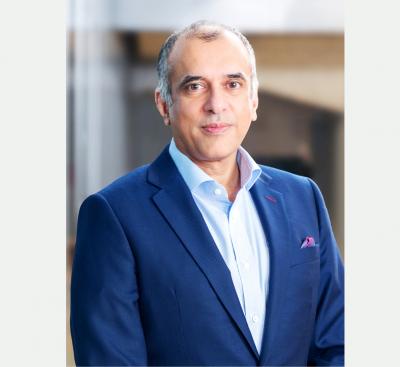
HSBC Holdings PLC is deepening its commitment to Taiwan as the economy emerges as one of the bank’s fastest-growing markets globally, driven by an artificial intelligence (AI) investment boom, expanding cross-border trade, and rising wealth creation. “The advantage that Taiwan has is a growth story linked to the semiconductor and broader AI industries, strong underlying corporate performance, and wealth creation,” said Surendra Rosha, HSBC’s co-chief executive for Asia and the Middle East, in an exclusive interview with the Taipei Times on June 2, during this year’s HSBC Taiwan Conference. That combination has helped HSBC cement its position as the most profitable international

Intel Corp regards Taiwan Semiconductor Manufacturing Co (TSMC, 台積電) as a longstanding partner, as the US chipmaker would continue outsourcing production of advanced chips to TSMC, Intel chief executive officer Lip-Bu Tan (陳立武) said yesterday. “I don’t look at people as competitors. I look at the collaboration... Nvidia is also, you know, a good friend,” Tan told a news conference following his keynote speech at the Computex trade show in Taipei. “It’s a very trusted partnership for us... We are a big, top customer for them, and we’re going to continue doing that,” he said, referring to TSMC, the world’s largest foundry
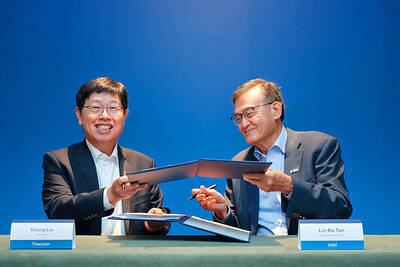
Hon Hai Precision Industry Co (鴻海精密) yesterday said it would work with US chipmaker Intel Corp to jointly develop and deploy next-generation artificial intelligence (AI) infrastructure and intelligent computing platforms in a move to capture booming demand for AI computing systems. Hon Hai, also known as Foxconn Technology Group (富士康), said in a statement that the partnership would combine its global manufacturing scale, system integration expertise and AI data center deployment capabilities with Intel’s strengths in processor architecture, silicon technologies and software ecosystem. The companies said they plan to work on equipment used in AI data centers, including server racks powered by


 RSS
RSS