


South Korea's LG Electronics Inc plans to launch home appliances that can access the Internet as early as February 2003 in Taiwan, the company revealed at a press event in Taipei last week.
Web-enabled products were on display at the event, which marked the first anniversary of the opening of LG's Taiwan branch office.
"We are introducing home networking products such as the Internet refrigerator, microwave, air conditioner and washing machine," Michael Ahn (
Ahn did not release figures for the number of products sold in the first stage of the launch, but he did reveal that the resources to fund research in these new products had come from LG's success in digital appliance sales in recent years. For the past five years LG's digital appliance sales have shown an annual growth of over 20 percent, with an operating margin of 12 percent.
LG launched its Net refrigerator in the US in October with a price tag of US$8,000. The fridge can remind users when products have passed their "use-by" date, as well as letting them download music, recipes and e-mail. The second-generation model to be launched in Taiwan incorporates a camera so users can record and send video-mails.
All the new Net appliances can be operated from outside the home via the Internet. Commuters can turn on their air conditioners or washing machine from the office as they prepare to make the journey home. The retail prices of the appliances in Taiwan had not been set at the time of the press event.
Some researchers have questioned the need for the so-called "smart appliances."
"Although more products have continued to enter the smart-appliance market, it is most hampered by a lack of consumer education on how the products add value," said Cindy Wolf, an analyst with US-based market research firm, In-Stat/MDR.
"In addition, this category will likely not experience high growth rates until there are standards, higher Internet penetration rates, and lower prices."
According to In-Stat/MDR, the market for Internet access devices -- which includes computers, cellular phones and set-top boxes as well as home appliances -- is expected to grow at an overall annual rate of 28.2 percent between last year and 2006. Growth is expected to rise from about 226 million units last year to over 780 million in 2006.
Though the PC and mobile-phone segments have the most unit shipments, Internet appliances, which include Internet terminals and tablet PCs, will have the highest annual growth rate with 74.3 percent, the report said.
LG Electronics sales exceeded US$76 billion last year and are expected to reach US$185 billion this year. The company employs 90,500 people in 300 operations in over 120 countries.

The domestic unit of the Chinese-owned, Dutch-headquartered chipmaker Nexperia BV will soon be able to produce semiconductors locally within China, according to two company sources. Nexperia is at the center of a global tug-of-war over critical semiconductor technology, with a Dutch court in February ordering a probe into alleged mismanagement at the company. The geopolitical tussle has disrupted supply chains, with some carmakers reportedly forced to cut production due to chip shortages. Local production would allow Nexperia’s domestic arm, Nexperia Semiconductors (China) Ltd (安世半導體中國), to bypass restrictions in place since October on the supply of silicon wafers — etched with tiny components to

Singapore-based ride-hailing and delivery giant Grab Holdings Ltd has applied for regulatory approval to acquire the Taiwan operations of Germany-based Delivery Hero SE's Foodpanda in a deal valued at about US$600 million. Grab submitted the filing to the Fair Trade Commission on Friday last week, with the transaction subject to regulatory review and approval, the company said in a statement yesterday. Its independent governance structure would help foster a healthy and competitive market in Taiwan if the deal is approved, Grab said. Grab, which is listed on the NASDAQ, said in the filing that US-based Uber Technologies Inc holds about 13 percent of
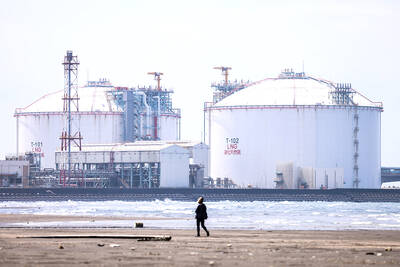
Taiwan is open to joining a global liquefied natural gas (LNG) program if one is created, but on the condition that countries provide delivery even in a scenario where there is a conflict with China, an energy department official said yesterday. While Taiwan’s priority is to have enough LNG at home, the nation is open to exploring potential strategic reserves in other countries such as Japan or South Korea, Energy Administration Deputy Director-General Chen Chung-hsien (陳崇憲) said. While the LNG market does not have a global reserve for emergencies like that of oil, the concept has been raised a few times —
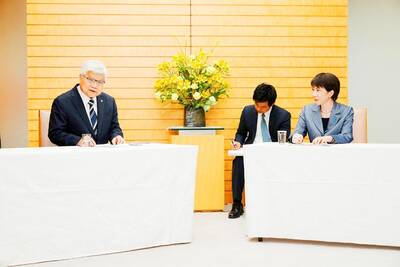
Taiwan Semiconductor Manufacturing Co (TSMC, 台積電) yesterday received government approval to deploy its advanced 3-nanometer (3nm) process at its second fab currently under construction in Japan, the Ministry of Economic Affairs said in a news release. The ministry green-lit the plan for the facility in Kumamoto, which is scheduled to start installing equipment and come online in 2028 with a monthly production capacity of 15,000 12-inch wafers, the ministry said. The Department of Investment Review in June 2024 authorized a US$5.26 billion investment for the facility, slated to manufacture 6- to 12nm chips, significantly less advanced than 3nm process. At a meeting with


 RSS
RSS