


Tingyi (Cayman Islands) Holding Corp (頂益控股), China's biggest instant noodle maker, and Uni-President Enterprises Co (統一企業), Taiwan's biggest, are extending their noodle war to Taiwan from China.
Tingyi, founded by brothers Wei Ing-chou and Wei Ying-chiao in northern China 10 years ago, said it will start making and selling its popular Master Kang (
The company's quest to grab a slice of a NT$10 billion (US$287 million) market that analysts say is already saturated won't be easy. There are five other major instant noodle makers in the local market.
"To complete our Greater China strategy, we have to enter the Taiwan market, even though it has negative or flat growth," Tingyi chief financial officer Frank Lin said in an interview.
"Based on the brand name, consumer curiosity and the product's quality and price, getting 10 percent should be simple," Lin said.
Taiwan's instant noodle war will be fought in supermarket aisles. Uni-President controls 3,000 7-Eleven stores, while Tingyi will rely mostly on the 70 supermarkets operated by family-run affiliate Wei Chuan Food Corp (味全食品).
"The competition will not be on the noodles, but on the distribution channels," said Richard Huang, who helps manage NT$8 billion of equities at Shinkong Investment Trust Co (新光投信).
Tingyi shares dropped HK$0.02, or 1 percent, to HK$1.96 at 11:41am in Hong Kong. Uni-President shares rose NT$0.15, or 1.3 percent, to NT$11.40. Wei Chuan shares rose NT$0.30, or 2.9 percent, to NT$10.80.
Tingyi's move to Taiwan may be a boost for Wei Chuan, in which the Wei family bought a controlling stake through its privately held Ting Hsin (Cayman Islands) Holding Corp in 1998.
Wei Chuan had posted five annual losses since 1996, though its shares surged 56 percent this month.
"After standing firm in China, Tingyi is helping its affiliate stand firm in Taiwan," said Lin Kuan-ho, who helps manage about NT$2.1 billion of stocks at First Global Investment Trust Co. (
"In terms of brand name, product range and distribution, Wei Chuan's organization is quite weak, compared to Uni-President."
Tingyi is leasing a factory from Wei Chuan to make instant noodles that it says will be attuned to local taste buds.
The noodles will be slightly blander than the saltier, oilier Master Kang version.
"A new entrant will definitely create pressure," said Lee Chin-shian, a spokesman for Ve Wong Corp, which earns 20 percent of its sales from instant noodles. "There will be competition on price and taste."
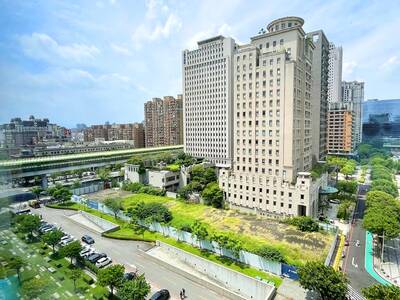
Taichung reported the steepest fall in completed home prices among the six special municipalities in the first quarter of this year, data compiled by Taiwan Realty Co (台灣房屋) showed yesterday. From January through last month, the average transaction price for completed homes in Taichung fell 8 percent from a year earlier to NT$299,000 (US$9,483) per ping (3.3m²), said Taiwan Realty, which compiled the data based on the government’s price registration platform. The decline could be attributed to many home buyers choosing relatively affordable used homes to live in themselves, instead of newly built homes in the city’s prime property market, Taiwan Realty
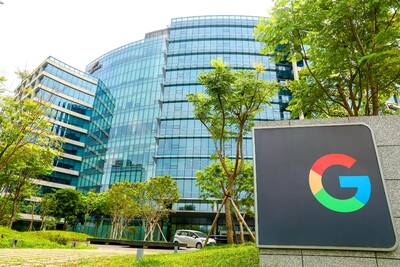
The government yesterday approved applications by Alphabet Inc’s Google to invest NT$27.08 billion (US$859.98 million) in Taiwan, the Ministry of Economic Affairs said in a statement. The Department of Investment Review approved two investments proposed by Google, with much of the funds to be used for data processing and electronic information supply services, as well as inventory procurement businesses in the semiconductor field, the ministry said. It marks the second consecutive year that Google has applied to increase its investment in Taiwan. Google plans to infuse NT$25.34 billion into Charter Investments Ltd (特許投資顧問) through its Singapore-based subsidiary Fructan Holdings Singapore Pte Ltd, and

JET JUICE: The war on Iran’s secondary effects have seen fuel prices skyrocket, knocking flight schedules down to earth in return as airlines struggle with costs Airline passengers should brace for more irritation in the next few months as carriers worldwide cancel flights and ground planes to cope with stratospheric increases in jet-fuel prices. Dutch flag carrier KLM is the latest company to cut its schedule, saying on Thursday that it would scrap 80 return flights at Amsterdam’s Schiphol Airport in the coming month. That puts it in the same league as United Airlines Holdings Inc, Deutsche Lufthansa AG and Cathay Pacific Airways Ltd, which have all pruned itineraries to mitigate costs. Global capacity for next month has been reduced by about 3 percentage points, with all
Micron Technology Inc is a driving force pushing the US Congress to pass legislation that would put new export restrictions on equipment its Chinese competitors use to make their chips, according to people familiar with the matter. A US House of Representatives panel yesterday was to vote on the “MATCH Act,” a bill designed to close gaps in restrictions on chipmaking equipment. It would also pressure foreign companies that sell equipment to Chinese chipmaking facilities to align with export curbs on US companies like Lam Research Corp and Applied Materials Inc. The bill targets facilities operated by China’s ChangXin Memory Technologies Inc


 RSS
RSS