


The inability of the latest generation of multimedia messaging service (MMS) cellphones and wireless services to communicate with each other may hinder the growth in the much ballyhooed market segment.
"It's all about communications ... [handsets and services must be able to exchange information because] the basic motivation of using a phone is being able to connect to other people," said Michael Pousti, CEO of SMS.ac, a San Diego-based mobile messaging service company.
MMS is a new advanced data transmission mobile service allowing cellphone users to send text messages, audio files or color pictures including photos and graphics.
Current problems with MMS are two-fold: First, handset makers have not created a standard for MMS exchange, resulting in blurry photo transmissions sent from, for example, a Nokia phone to a Sony Ericsson phone.
Second, wireless-service providers also have no MMS communication standard, meaning subscribers to different services, such as Taiwan Cellular Corp (
This lack of inter-connectivity among cellphone platforms is a major stumbling block that is expected to force industry players to sit down and work on the issue.
"The industry has realized the challenge is there, and sooner or later major telecom vendors in the world need to make an effort to work it out," said Alex Yang, software integration division manager at Nokia Taiwan Co.
Both Pousti and Yang made the remarks at a sideline of the two-day MMS Taiwan 2002 seminar in Taipei yesterday. Over 20 global telecom players are in town to talk about the development of MMS.
In June, Taiwan Cellular launched the nation's first MMS feature, followed by Chunghwa Telecom in August.
Far EasTone Telecom Co (
Resolving the problem will require cooperation among rivals.
"This is a business issue not a technical problem. The technology is already there, but carriers want to protect their own interests and have therefore decided not to allow inter-connections," Yang said.
The government, meanwhile, is pressuring competitors in the sector to come up with a solution.
"The Directorate General of Telecommunications has talked with operators and urged them to quickly form an interconnection agreement," Yang said.
They hope to finalize inter-connection and roaming agreements early next year, he said. Manufacturers are already working on handset compatibility, Wang said.
"Handset companies have been working on this ... and in three months to maybe a year there will be a standard that everyone can use," Yang said.
While the MMS handset penetration rate in Taiwan is less than 1 percent, makers are hoping 50 percent of next year's new cellphones will be MMS ready.
Industry professionals, meanwhile, said the nation's MMS development is very promising.
"Taiwan will be faster [than most countries in the US and Europe] in adopting MMS," said Jay Teborek, a director at MMS software, creator Comverse Network Systems Asia Pacific Limited.
Taiwanese mobile operators, have the money to invest in new services, he said.
Tech-crazed Taiwanese change handsets almost twice as often as their US or European counterparts -- a boon for telecom makers, Teborek said.
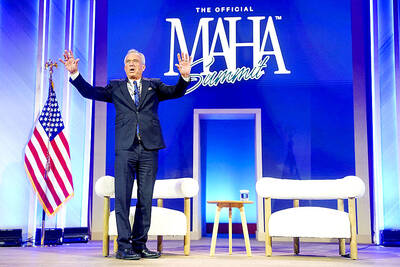
Sweeping policy changes under US Secretary of Health and Human Services Robert F. Kennedy Jr are having a chilling effect on vaccine makers as anti-vaccine rhetoric has turned into concrete changes in inoculation schedules and recommendations, investors and executives said. The administration of US President Donald Trump has in the past year upended vaccine recommendations, with the country last month ending its longstanding guidance that all children receive inoculations against flu, hepatitis A and other diseases. The unprecedented changes have led to diminished vaccine usage, hurt the investment case for some biotechs, and created a drag that would likely dent revenues and
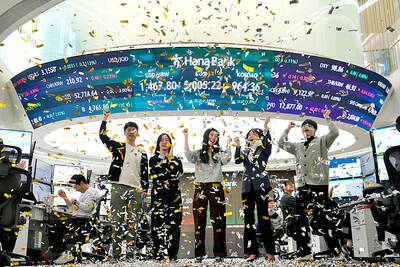
Global semiconductor stocks advanced yesterday, as comments by Nvidia Corp chief executive officer Jensen Huang (黃仁勳) at Davos, Switzerland, helped reinforce investor enthusiasm for artificial intelligence (AI). Samsung Electronics Co gained as much as 5 percent to an all-time high, helping drive South Korea’s benchmark KOSPI above 5,000 for the first time. That came after the Philadelphia Semiconductor Index rose more than 3 percent to a fresh record on Wednesday, with a boost from Nvidia. The gains came amid broad risk-on trade after US President Donald Trump withdrew his threat of tariffs on some European nations over backing for Greenland. Huang further

CULPRITS: Factors that affected the slip included falling global crude oil prices, wait-and-see consumer attitudes due to US tariffs and a different Lunar New Year holiday schedule Taiwan’s retail sales ended a nine-year growth streak last year, slipping 0.2 percent from a year earlier as uncertainty over US tariff policies affected demand for durable goods, data released on Friday by the Ministry of Economic Affairs showed. Last year’s retail sales totaled NT$4.84 trillion (US$153.27 billion), down about NT$9.5 billion, or 0.2 percent, from 2024. Despite the decline, the figure was still the second-highest annual sales total on record. Ministry statistics department deputy head Chen Yu-fang (陳玉芳) said sales of cars, motorcycles and related products, which accounted for 17.4 percent of total retail rales last year, fell NT$68.1 billion, or
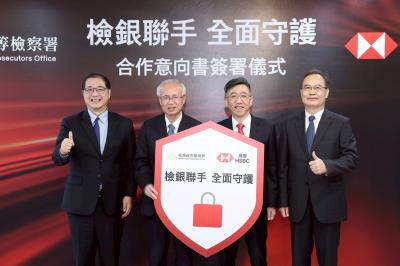
HSBC Bank Taiwan Ltd (匯豐台灣商銀) and the Taiwan High Prosecutors Office recently signed a memorandum of understanding (MOU) to enhance cooperation on the suspicious transaction analysis mechanism. This landmark agreement makes HSBC the first foreign bank in Taiwan to establish such a partnership with the High Prosecutors Office, underscoring its commitment to active anti-fraud initiatives, financial inclusion, and the “Treating Customers Fairly” principle. Through this deep public-private collaboration, both parties aim to co-create a secure financial ecosystem via early warning detection and precise fraud prevention technologies. At the signing ceremony, HSBC Taiwan CEO and head of banking Adam Chen (陳志堅)


 RSS
RSS