


Taiwan's high-tech manufacturers are helping to build the newest generation of devices that will bring home-entertainment services together in one box.
Last week US software developer Interact-TV launched the "Telly," a VCR-sized device that houses components from VIA Technologies Inc (
Telly is one of a new generation of devices that will allow users to store and catalog their favorite music from CDs, MP3 tracks, digital photos, and up to 60 hours of video recorded by digital camcorders or direct from television. The system also allows users to check their e-mail and access the Internet.
Telly is based on VIA's EPIA mainboard, a compact main circuit-board that has been specially designed with the home user in mind.
"We are focusing on solutions such as the VIA EPIA mainboard because it brings the benefits of a PC-hardware platform, plus hardware components for digital-entertainment solutions at an attractive price," Ken Fuhrman, CEO of Interact-TV, said.
Unlike the current range of home entertainment products that age quickly and need to be replaced after a few years, Fuhrman believes that his product will have a long lifespan.
"We feel hardware platforms like this will provide scalability and expendability for the consumer over time in contrast to more dedicated hardware designs that are typically done for the consumer-electronics market," Fuhrman said.
"VIA and Interact-TV share a common direction of the home digital-media device as the next best thing in personal computing," Richard Brown, VIA's director of marketing, said in a statement last week.
VIA launched its "total connectivity" concept at a conference in Taipei at the beginning of October, including mainboards that can be used to construct home-entertainment platforms that are relatively inexpensive.
The company has employed the use of low-power components that do not get too hot when operating, helping to reduce the need for powerful and loud cooling fans.
"We see this as one of those critical issues for getting solutions into the living room. A typical PC with fan noise is just not conducive for that environment," Fuhrman said.
VIA's EPIA mainboard is gaining popularity with manufacturers of home entertainment systems. Since the launch of the mainboard at the beginning of this month, VIA has announced partnerships with companies in Taiwan, the US and Europe to make systems intended for use in the home.
"We are also seeing interest from consumer-electronics companies in integrating a small PC into entertainment products," Fuhrman said.
Telly will function as a home server, centralizing entertainment and information on the television. "Interact-TV's focus is on a digital-entertainment solution that is designed to be user-friendly and provides them with access to digital media in the consumers' entertainment environment, typically the living room," Fuhrman said.
Intially for sale in the US, Telly is intended for release globally.
"The product has been designed to be internationalized, and once we have partners outside the US we will expand into these markets," said Fuhrman.
Telly will be available to consumers in the US from Dec. 10 for just under US$700.

Taiwanese firms have increased investment in the Philippines in recent years as Manila’s ties with Washington deepen and global supply chains continue to shift away from China, an expert at the Chung-Hua Institution for Economic Research (CIER, 中華經濟研究院) said yesterday. The Philippines had not been among Taiwanese investors’ top choices in Southeast Asia, CIER Taiwan ASEAN Studies Center director Kristy Hsu (徐遵慈) said at a seminar in Taipei. However, Taiwan’s investment in the country has grown significantly since the COVID-19 pandemic, reaching US $257 million last year, a high in recent years, she said. Although Taiwan’s total investment in the Philippines still lags
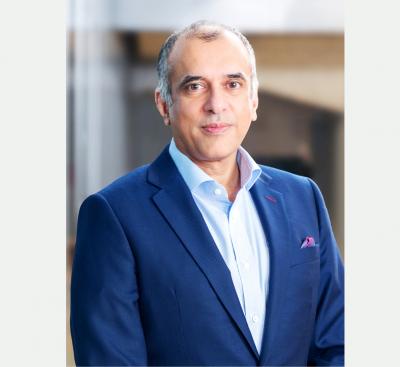
HSBC Holdings PLC is deepening its commitment to Taiwan as the economy emerges as one of the bank’s fastest-growing markets globally, driven by an artificial intelligence (AI) investment boom, expanding cross-border trade, and rising wealth creation. “The advantage that Taiwan has is a growth story linked to the semiconductor and broader AI industries, strong underlying corporate performance, and wealth creation,” said Surendra Rosha, HSBC’s co-chief executive for Asia and the Middle East, in an exclusive interview with the Taipei Times on June 2, during this year’s HSBC Taiwan Conference. That combination has helped HSBC cement its position as the most profitable international

Intel Corp regards Taiwan Semiconductor Manufacturing Co (TSMC, 台積電) as a longstanding partner, as the US chipmaker would continue outsourcing production of advanced chips to TSMC, Intel chief executive officer Lip-Bu Tan (陳立武) said yesterday. “I don’t look at people as competitors. I look at the collaboration... Nvidia is also, you know, a good friend,” Tan told a news conference following his keynote speech at the Computex trade show in Taipei. “It’s a very trusted partnership for us... We are a big, top customer for them, and we’re going to continue doing that,” he said, referring to TSMC, the world’s largest foundry

Hon Hai Precision Industry Co (鴻海精密) yesterday said it would work with US chipmaker Intel Corp to jointly develop and deploy next-generation artificial intelligence (AI) infrastructure and intelligent computing platforms in a move to capture booming demand for AI computing systems. Hon Hai, also known as Foxconn Technology Group (富士康), said in a statement that the partnership would combine its global manufacturing scale, system integration expertise and AI data center deployment capabilities with Intel’s strengths in processor architecture, silicon technologies and software ecosystem. The companies said they plan to work on equipment used in AI data centers, including server racks powered by


 RSS
RSS