


In the early 1990s, Sabrina Kemeny was among the researchers at NASA's Jet Propulsion Laboratory in Southern California who made spacecraft smaller and cheaper. The key was discovering how to build an optical sensor on a single semiconductor, allowing for smaller components that consumed less power.
"That was the breakthrough," Kemeny recalled. "It was a dislocating kind of technology."
Kemeny and a handful of colleagues were so excited about the photographic applications of this semiconductor that in 1995, over a kitchen table, they created a company to design it for other companies. But their start-up, called Photobit, lacked the size and capital to go ahead and make this "camera on a chip," a type known in the semiconductor industry as a CMOS (pronounced SEE-moss), which stands for complementary metal oxide semiconductor.
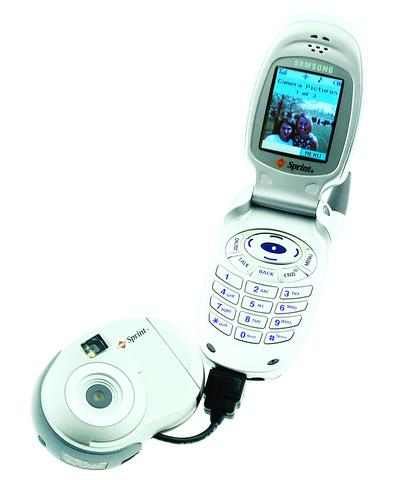
PHOTO: NY TIMES
The destiny of Photobit changed nine months ago, when Micron Technology, the large semiconductor maker based in Boise, Idaho, bought the company and renamed it Micron Imaging. Kemeny is director for technical marketing at there.
That decade-long journey from the laboratory is part of a new race in the chip industry, where growth in demand has been disappointingly slow for nearly everything. A notable exception is the photographic applications of CMOS. These chips are responsible for products that are just beginning to reach consumers -- including cameras within cell phones, cameras in tiny capsules that can pass through the body to diagnose disease and tiny cameras mounted on personal computers. The chips have many other uses in security systems and industry.
Unlike the technology bubble of the late 1990s, a time when fanciful dot-coms without real products raced to overpriced initial public offerings, the race to dominate the market for cameras on chips is an old-fashioned kind of technology battle: Real companies are vying to invent real products that touch millions of consumers.
The older technology that CMOS is beginning to displace is called the charge-coupled device, or CCD, invented at Bell Labs in the late 1960s and first used in products like fax machines.
The CCD uses passive sensors, or tiny eyes, that detect light. An outside source of power is required to get the image from the devices, and other circuitry is needed, too. That makes them relatively big and expensive. CMOS chips, by contrast, consist of active sensors that have tiny transistors as power sources.
Because of the way CMOS chips are made, sensors and many other processing functions can be placed on one chip.
CMOS technology greatly reduces the amount of power used, allowing batteries to last longer in hand-held devices, but it also provides photographic image quality almost as good as that of charge-coupled devices.
In-Stat/MDR, a Scottsdale, Arizizona, a unit of the Reed Elsevier Group, a publishing and industry research group, says the number of CMOS chips made each year will triple from current levels by 2006. But In-Stat/MDR said sales, which totaled US$1.2 billion last year, were expected to rise only to US$1.6 billion in 2006 because the price of each chip would decline as production accelerated.
Micron and others define the market more broadly, putting its potential at US$4 billion in annual sales. Whichever figures are correct, it's clear that solid growth is occurring in one area of the otherwise depressed semiconductor industry.
Micron, a relatively late entry to the field, has tried to leapfrog toward the front with the technology expertise gained from buying Photobit. Three other major US companies are also in the battle. Agilent Technologies, a Palo Alto, California, spinoff of Hewlett-Packard, learned from the published research on CMOS done at the Jet Propulsion Laboratory in the 1990s. Its biggest customer is Logitech International, of Fremont, California, which makes PC cameras for Dell Computer and others.
The two other companies, Eastman Kodak and Motorola, started a technology alliance in 1997 that makes and sells CMOS chips. The Kodak-Motorola unit sells chips primarily for industrial uses like machine vision, but also for some Kodak digital still cameras.
Toshiba and Sharp, which have developed their own CMOS manufacturing processes, are believed to have an advantage. If there is a top potential application for the chips, it could be teenagers' swapping of pictures on their cellphones -- already a pastime in Japan.

SECOND-RATE: Models distilled from US products do not perform the same as the original and undo measures that ensure the systems are neutral, the US’ cable said The US Department of State has ordered a global push to bring attention to what it said are widespread efforts by Chinese companies, including artificial intelligence (AI) start-up DeepSeek (深度求索), to steal intellectual property from US AI labs, according to a diplomatic cable. The cable, dated Friday and sent to diplomatic and consular posts around the world, instructs diplomatic staff to speak to their foreign counterparts about “concerns over adversaries’ extraction and distillation of US AI models.” Distillation is the process of training smaller AI models using output from larger, more expensive ones to lower the costs of training a powerful new

Singapore-based ride-hailing and delivery giant Grab Holdings’ planned acquisition of Foodpanda’s Taiwan operations has yet to enter the formal review stage, as regulators await supplementary documents, the Fair Trade Commission (FTC) said yesterday. Acting FTC Chairman Chen Chih-min (陳志民) told the legislature’s Economics Committee that although Grab submitted its application on March 27, the case has not been officially accepted because required materials remain incomplete. Once the filing is finalized, the FTC would launch a formal probe into the deal, focusing on issues such as cross-shareholding and potential restrictions on market competition, Chen told lawmakers. Grab last month announced that it would acquire
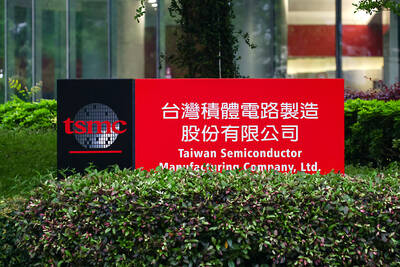
Shares of Taiwan Semiconductor Manufacturing Co (TSMC, 台積電) have repeatedly hit new highs, but an equity analyst said the stock’s valuation remains within a reasonable range and any pullback would likely be technical. The contract chipmaker’s historical price-to-earnings (P/E) ratio has ranged between 20 and 30, Cathay Futures Consultant Co (國泰證期) analyst Tsai Ming-han (蔡明翰) told Central News Agency. With market consensus projecting that TSMC would post earnings per share of about NT$100 (US$3.17) this year, supported by strong global demand for artificial intelligence (AI) applications, and the stock currently trading at a P/E ratio of below 25, Tsai said the valuation
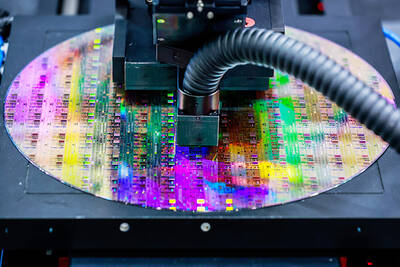
The artificial intelligence (AI) boom has triggered a seismic reshuffling of global equity markets, with Taiwan and South Korea muscling past European nations one by one. With its stock market now valued at nearly US$4.3 trillion, Taiwan surpassed the UK, Europe’s biggest market, earlier this month, data compiled by Bloomberg showed. South Korea is about US$140 billion away from doing the same. The tech-heavy Asian markets have shot past Germany and France in the past seven months. The shift is largely down to massive gains in shares of three companies that provide essential hardware for AI: Taiwan Semiconductor Manufacturing Co (TSMC, 台積電),


 RSS
RSS