


While most businesses and financial markets battened down the hatches yesterday as Typhoon Sinlaku menaced northern Taiwan, some entrepreneurs were making the most of the commercial opportunities the bad weather had created.
One such businessman was Chen Wei-lun (
Normally busy at construction sites, Chen shifted gears Thursday night after several residents and building material store staff turned up at his company to buy bags of sand at a premium.
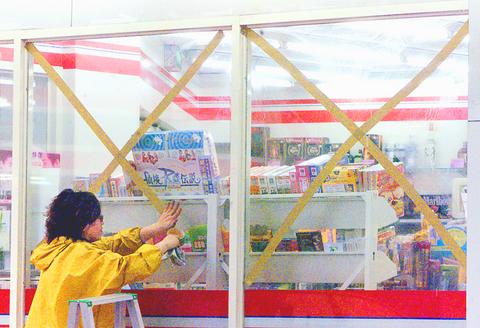
PHOTO: REUTERS
Located in Nankang opposite the Makro hypermarket, Chen said he had sold about 250m3 of sand and 200 30kg sandbags over the past few days.
With each bag selling for NT$50 -- many times the bulk prices he normally charges -- for Chen it was like selling bags of gold.
"We were all sold out by 5:30pm Friday. Many customers were from flood-prone Neihu and Nankang areas, with a few from other locations in Taipei," Chen said.
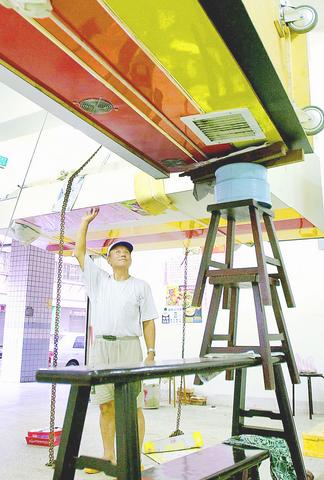
PHOTO: CHU PEI-HSIUNG, TAIPEI TIMES
Meanwhile, across town, Tseng Kuo-chiang (
"As people's memory of last year's Typhoon Nari is still strong, many residents have lined up to buy sandbags since Thursday night," he said.
On Thursday, the Taipei City Government's Bureau of Public Works opened five construction sites where residents could make their own sandbags for free. But Tseng said the sand the city government was offering was of poor quality.
"What we have here is 100 percent sand, not what they offer -- 70 percent sand and 30 percent clay," Tseng said.
Tseng was filling bags at a slight discount to Chen, with 20kg bags going for NT$30 each. He said he would deliver them for an extra NT$30 per bag. By yesterday evening he had sold most of the 100 sandbags he had prepared.
The entrepreneurs predicted the money would continue to flood in as long as the rains fell.
Taiwan was expected to experience heavy rainfall and strong winds last night and this morning as Sinlaku headed across the northern part of the island. The typhoon is expected to bring up to 700mm of rainfall to mountainous areas, forecasters said.
People in low-lying areas were preparing for the worst, piling up sandbags at the entrances to their homes to keep the water at bay.
One resident who stopped by Tseng's company yesterday afternoon said his family had moved furniture and valuables to the second floor of their home, but he still wanted sandbags for extra peace of mind.
"Last year our house was flooded to the first floor ceiling," said Hsu Yu-fang (
While many businesses and home owners scrambled yesterday to prepare for potential flooding, some said they were helpless to stop flooding like last year's.
"Nothing, not even sandbags, will help keep the water out," said a menswear merchant surnamed Tu, as he pointed to the shoulder-high lines on his wall where flood waters had reached last year.
Tu's business is in the Sungshan district, a low-lying area which suffered greatly during last September when city pumps failed.
He claims to have lost about NT$4 million to NT$5 million last year after his stock of suits and menswear in his basement were submerged.
The small-business owner said he had no money to buy pumps or other preventive equipment and that he only had one plan: "If it starts to flood, we'll try to pack everything up."
Last year, Typhoon Toraji killed about 200 people in July, while Nari struck in mid-September, killing around 100 people. Nari caused the capital's worst-ever flooding, knocking out portions of the subway system for months and flooding some 2,000 commercial buildings.
Publicly listed companies reported a total of NT$1.44 billion in Nari-related damage, while agricultural losses from the typhoon totalled NT$2.79 billion.
In the Wufenpu (五分埔) clothing market nearby, many small-business owners also hit hard by floods last year chose to keep their doors shut yesterday. Those still on the street were busy packing up clothes in plastic bags, hoping to move to higher ground.
"We are so terrified by floods," a shop clerk in her early 20s said as she rolled up pants and skirts and put piles of folded clothes into plastic bags.
One middle-aged shop owner, surnamed Ker, said she wasn't going anywhere and planned to try to protect her investment. Her strategy was simple: stack clothes as high as possible on the racks.
"I'm stuck here and don't know what to do next except hope we don't get flooded tonight," Ker said.
Many other store owners had the same plan as Ker, while others in the area seemed to be totally unprepared.
"We'll keep an eye on the weather reports. If the situation turns worse, we'll move our stuff to the second floor," a clerk at a two-story bookstore said.
Shares of contract chipmaker Taiwan Semiconductor Manufacturing Co (TSMC, 台積電) came under pressure yesterday after a report that Apple Inc is looking to shift some orders from the Taiwanese company to Intel Corp. TSMC shares fell NT$55, or 2.4 percent, to close at NT$2,235 on the local main board, Taiwan Stock Exchange data showed. Despite the losses, TSMC is expected to continue to benefit from sound fundamentals, as it maintains a lead over its peers in high-end process development, analysts said. “The selling was a knee-jerk reaction to an Intel-Apple report over the weekend,” Mega International Investment Services Corp (兆豐國際投顧) analyst Alex Huang
Taiwan Semiconductor Manufacturing Co (TSMC, 台積電) is expected to remain Apple Inc’s primary chip manufacturing partner despite reports that Apple could shift some orders to Intel Corp, industry experts said yesterday. The comments came after The Wall Street Journal reported on Friday that Apple and Intel had reached a preliminary agreement following more than a year of negotiations for Intel to manufacture some chips for Apple devices. Taiwan Institute of Economic Research (台灣經濟研究院) economist Arisa Liu (劉佩真) said TSMC’s advanced packaging technologies, including integrated fan-out and chip-on-wafer-on-substrate, remain critical to the performance of Apple’s A-series and M-series chips. She said Intel and Samsung
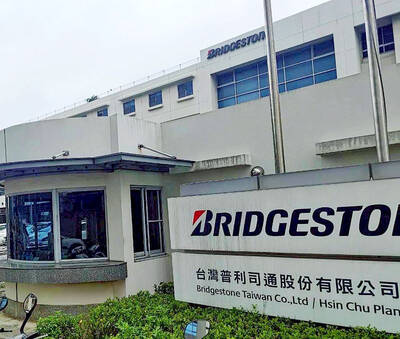
TRANSITION: With the closure, the company would reorganize its Taiwanese unit to a sales and service-focused model, Bridgestone said Bridgestone Corp yesterday announced it would cease manufacturing operations at its tire plant in Hsinchu County’s Hukou Township (湖口), affecting more than 500 workers. Bridgestone Taiwan Co (台灣普利司通) said in a statement that the decision was based on the Tokyo-based tire maker’s adjustments to its global operational strategy and long-term market development considerations. The Taiwanese unit would be reorganized as part of the closure, effective yesterday, and all related production activities would be concluded, the statement said. Under the plan, Bridgestone would continue to deepen its presence in the Taiwanese market, while transitioning to a sales and service-focused business model, it added. The Hsinchu
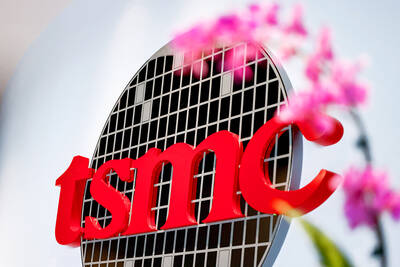
Taiwan Semiconductor Manufacturing Co (TSMC, 台積電) has approved a capital budget of US$31.28 billion for production expansion to meet long-term development needs during the artificial intelligence (AI) boom. The company’s board meeting yesterday approved the capital appropriation plan for purposes such as the installation of advanced technology capacity and fab construction, the world’s largest contract chipmaker said in a statement. At an earnings conference last month, TSMC forecast that its capital expenditure for this year would be at the higher end of the US$52 billion to US$56 billion range it forecast in January in response to robust demand for 5G, AI and


 RSS
RSS