


GVC's trading investigated
GVC Corp (致福) said prosecutors are investigating trading of its stock in the first four months of last year, when shares in the maker of computer components more than doubled. The stock then tumbled 40 percent before GVC sold unit Alpha-Top Corp (致勝科技) to Elitegroup Computer Systems Co (精英電腦) in August last year. The Liberty Times, which reported the probe earlier, said GVC Chairman Raymond Soong had been summoned on Friday for questioning, as had Vice Chairman Luo Chieh-hsiung and two other executives. "The case is now under investigation and Lite-On Group (光寶集團) will cooperate with the investigators," GVC spokesman Huang Meng-hua said. He declined to confirm whether Soong was involved in the investigation or had been questioned by prosecutors. Should any GVC executives be convicted of insider trading, they may be jailed for as long as seven years, disrupting company operations. Soong is also chairman of computer components maker Lite-On Electronics Inc., GVC's parent. GVC stock fell 5.2 percent to NT$20.2 as of 12:14 p.m. in Taipei. Lite-On Electronics fell 4.4 percent to NT$34.40. Lite-On Technology Corp. shares fell 5.1 percent to NT$56. Stock in Lite- On unit Silitek Corp. fell 5.6 percent to NT$50.5.
Taiwan Cellular profit rises
Taiwan Cellular Corp (台灣大哥大), the nation's second-largest mobile-phone provider, posted an 8 percent increase in second-quarter profit as it increased subscribers after acquiring a rival last year. Profit rose to NT$4.2 billion (US$123 million) from NT$3.9 billion a year earlier. The second-quarter profit was derived from first-half earnings, which rose 11 percent to NT$8.8 billion Taiwan Cellular, facing a market where there are as many mobile phones as people, increased subscribers by acquiring rival Transasia Telecom-munications Inc (泛亞電信) in June last year. Taiwan Cellular users in the year to June 30 rose 7.7 percent in the year to June 30 to 5.6 million, with Transasia accounting for about 20 percent, analysts said. Transasia's subscriber base has almost doubled since Taiwan Cellular acquired it," said Helen Zhu, an analyst with ABN Amro Asia Ltd. "Transasia has been doing phenomenally well." This is the first time Taiwan Cellular is consolidating Tranasia's earnings with its own, said Irene Chi, a Taiwan Cellular spokesman. Sales in the first half fell to NT$23.6 billion from NT$24.5 billion.
Chi Mei denies share sale plan
Chi Mei Optoelectronics Corp (奇美光電), Taiwan's No. 2 flat-panel display maker, denied a report that it decided to sell as much as NT$20 billion ($585 million) in shares to fund a factory. "There is a capital need, and we are evaluating all sources of financing open to us including selling shares, syndicated loans and selling convertible bonds," said Finance Manager Eddie Chen, who's in charge of submitting financing proposals to management. "No decision has been made on a share sale." The local media last week cited unidentified company officials saying the company may sell new shares overseas by December to help fund a factory. Chi Mei and rivals such as AU Optronics Corp (友達光電) are expanding to satisfy demand for the screens used in televisions and computers. Chen declined to give a timetable for when the funds will be raised.
NT dollar falls
The New Taiwan dollar fell against the US dollar yesterday, dropping NT$0.106 to close at NT$34.245. The turnover was US$590 million.

NEW IDENTITY: Known for its software, India has expanded into hardware, with its semiconductor industry growing from US$38bn in 2023 to US$45bn to US$50bn India on Saturday inaugurated its first semiconductor assembly and test facility, a milestone in the government’s push to reduce dependence on foreign chipmakers and stake a claim in a sector dominated by China. Indian Prime Minister Narendra Modi opened US firm Micron Technology Inc’s semiconductor assembly, test and packaging unit in his home state of Gujarat, hailing the “dawn of a new era” for India’s technology ambitions. “When young Indians look back in the future, they will see this decade as the turning point in our tech future,” Modi told the event, which was broadcast on his YouTube channel. The plant would convert
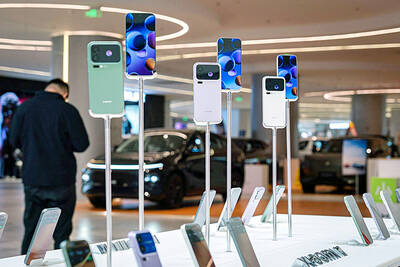
‘SEISMIC SHIFT’: The researcher forecast there would be about 1.1 billion mobile shipments this year, down from 1.26 billion the prior year and erasing years of gains The global smartphone market is expected to contract 12.9 percent this year due to the unprecedented memorychip shortage, marking “a crisis like no other,” researcher International Data Corp (IDC) said. The new forecast, a dramatic revision down from earlier estimates, gives the latest accounting of the ongoing memory crunch that is affecting every corner of the electronics industry. The demand for advanced memory to power artificial intelligence (AI) tasks has drained global supply until well into next year and jeopardizes the business model of many smartphone makers. IDC forecast about 1.1 billion mobile shipments this year, down from 1.26 billion the prior
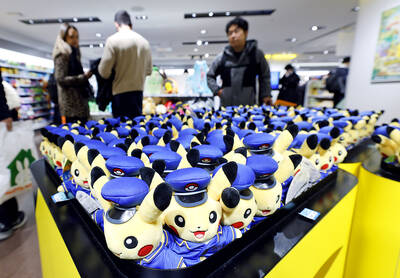
People stand in a Pokemon store in Tokyo on Thursday. One of the world highest-grossing franchises is celebrated its 30th anniversary yesterday.

Zimbabwe’s ban on raw lithium exports is forcing Chinese miners to rethink their strategy, speeding up plans to process the metal locally instead of shipping it to China’s vast rechargeable battery industry. The country is Africa’s largest lithium producer and has one of the world’s largest reserves, according to the US Geological Survey (USGS). Zimbabwe already banned the export of lithium ore in 2022 and last year announced it would halt exports of lithium concentrates from January next year. However, on Wednesday it imposed the ban with immediate effect, leaving unclear what the lithium mining sector would do in the


 RSS
RSS