


Fidelity Investments plans to start a new bond fund that will take more risk than two others the biggest US mutual fund company has filed to offer since April.
Fidelity Total Bond Fund will typically invest at least 80 percent of its assets in all types of debt securities -- and can devote 15 percent to high-yield and emerging market debt, according to a regulatory filing.
Fidelity's moves come as investors have been ploughing money into bond funds and other fixed-income investments and withdrawing from equity investments that have been losing value. The 8,965 US-based stock funds Bloomberg tracks have declined 24 percent on average in the 12 months ended July 25 compared with a 4.8 percent gain for 4,296 bond funds.
Investment companies such as Fidelity have been jockeying to broaden their menu of bond funds to attract new money.
"Fidelity realizes there's a huge market for bond funds, just given the current equity market environment and investor sentiment," said Jim Lowell, editor of Fidelity Investor, an independent newsletter based in Needham, Massachusetts.
This year's best-selling mutual fund has been the Pimco Total Return Fund, which opened in May 1987 and invests in high-yield as well as investment-grade fixed-income securities.
Its assets soared to US$58.6 billion as of June 30 from US$43.9 billion one year earlier, according to Financial Research Corp, a Boston consulting firm. That makes it the second-largest fund by assets behind Fidelity's own Magellan Fund, according to Morningstar Inc analyst Stephen Murphy.
Magellan, which opened in 1963 and no longer accepts new investments except through retirement plans, had assets of US$65.9 billion at the end of June, their lowest monthly level in almost four years.
Lowell said Fidelity's Total Bond Fund will be aimed at the same investors who are flocking to the Pimco Total Return Fund.
The new Fidelity fund, which will require a minimum investment of US$2,500 or US$500 for retirement accounts, will be managed by Kevin Grant and is expected to open in October. Grant manages two other bond funds, Fidelity's Spartan Investment Grade Bond Fund and its Investment Grade Fund, according to the Boston-based company.
"This fund should appeal to income-oriented investors who want to invest in the total US dollar-denominated bond market," Fidelity spokesman Vin Loporchio said. "The fund will have more investment flexibility than Fidelity's existing investment-grade bond funds, which do not typically invest in emerging-market debt or high-yield securities."
Fidelity in June filed with the Securities and Exchange Commission for Fidelity Ultra-Short Bond Fund and in April for Fidelity Inflation-Protected Bond Fund. The Inflation-Protected fund began investing on July 9; the Ultra-Short fund is expected to open later this quarter.
Four of the five best-selling categories of mutual funds in June were bond funds, and the trend should continue, Lowell said.
Aging baby boomers "are going to want investments that produce less gray hairs" than equity investments, Lowell said. "They are going to want instruments that let them reallocate their overall portfolios, most of which are still very heavily focused on stocks or equity funds."
Shares of contract chipmaker Taiwan Semiconductor Manufacturing Co (TSMC, 台積電) came under pressure yesterday after a report that Apple Inc is looking to shift some orders from the Taiwanese company to Intel Corp. TSMC shares fell NT$55, or 2.4 percent, to close at NT$2,235 on the local main board, Taiwan Stock Exchange data showed. Despite the losses, TSMC is expected to continue to benefit from sound fundamentals, as it maintains a lead over its peers in high-end process development, analysts said. “The selling was a knee-jerk reaction to an Intel-Apple report over the weekend,” Mega International Investment Services Corp (兆豐國際投顧) analyst Alex Huang
Taiwan Semiconductor Manufacturing Co (TSMC, 台積電) is expected to remain Apple Inc’s primary chip manufacturing partner despite reports that Apple could shift some orders to Intel Corp, industry experts said yesterday. The comments came after The Wall Street Journal reported on Friday that Apple and Intel had reached a preliminary agreement following more than a year of negotiations for Intel to manufacture some chips for Apple devices. Taiwan Institute of Economic Research (台灣經濟研究院) economist Arisa Liu (劉佩真) said TSMC’s advanced packaging technologies, including integrated fan-out and chip-on-wafer-on-substrate, remain critical to the performance of Apple’s A-series and M-series chips. She said Intel and Samsung
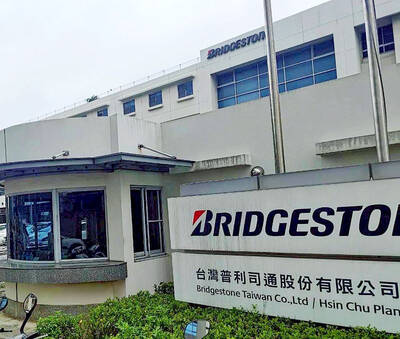
TRANSITION: With the closure, the company would reorganize its Taiwanese unit to a sales and service-focused model, Bridgestone said Bridgestone Corp yesterday announced it would cease manufacturing operations at its tire plant in Hsinchu County’s Hukou Township (湖口), affecting more than 500 workers. Bridgestone Taiwan Co (台灣普利司通) said in a statement that the decision was based on the Tokyo-based tire maker’s adjustments to its global operational strategy and long-term market development considerations. The Taiwanese unit would be reorganized as part of the closure, effective yesterday, and all related production activities would be concluded, the statement said. Under the plan, Bridgestone would continue to deepen its presence in the Taiwanese market, while transitioning to a sales and service-focused business model, it added. The Hsinchu
Taiwan Semiconductor Manufacturing Co (TSMC, 台積電) has approved a capital budget of US$31.28 billion for production expansion to meet long-term development needs during the artificial intelligence (AI) boom. The company’s board meeting yesterday approved the capital appropriation plan for purposes such as the installation of advanced technology capacity and fab construction, the world’s largest contract chipmaker said in a statement. At an earnings conference last month, TSMC forecast that its capital expenditure for this year would be at the higher end of the US$52 billion to US$56 billion range it forecast in January in response to robust demand for 5G, AI and


 RSS
RSS