


The vulnerability of electronic data made evident by the attacks against the World Trade Center in New York last September is providing opportunities for local information-technology companies specializing in information security systems.
At Computex Taipei 2002, a host of home-grown IT companies are promoting products that provide back-up storage systems for data in the event of catastrophic damage to mainframes.

PHOTO: GEORGE TSORNG, TAIPEI TIMES
Log-on and casing systems designed to protect corporate data from theft and damage are also being featured at the trade fair, which will run until Friday at the Taipei World Trade Center.
Anextek Global Inc (
Since the Z-Box is not attached to a server, if the server goes down data remains accessible.
The Z-Box also replicates data and can send it via the Internet to a data center where information is secured in the event data is destroyed.
According to Stuart Schuman, international marketing manager for Anextek, "Everyone became more interested in securing their data after 911."
The threat of data loss has also been apparent in Taiwan where a building fire last year in Hsichih's high-tech district destroyed the offices of several high-tech companies.
Bolstering security measures for corporate data and highly sensitive areas such as airports is also being addressed.
Taiwan-based Symtron Technology Inc's (
"National security agencies, public agencies, airports and the corporate world may find this added security measure useful," Symtron Vice President Vera Hsu (
Taiwan-based Mitac International Corp (
One of the big attractions is the affordability of the product. The system can be installed on a laptop for around US$100, and requires only a small digital camera to function, Hsu said.
Crete Systems Inc (
The "war on terror" being carried out by the US military and its allies may bring a 15 percent growth in sales for the company over last year, Lan said.
Totally water and dust proof and housed in a magnesium case, the Rocky II can operate in a temperature range between -10?C and 50?C.
The company's main customers are the US, German, Belgium, Australian and Taiwan military and research groups, he said.
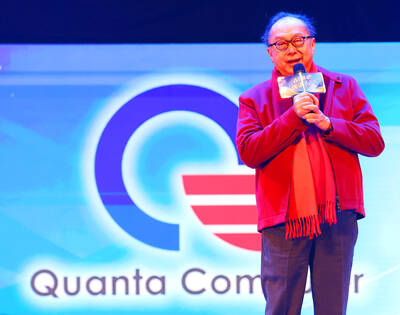
Quanta Computer Inc (廣達) chairman Barry Lam (林百里) is expected to share his views about the artificial intelligence (AI) industry’s prospects during his speech at the company’s 37th anniversary ceremony, as AI servers have become a new growth engine for the equipment manufacturing service provider. Lam’s speech is much anticipated, as Quanta has risen as one of the world’s major AI server suppliers. The company reported a 30 percent year-on-year growth in consolidated revenue to NT$1.41 trillion (US$43.35 billion) last year, thanks to fast-growing demand for servers, especially those with AI capabilities. The company told investors in November last year that

Intel Corp has named Tasha Chuang (莊蓓瑜) to lead Intel Taiwan in a bid to reinforce relations between the company and its Taiwanese partners. The appointment of Chuang as general manager for Intel Taiwan takes effect on Thursday, the firm said in a statement yesterday. Chuang is to lead her team in Taiwan to pursue product development and sales growth in an effort to reinforce the company’s ties with its partners and clients, Intel said. Chuang was previously in charge of managing Intel’s ties with leading Taiwanese PC brand Asustek Computer Inc (華碩), which included helping Asustek strengthen its global businesses, the company
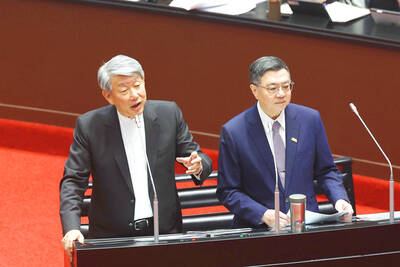
Taiwanese suppliers to Taiwan Semiconductor Manufacturing Co. (TSMC, 台積電) are expected to follow the contract chipmaker’s step to invest in the US, but their relocation may be seven to eight years away, Minister of Economic Affairs J.W. Kuo (郭智輝) said yesterday. When asked by opposition Chinese Nationalist Party (KMT) Legislator Niu Hsu-ting (牛煦庭) in the legislature about growing concerns that TSMC’s huge investments in the US will prompt its suppliers to follow suit, Kuo said based on the chipmaker’s current limited production volume, it is unlikely to lead its supply chain to go there for now. “Unless TSMC completes its planned six
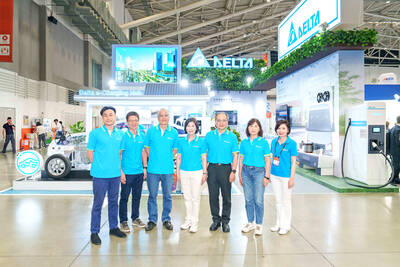
Power supply and electronic components maker Delta Electronics Inc (台達電) yesterday said it plans to ship its new 1 megawatt charging systems for electric trucks and buses in the first half of next year at the earliest. The new charging piles, which deliver up to 1 megawatt of charging power, are designed for heavy-duty electric vehicles, and support a maximum current of 1,500 amperes and output of 1,250 volts, Delta said in a news release. “If everything goes smoothly, we could begin shipping those new charging systems as early as in the first half of next year,” a company official said. The new


 RSS
RSS