


When Jeffrey Skilling ran Enron Corp, he described the energy trader as "brain-power intensive." Friday, the Harvard Business School graduate told Congress 34 times he couldn't remember memorandums or meetings about partnerships that drove the company into the biggest US bankruptcy.
The former chief executive officer testified he knew nothing of bogus accounting or conflicts of interest by Enron executives who helped run the company's partnerships. His testimony clashed with that of other Enron officials, including current President Jeffrey McMahon.
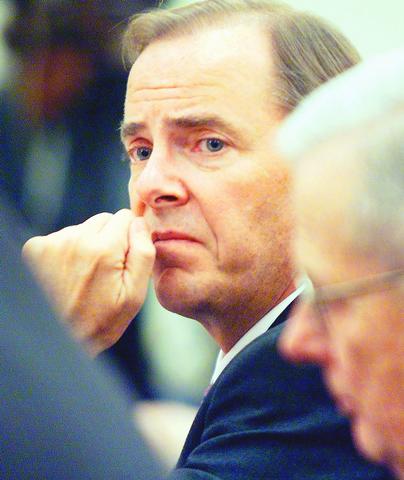
PHOTO: REUTERS
Skilling's four hours of testimony to a House Energy and Commerce subcommittee investigating Enron's collapse included a two-minute period where he said "I don't know" eight times.
McMahon, a former treasurer of the company, said he told Skilling on March 16, 2000, that the partnerships were "unethical and improper." Panel members said they were skeptical Skilling was telling the truth.
"I can believe you, Mr. Skilling, or I can believe Mr. McMahon, but I sure as hell can't believe you both," Representative Jim Greenwood, a Pennsylvania Republican, told Skilling after his testimony.
Some former CEOs of US companies said they found Skilling's testimony hard to believe.
"It is not credible," said Gerald Meyers, former CEO of American Motors Corp and now a professor of organizational behavior at University of Michigan. "There's no way to escape management responsibility here. He may be able to escape liability -- that's a legal subject."
Lawmakers quoted from a New York Times article that portrayed Skilling as "the ultimate control freak."
Representative Bart Stupak, a Michigan Democrat, questioned how a former McKinsey & Co consultant known for his hands-on management style could be oblivious to the financial dangers of the partnerships.
"Probably a more accurate description would be that I was a `controls freak," the 48-year-old Skilling said. "We had a company that was an enormous organization, that was far flung across the globe. We put in force what I believe was a very effective control structure for the company."
Skilling, who resigned from Enron on Aug. 14 after six months as CEO, said he was not aware of transactions between Enron and partnerships set up and run by former Chief Financial Officer Andrew Fastow.
The partnerships, LJM Cayman and LJM2 Co-Investment LP, were designed to hedge Enron's investments in volatile technology stocks and to buy and sell Enron assets, such as power plants.
McMahon, 41, testified that he met with Skilling on March 16, 2000, because he was uncomfortable with Fastow being both a top Enron executive and the general partner of the LJM ventures.
Skilling said he understood the concerns and would remedy the situation, according to McMahon.
"I was sure the situation created by the involvement of a high-ranking executive in the company with these partnerships was like creating a moral cesspool," McMahon testified. "Fastow's own interests in the partnerships put Enron at risk."
Skilling said he recalled that the meeting focused on compensation issues. "He felt he was being put in awkward position having to negotiate with Andy [Fastow] and that it might affect his compensation package," Skilling said. "I don't think there's anything radically different in my recollection compared to what he said."
The conflicting testimony doesn't jibe with the image of Enron prior to the bankruptcy, when it transformed itself in a decade into the world's largest energy trader from an oil pipeline company.
In another example where his testimony didn't match other evidence, Skilling said he didn't believe he was required to approve each of the transactions involving the LJM partnerships, which were set up in 1999 when he was company president and chief operating officer.
"I wasn't required to approve the LJM1 and LJM2 transactions," he said.
Shown minutes of an Oct. 6, 2000, board meeting in which Fastow said Skilling would approve all the deals between Enron and the partnerships, Skilling said he didn't remember the meeting.
"I don't recall this being said," Skilling testified.
Committee member Clifford Stearns, a Florida Republican, questioned Skilling's version of events.
"I have a hard time believing McMahon didn't describe this conflict of interest," Stearns said. "McMahon says you were told specifically about these conflicts of interest. You are practicing plausible deniability."

Shares of contract chipmaker Taiwan Semiconductor Manufacturing Co (TSMC, 台積電) came under pressure yesterday after a report that Apple Inc is looking to shift some orders from the Taiwanese company to Intel Corp. TSMC shares fell NT$55, or 2.4 percent, to close at NT$2,235 on the local main board, Taiwan Stock Exchange data showed. Despite the losses, TSMC is expected to continue to benefit from sound fundamentals, as it maintains a lead over its peers in high-end process development, analysts said. “The selling was a knee-jerk reaction to an Intel-Apple report over the weekend,” Mega International Investment Services Corp (兆豐國際投顧) analyst Alex Huang
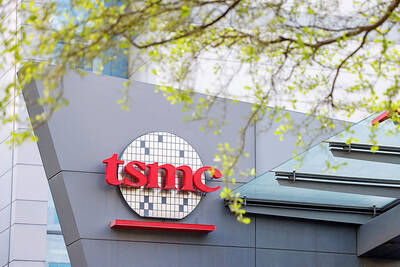
Taiwan Semiconductor Manufacturing Co (TSMC, 台積電) is expected to remain Apple Inc’s primary chip manufacturing partner despite reports that Apple could shift some orders to Intel Corp, industry experts said yesterday. The comments came after The Wall Street Journal reported on Friday that Apple and Intel had reached a preliminary agreement following more than a year of negotiations for Intel to manufacture some chips for Apple devices. Taiwan Institute of Economic Research (台灣經濟研究院) economist Arisa Liu (劉佩真) said TSMC’s advanced packaging technologies, including integrated fan-out and chip-on-wafer-on-substrate, remain critical to the performance of Apple’s A-series and M-series chips. She said Intel and Samsung
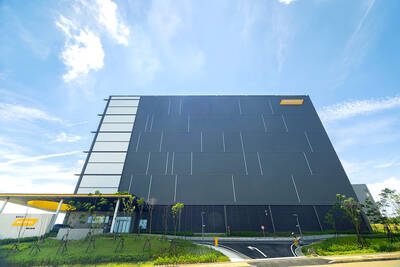
POWER BUILDUP: Powered by Nvidia’s B200 Blackwell chips, the data center would support MediaTek’s computing power demand and business growth, the company said Smartphone chip designer MediaTek Inc (聯發科) yesterday launched a new artificial intelligence (AI) data center with a maximum capacity of 45 megawatts to meet its rising demand for computing power required to develop new advanced chips for AI applications. The company has completed the first-phase computing power buildup at the data center in Miaoli County’s Tongluo Township (銅鑼), providing 15 megawatts of capacity to support its research and development (R&D) capabilities, despite an industrywide shortage of key components, MediaTek said. Supply constraints have plagued a wide range of key components, including memory chips, solid-state drives, power supply units and central
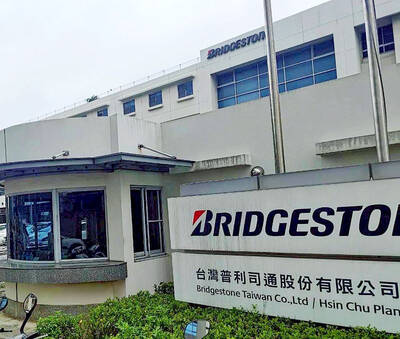
TRANSITION: With the closure, the company would reorganize its Taiwanese unit to a sales and service-focused model, Bridgestone said Bridgestone Corp yesterday announced it would cease manufacturing operations at its tire plant in Hsinchu County’s Hukou Township (湖口), affecting more than 500 workers. Bridgestone Taiwan Co (台灣普利司通) said in a statement that the decision was based on the Tokyo-based tire maker’s adjustments to its global operational strategy and long-term market development considerations. The Taiwanese unit would be reorganized as part of the closure, effective yesterday, and all related production activities would be concluded, the statement said. Under the plan, Bridgestone would continue to deepen its presence in the Taiwanese market, while transitioning to a sales and service-focused business model, it added. The Hsinchu


 RSS
RSS