


Taiwan Semiconductor Manufac-turing Co's (TSMC, 台積電) US-based subsidiary, WaferTech LLC, is finally showing signs of a turnaround after dragging TSMC's earnings dangerously close to losses for the past two business quarters.
Yesterday, WaferTech officials announced that a five-month program to improve chip yields has paid off with strong yield gains in chip manufacturing processes for which customers are willing to pay higher fees.
The yield rate measures for how many microchips a company is able to cut from a silicon plate in good condition.
"With chip manufacturing costs continuing to rise, yield management plays a vital role in determining a company's profitability since it can accelerate the production ramp of new processes and technologies," said Randy Tully, general manager for KLA-Tencor Corp, a US-engineering firm working with WaferTech on the perfecting its manufacturing process.
For example, 1,108 thumbnail-sized microchips can be etched onto an 8-inch silicon wafer. Usually around three quarters of those will run properly, but WaferTech is trying to raise that amount. Greater chip yield translates into higher profits.
During investor conferences for second and third-quarter revenues, TSMC Chairman Morris Chang (張忠謀) blamed large investment losses on WaferTech. These losses pushed TSMC's pre-tax income into the red for the past two quarters. Only government tax breaks for new chip plants and equipment saved the firm from reporting consecutive net losses.
In the second quarter and third quarters, TSMC posted before-tax losses of NT$870 million (US$25.2 million) and NT$200 million (US$5.8 million), respectively. In both cases, investment losses exceeding NT$1 billion in each quarter pushed the company into the red and it was only sizable income tax credits paid out by the government that nudged TSMC into the black.
Since then, WaferTech has been working on its yield rate. The step up in chip-yield rates are all on state-of-the-art manufacturing processes, which etch microchips as small as 0.18 microns and 0.15 microns, over 100 times smaller than a strand of human hair.
Currently, manufacturing at this small size is in heavy demand.
TSMC's chairman said last month that demand remained heavy for chips manufactured using these tiny processes, and Semiconductor Business News reported that TSMC had sold out of production capacity for 0.18 micron wafers despite the global downturn.
The report credited new orders from Intel Corp, Nvidia Corp and ATI Technologies Inc with using the 0.18 micron chip-making capacity.
Steve Tso, president of WaferTech, said improvements in the company's yields have changed its standing within TSMC.
In just five months of process work, WaferTech has become one of TSMC's leading yield performers, further enhancing its strategic value as TSMC's sole manufacturing subsidiary in North America.
The Taiwanese chip powerhouse opened WaferTech as a joint US-venture with customer Altera in 1996 and then bought out Altera's shares in December of last year amid record-breaking profits in the chip industry.
TSMC currently owns 99 percent of WaferTech.
Shares of contract chipmaker Taiwan Semiconductor Manufacturing Co (TSMC, 台積電) came under pressure yesterday after a report that Apple Inc is looking to shift some orders from the Taiwanese company to Intel Corp. TSMC shares fell NT$55, or 2.4 percent, to close at NT$2,235 on the local main board, Taiwan Stock Exchange data showed. Despite the losses, TSMC is expected to continue to benefit from sound fundamentals, as it maintains a lead over its peers in high-end process development, analysts said. “The selling was a knee-jerk reaction to an Intel-Apple report over the weekend,” Mega International Investment Services Corp (兆豐國際投顧) analyst Alex Huang
Taiwan Semiconductor Manufacturing Co (TSMC, 台積電) is expected to remain Apple Inc’s primary chip manufacturing partner despite reports that Apple could shift some orders to Intel Corp, industry experts said yesterday. The comments came after The Wall Street Journal reported on Friday that Apple and Intel had reached a preliminary agreement following more than a year of negotiations for Intel to manufacture some chips for Apple devices. Taiwan Institute of Economic Research (台灣經濟研究院) economist Arisa Liu (劉佩真) said TSMC’s advanced packaging technologies, including integrated fan-out and chip-on-wafer-on-substrate, remain critical to the performance of Apple’s A-series and M-series chips. She said Intel and Samsung
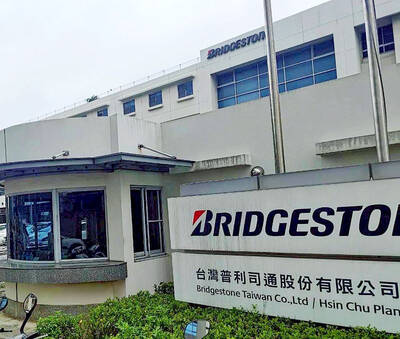
TRANSITION: With the closure, the company would reorganize its Taiwanese unit to a sales and service-focused model, Bridgestone said Bridgestone Corp yesterday announced it would cease manufacturing operations at its tire plant in Hsinchu County’s Hukou Township (湖口), affecting more than 500 workers. Bridgestone Taiwan Co (台灣普利司通) said in a statement that the decision was based on the Tokyo-based tire maker’s adjustments to its global operational strategy and long-term market development considerations. The Taiwanese unit would be reorganized as part of the closure, effective yesterday, and all related production activities would be concluded, the statement said. Under the plan, Bridgestone would continue to deepen its presence in the Taiwanese market, while transitioning to a sales and service-focused business model, it added. The Hsinchu
Taiwan Semiconductor Manufacturing Co (TSMC, 台積電) has approved a capital budget of US$31.28 billion for production expansion to meet long-term development needs during the artificial intelligence (AI) boom. The company’s board meeting yesterday approved the capital appropriation plan for purposes such as the installation of advanced technology capacity and fab construction, the world’s largest contract chipmaker said in a statement. At an earnings conference last month, TSMC forecast that its capital expenditure for this year would be at the higher end of the US$52 billion to US$56 billion range it forecast in January in response to robust demand for 5G, AI and


 RSS
RSS