


While commercials featuring sweaty young dancers and hip music have been the mainstay for many industries, computer server makers discovered long ago that a metal box stuffed with microchips and wires simply lacked sex appeal. So they turned to tests of raw computing power to prove their superiority, like when IBM's Deep Blue put chess champion Garry Kasparov in checkmate four years ago.
While IBM's muscle machine stood as a monument in its time, Compaq computer may have found the ultimate ad in this battle for computing power, the Human Genome project.
The mapping of the genetic code required the computing power to make over 500 million trillion base-to-base comparisons over a course of 20,000 super-computing hours. To ensure accuracy, the routine will have to be performed 10 more times and compared to the "original," according to Hsiao Kwang-jen (
When US President Bill Clinton and UK Prime Minister Tony Blair announced the mapping of the human genome, attention quickly turned to the tools used in its discovery, Compaq's Alpha Servers.
"The race to map the human genome is over, and the winner is ... Compaq. At least from a computing standpoint," wrote one Forbes writer.
Now members of Compaq's Alpha team are in Taiwan to sell the product to Taiwan's burgeoning biotech sector.
"We expect big things from Taiwan in terms of genetics and telecom," said Compaq's Bruce Foster.
The Alpha servers designed for mapping the human genetic code along with competing servers made by Fujitsu, IBM, Sun Microsystems and others, fits well into President Chen Shui-bian's (
The Alpha computer collects, analyzes and sorts data, performing whatever specific functions as directed by its programming. And it shows clearly how the information technology revolution is fueling the revolution in human knowledge. The mapping of the human genome itself "would not have been possible without information technology," according to Foster.
That computing power is now pushing into a burgeoning number of fields, including the collection of satellite data for improved weather prediction, mapping the universe in astronomy, computer aided design in construction projects, and seismic studies enabling people to better predict earthquakes and oil drilling sites.
"The development of seismic techniques and satellite surveillance to discover promising new oil reservoirs has more than doubled the drilling success rate for new field wildcat wells during the past decade," Alan Greenspan reportedly told members of the Cato Institute earlier this year.
Now it is Compaq's turn to run a victory lap. IBM estimated it received US$500 million of free publicity from the Deep Blue vs. Kasparov chess match, and its stock price added US$10 at the time -- setting a record high for the company.
Compaq said yesterday it had already received an order for a US$1 million supercomputer from one Asian government, and company officials value supercomputer sales for biotechnology research at US$2.4 billion per year, with expected sales growth of 75 percent annually.
Shares of contract chipmaker Taiwan Semiconductor Manufacturing Co (TSMC, 台積電) came under pressure yesterday after a report that Apple Inc is looking to shift some orders from the Taiwanese company to Intel Corp. TSMC shares fell NT$55, or 2.4 percent, to close at NT$2,235 on the local main board, Taiwan Stock Exchange data showed. Despite the losses, TSMC is expected to continue to benefit from sound fundamentals, as it maintains a lead over its peers in high-end process development, analysts said. “The selling was a knee-jerk reaction to an Intel-Apple report over the weekend,” Mega International Investment Services Corp (兆豐國際投顧) analyst Alex Huang
Taiwan Semiconductor Manufacturing Co (TSMC, 台積電) is expected to remain Apple Inc’s primary chip manufacturing partner despite reports that Apple could shift some orders to Intel Corp, industry experts said yesterday. The comments came after The Wall Street Journal reported on Friday that Apple and Intel had reached a preliminary agreement following more than a year of negotiations for Intel to manufacture some chips for Apple devices. Taiwan Institute of Economic Research (台灣經濟研究院) economist Arisa Liu (劉佩真) said TSMC’s advanced packaging technologies, including integrated fan-out and chip-on-wafer-on-substrate, remain critical to the performance of Apple’s A-series and M-series chips. She said Intel and Samsung
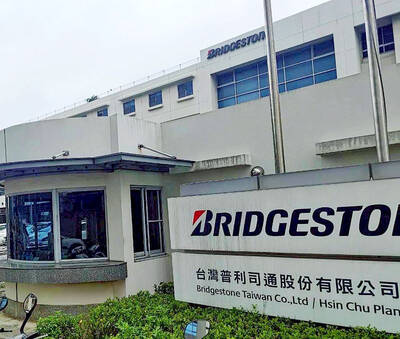
TRANSITION: With the closure, the company would reorganize its Taiwanese unit to a sales and service-focused model, Bridgestone said Bridgestone Corp yesterday announced it would cease manufacturing operations at its tire plant in Hsinchu County’s Hukou Township (湖口), affecting more than 500 workers. Bridgestone Taiwan Co (台灣普利司通) said in a statement that the decision was based on the Tokyo-based tire maker’s adjustments to its global operational strategy and long-term market development considerations. The Taiwanese unit would be reorganized as part of the closure, effective yesterday, and all related production activities would be concluded, the statement said. Under the plan, Bridgestone would continue to deepen its presence in the Taiwanese market, while transitioning to a sales and service-focused business model, it added. The Hsinchu
Taiwan Semiconductor Manufacturing Co (TSMC, 台積電) has approved a capital budget of US$31.28 billion for production expansion to meet long-term development needs during the artificial intelligence (AI) boom. The company’s board meeting yesterday approved the capital appropriation plan for purposes such as the installation of advanced technology capacity and fab construction, the world’s largest contract chipmaker said in a statement. At an earnings conference last month, TSMC forecast that its capital expenditure for this year would be at the higher end of the US$52 billion to US$56 billion range it forecast in January in response to robust demand for 5G, AI and


 RSS
RSS