


GMAC Financial Services said on Monday that Alvaro de Molina has stepped down as CEO, a surprise departure that comes as the troubled auto lender remains in negotiations with the government over its third round of taxpayer aid.
A person familiar with the situation said De Molina was asked to step down by GMAC’s board of directors. The person declined to be named because the reasons behind De Molina’s exit have not been made public.
US Treasury Department officials stressed that they had nothing to do with Molina’s departure, calling the decision “100 percent GMAC’s.”
That is in contrast to the government’s ouster earlier this year of General Motors (GM) CEO Rick Wagoner, who was pressured to step down as a condition for taxpayer aid.
GMAC director Michael Carpenter will take over as CEO. In an interview, Carpenter affirmed that no government entity had any say in De Molina’s departure.
“To the contrary, the board reached its own conclusions,” Carpenter said. “As the board looked forward, it decided that it really wanted some more strategic skills. It wanted more turnaround skills, more operations skills. So that is, in short, the basis I believe for a change.”
De Molina’s resignation comes as the lender is negotiating with the Treasury Department over additional taxpayer aid. GMAC is instrumental to the operations of automakers GM and Chrysler Group LLC, but its finances have been haunted by bad loans it made during the housing boom.
GMAC provides the financing for dealers and customers of GM and Chrysler and its survival is a crucial part of the US administration’s restructuring of the auto industry.
Carpenter said in an interview that providing auto financing was the company’s No. 1 priority. Paying back the federal government ranks No. 2.
GMAC, which became a bank holding company late last year, has received US$12.5 billion in taxpayer money and is 35 percent owned by the federal government.
The Federal Deposit Insurance Corp also took the rare step earlier this year of allowing the junk-rated company to gain access to its debt-guarantee program, called the Temporary Liquidity Guarantee Program.
It agreed to guarantee up to US$7.4 billion in GMAC-issued debt in case the company defaulted on payment.
However, results of the federal government’s “stress tests” earlier this year demanded that GMAC raise US$11.5 billion in capital cushion to help it weather further economic decline. Of 10 banks asked to raise additional cash, GMAC was the only one that failed to be able to raise the funds privately.
De Molina’s exit ends a tenure that lasted less than two years.
GMAC declined to make him available for interviews, but he said in a statement it was a “good time for me to move on to my next chapter.”
“I came to GMAC thinking that it was a short-term assignment working through a liquidity crisis. That crisis lasted two years,” De Molina said.

MORE VISITORS: The Tourism Administration said that it is seeing positive prospects in its efforts to expand the tourism market in North America and Europe Taiwan has been ranked as the cheapest place in the world to travel to this year, based on a list recommended by NerdWallet. The San Francisco-based personal finance company said that Taiwan topped the list of 16 nations it chose for budget travelers because US tourists do not need visas and travelers can easily have a good meal for less than US$10. A bus ride in Taipei costs just under US$0.50, while subway rides start at US$0.60, the firm said, adding that public transportation in Taiwan is easy to navigate. The firm also called Taiwan a “food lover’s paradise,” citing inexpensive breakfast stalls

TRADE: A mandatory declaration of origin for manufactured goods bound for the US is to take effect on May 7 to block China from exploiting Taiwan’s trade channels All products manufactured in Taiwan and exported to the US must include a signed declaration of origin starting on May 7, the Bureau of Foreign Trade announced yesterday. US President Donald Trump on April 2 imposed a 32 percent tariff on imports from Taiwan, but one week later announced a 90-day pause on its implementation. However, a universal 10 percent tariff was immediately applied to most imports from around the world. On April 12, the Trump administration further exempted computers, smartphones and semiconductors from the new tariffs. In response, President William Lai’s (賴清德) administration has introduced a series of countermeasures to support affected
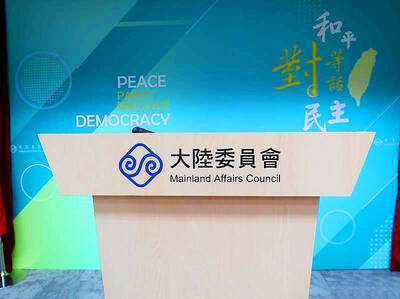
CROSS-STRAIT: The vast majority of Taiwanese support maintaining the ‘status quo,’ while concern is rising about Beijing’s influence operations More than eight out of 10 Taiwanese reject Beijing’s “one country, two systems” framework for cross-strait relations, according to a survey released by the Mainland Affairs Council (MAC) on Thursday. The MAC’s latest quarterly survey found that 84.4 percent of respondents opposed Beijing’s “one country, two systems” formula for handling cross-strait relations — a figure consistent with past polling. Over the past three years, opposition to the framework has remained high, ranging from a low of 83.6 percent in April 2023 to a peak of 89.6 percent in April last year. In the most recent poll, 82.5 percent also rejected China’s

PLUGGING HOLES: The amendments would bring the legislation in line with systems found in other countries such as Japan and the US, Legislator Chen Kuan-ting said Democratic Progressive Party (DPP) Legislator Chen Kuan-ting (陳冠廷) has proposed amending national security legislation amid a spate of espionage cases. Potential gaps in security vetting procedures for personnel with access to sensitive information prompted him to propose the amendments, which would introduce changes to Article 14 of the Classified National Security Information Protection Act (國家機密保護法), Chen said yesterday. The proposal, which aims to enhance interagency vetting procedures and reduce the risk of classified information leaks, would establish a comprehensive security clearance system in Taiwan, he said. The amendment would require character and loyalty checks for civil servants and intelligence personnel prior to


 RSS
RSS