


World markets appeared unimpressed yesterday with an action plan from international leaders to tackle the global financial crisis, as Japan became the latest major economy to sink into recession.
The G20 rich and emerging nations pledged to work together to restore global growth and overhaul the world’s financial system, but stopped short of announcing specific measures such as coordinated stimulus spending.
“In the midst of an emergency crisis, to have a statement that reads ‘We will cooperate with each another’ is all but meaningless,” said Daisuke Uno, chief strategist at Sumitomo Mitsui Banking Corp.
The leaders vowed to use government spending to reverse a spreading recession, to press for a global trade deal to ward off protectionism and to reform financial regulation and world financial institutions.
Many market players had been hoping for more specific steps to try to prevent the worst financial crisis in decades pushing the global economy into a long and deep recession.
“The G20 statement made promises of future initiatives on global financial regulation and monetary and fiscal stimulus to help global demand, but there was nothing concrete,” Barclays Capital analysts said.
Asian stock markets were mostly lower in early trade. Stocks fell 0.8 percent in Hong Kong, 2.6 percent in Sydney, 1.2 percent in Seoul and 1.1 percent in Singapore, although Tokyo managed to eke out a gain of 1.2 percent.
US president-elect Barack Obama vowed to make fighting a looming recession a top priority with new stimulus spending and help for the auto industry.
He said there was a common understanding that “we have to do whatever it takes to get this economy moving again.”
“And that we shouldn’t worry about the deficit next year or even the year after. That short term, the most important thing is that we avoid a deepening recession,” he told the CBS television network in an interview.
The yen rose as investors became more risk averse due to the lack of specifics in the G20 action plan.
The dollar fell to ¥96.25 in Tokyo morning trade, down from ¥97.06 in New York late Friday. The euro slid to US$1.2538 from US$1.2591 and to ¥120.63 from ¥122.24.
“The economic spillover of the financial crisis has increased and there is uncertainty about when conditions will stop getting worse,” said Saburo Matsumoto, chief forex strategist at Sumitomo Trust Bank.
Major companies around the world continued to feel the pain from a financial crisis that began with a wave of defaults on US subprime mortgages and developed into a full-blown credit crunch and global economic slump.
Oil prices fell in Asia after OPEC president Chakib Khelil, the energy minister of Algeria, suggested the cartel is unlikely to reduce output at a meeting later this month, and as the bad economic news continued to pile up.
New York light sweet crude for delivery next month dropped US$1.26 to US$55.78 a barrel.
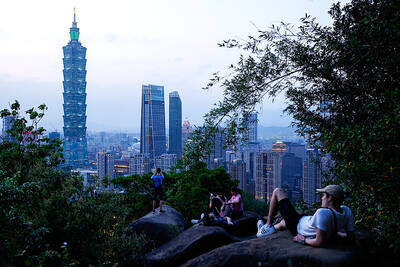
MORE VISITORS: The Tourism Administration said that it is seeing positive prospects in its efforts to expand the tourism market in North America and Europe Taiwan has been ranked as the cheapest place in the world to travel to this year, based on a list recommended by NerdWallet. The San Francisco-based personal finance company said that Taiwan topped the list of 16 nations it chose for budget travelers because US tourists do not need visas and travelers can easily have a good meal for less than US$10. A bus ride in Taipei costs just under US$0.50, while subway rides start at US$0.60, the firm said, adding that public transportation in Taiwan is easy to navigate. The firm also called Taiwan a “food lover’s paradise,” citing inexpensive breakfast stalls
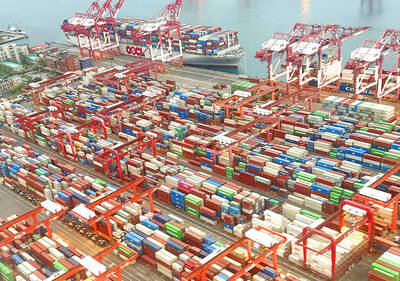
TRADE: A mandatory declaration of origin for manufactured goods bound for the US is to take effect on May 7 to block China from exploiting Taiwan’s trade channels All products manufactured in Taiwan and exported to the US must include a signed declaration of origin starting on May 7, the Bureau of Foreign Trade announced yesterday. US President Donald Trump on April 2 imposed a 32 percent tariff on imports from Taiwan, but one week later announced a 90-day pause on its implementation. However, a universal 10 percent tariff was immediately applied to most imports from around the world. On April 12, the Trump administration further exempted computers, smartphones and semiconductors from the new tariffs. In response, President William Lai’s (賴清德) administration has introduced a series of countermeasures to support affected
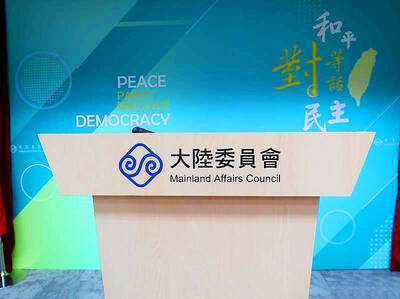
CROSS-STRAIT: The vast majority of Taiwanese support maintaining the ‘status quo,’ while concern is rising about Beijing’s influence operations More than eight out of 10 Taiwanese reject Beijing’s “one country, two systems” framework for cross-strait relations, according to a survey released by the Mainland Affairs Council (MAC) on Thursday. The MAC’s latest quarterly survey found that 84.4 percent of respondents opposed Beijing’s “one country, two systems” formula for handling cross-strait relations — a figure consistent with past polling. Over the past three years, opposition to the framework has remained high, ranging from a low of 83.6 percent in April 2023 to a peak of 89.6 percent in April last year. In the most recent poll, 82.5 percent also rejected China’s
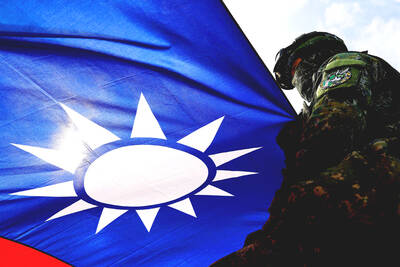
PLUGGING HOLES: The amendments would bring the legislation in line with systems found in other countries such as Japan and the US, Legislator Chen Kuan-ting said Democratic Progressive Party (DPP) Legislator Chen Kuan-ting (陳冠廷) has proposed amending national security legislation amid a spate of espionage cases. Potential gaps in security vetting procedures for personnel with access to sensitive information prompted him to propose the amendments, which would introduce changes to Article 14 of the Classified National Security Information Protection Act (國家機密保護法), Chen said yesterday. The proposal, which aims to enhance interagency vetting procedures and reduce the risk of classified information leaks, would establish a comprehensive security clearance system in Taiwan, he said. The amendment would require character and loyalty checks for civil servants and intelligence personnel prior to


 RSS
RSS