


G8 finance chiefs kicked off two days of discussions yesterday focused squarely on mounting Western concern over the Kremlin's swelling clout in world oil and gas markets.
Beginning its first turn at the helm of the Group of Eight, Russia has set a diverse agenda for the meetings that will include talk about world trade, debt relief for poor countries, fighting infectious diseases and terror financing.
As host to its seven G8 partners -- Britain, Canada, France, Germany, Italy, Japan and the US -- Russia has also invited emerging giants Brazil, China, India and South Africa to talks alongside the G8 discussion.
Attention during the two days of meetings that begin with a Kremlin dinner will center on issues likely to be taken up by the G8 leaders at their annual summit in July in St. Petersburg.
Discussion of more technical issues like currency market regulation traditionally addressed by G7 finance ministers -- Russia does not take part in these talks -- will be avoided altogether this weekend, a device to avoid excluding Russia from portions of the meetings it is hosting.
Chief among the issues to be discussed by the ministers is "global energy security," the topic that Russia, a fast-growing world energy giant, has singled out as the top agenda item for its year-long G8 presidency.
Russia made clear last year it would use the G8 discussion process to promote itself as a dependable energy partner with seemingly inexhaustible supply for world markets spooked by high prices and volatility in the Middle East .
What Moscow may not have foreseen was the cascade of consequences from an ugly dispute with Ukraine on pricing for Russian gas supplies that marked the start of its G8 presidency early this year.
That dispute resulted in supply disruption to clients further downstream in Europe. That, coupled with Moscow's reassertion of state control over energy resources, is raising Western concern over its dependence on Moscow for vital fuel and Kremlin linkage of energy to politics.
That concern will be aired at this weekend's G8 finance minister's meeting where, according to the Financial Times, France and others intend to offer Moscow financial incentives to liberalize its gas industry.
However Russia, spanning the globe between Europe and Asia and facing hungry markets in both east and west eager to diversify energy supply away from the Middle East, holds a lot of cards and will not easily be pushed on the issue.
Quoting an unnamed "Western energy diplomat," the Times said any moves aimed at pushing Russian state-controlled energy giant Gazprom to ease its monopoly grip on Russia's gas pipeline network was "wishful thinking."
Russia confirmed as much on the eve of the talks, with Finance Minister Alexei Kudrin saying Moscow was prepared to ratify an energy charter aimed at facilitating its gas flow to Europe but was unable to say when it would actually do so.
"Russia must develop its gas network in order to provide access to everyone, including private companies, and we are working on it," he told a press conference.
"In that context we are going to ratify the charter" he said, but added that "we cannot set a date for the moment."
The charter, drafted in 1991 by the EU's executive commission, aims to improve energy cooperation between the EU and eastern Europe and the former Soviet Union. Russia has signed the text but has yet to ratify it.
Kudrin said Moscow regarded this weekend's finance minister's meeting as of "fundamental" importance because it would lay out all of the headline issues to be addressed on concert by the G8 countries over the course of the coming year.
He said energy discussion was not merely about secure supply of oil and gas but about "establishing clear rules of the game" for the energy market.

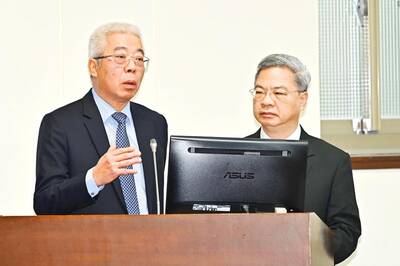
Taiwan has arranged for about 8 million barrels of crude oil, or about one-third of its monthly needs, to be shipped from the Red Sea this month to bypass the Strait of Hormuz and ease domestic supply pressures, CPC Corp, Taiwan (CPC, 台灣中油) said yesterday. The state-run oil company has worked with Middle Eastern suppliers to secure routes other than the Strait of Hormuz, through which about 20 percent of the world’s oil and liquefied natural gas typically passes, CPC chairman Fang Jeng-zen (方振仁) said at a meeting of the legislature’s Economics Committee in Taipei. Suppliers in Saudi Arabia have indicated they
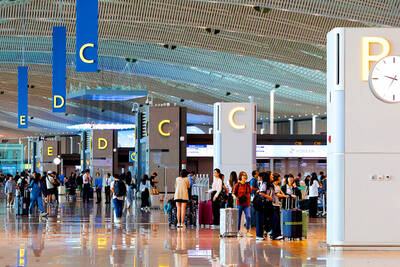
South Korea has adjusted its electronic arrival card system to no longer list Taiwan as a part of China, a move that the Ministry of Foreign Affairs said would help facilitate exchanges between the two sides. South Korea previously listed “Taiwan” as “Taiwan (China)” in the drop-down menus of its online arrival card system, where people had to fill out where they came from and their next destination. The ministry had requested South Korea make a revision and said it would change South Korea’s name on Taiwan’s online immigration system from “Republic of Korea” to “Korea (South),” should the issue not be

Tainan, Taipei and New Taipei City recorded the highest fines nationwide for illegal accommodations in the first quarter of this year, with fines issued in the three cities each exceeding NT$7 million (US$220,639), Tourism Administration data showed. Among them, Taipei had the highest number of illegal short-term rental units, with 410. There were 3,280 legally registered hotels nationwide in the first quarter, down by 14 properties, or 0.43 percent, from a year earlier, likely indicating operators exiting the market, the agency said. However, the number of unregistered properties rose to 1,174, including 314 illegal hotels and 860 illegal short-term rental
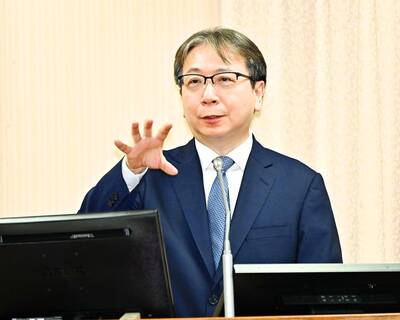
AIR ALERT: China’s reservation of airspace over the Yellow Sea and East China Sea could be an attempt to test the US’ response ahead of a Trump-Xi meeting, the NSB head said China’s attempts to infiltrate Taiwan are systematic, planned and targeted, with activity shifting from recruiting mid-level military officers to rank-and-file enlisted personnel, National Security Bureau (NSB) Director-General Tsai Ming-yen (蔡明彥) said yesterday. The Chinese Communist Party’s (CCP) integrates national security, intelligence operations and “united front” efforts into a dense network to conduct intelligence gathering and espionage in Taiwan, Tsai said at a meeting of the legislature’s Foreign Affairs and National Defense Committee. It uses specific networks to screen targets through exchange activities and recruiting local collaborators to establish intelligence-gathering organizations, he said. China is also shifting who it targets to lower-ranking military personnel,


 RSS
RSS