


In a sharp rebuttal to an antitrust lawsuit, Intel Corp on Thursday denied any wrongdoing and characterized Advanced Micro Devices, its rival and accuser, as a victim of its own mistakes.
Intel's formal response came nine weeks after AMD accused Intel of unfair pricing and rebates, and of coercing customers to prevent them from using AMD microprocessors. At 63 pages, the Intel rebuttal was 15 pages longer than the lawsuit itself.
"The claims are factually incorrect and contradictory," Intel states in its response, filed in US District Court in Delaware.
"The evidence will show that every failure and setback for which AMD today seeks to blame Intel is actually a direct result of AMD's own actions or inactions," Intel said.
Intel, of Santa Clara, California, has more than 80 percent of the unit sales and 90 percent of the revenues in the market for so-called x86 microprocessors.
In its lawsuit, AMD contends that its share of x86 unit sales peaked in 2001 at 20.8 percent and then declined to 15.8 percent by last year despite its technical advances -- a decline it attributes to unfair business practices by Intel.
But in its response, Intel alleges that AMD's real motivation is to keep prices high, which would harm consumers.
"AMD seeks to impede Intel's ability to lower prices and thereby to allow AMD to charge higher prices," Intel said.
Intel's response describes a range of business missteps that it says AMD made, resulting in its current market position.
Most notably, Intel contends that AMD did not invest enough in new plants in recent years to stay competitive and is therefore "capacity constrained" -- meaning it is selling all the chips it can make -- rather than being improperly limited by any actions on Intel's part.
AMD's action also alleges that Intel used illegal tactics to persuade dozens of companies -- including Dell, Sony and Toshiba -- not to use AMD chips.
In its response on Thursday, Intel called AMD's claims contradictory, since AMD currently does business with many of those same companies.
AMD, based in Sunnyvale, California, has not indicated what damages it is seeking. But regardless of the outcome, the lawsuit is expected to take years to litigate and involve hundreds of witnesses and documents.
"We believe this will be one of the largest pieces of litigation in US history," said Bruce Sewell, Intel's chief counsel, given the scope and the number of documents and witnesses involved. Sewell said he expected the discovery portion of the case to take a year or more.
AMD lawyers said they planned to begin deposing witnesses next week.
AMD's lawsuit on June 27came after the Japanese Fair Trade Commission concluded in March that Intel had stifled competition there by offering rebates to five computer companies, including Toshiba and Sony, in exchange for their agreeing to limit purchases from AMD or Transmeta, another Intel rival. At the time, Intel said it disagreed with the outcome but would not contest it.
The European Commission is also investigating allegations of Intel misconduct there, and in July European regulators raided the offices of Intel and some of its customers in four countries, seeking evidence of illegal activity.
Tom McCoy, an AMD lawyer, said on Thursday that the ruling in Japan, along with the raids in Europe, added credibility to the company's complaints about Intel's practices.
"There is an obvious reason why there is a global investigation of Intel's business practices. That is because they are using their monopoly position to strengthen their monopoly," he said.
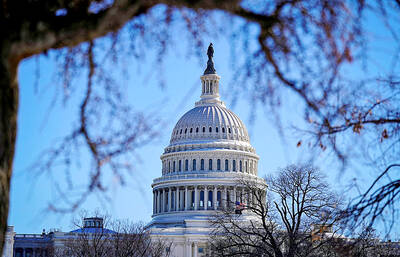
RESTRAINTS: Should China’s actions pose any threat to Taiwan’s security, economic or social systems, China would be excluded from major financial institutions, the bill says The US House of Representatives on Monday passed the PROTECT Taiwan Act, which states that Washington would exclude China from participating in major global financial organizations if its actions directly threaten Taiwan’s security. The bill, proposed by Republican Representative Frank Lucas, passed with 395 votes in favor and two against. It stipulates that if China’s actions pose any threat to Taiwan’s security, economic or social systems, the US would, “to the maximum extent practicable,” exclude Beijing from international financial institutions, including the G20, the Bank for International Settlements and the Financial Stability Board. The bill makes it clear that China must be prepared

Taiwanese trade negotiators told Washington that Taipei would not relocate 40 percent of its semiconductor production to the US, and that its most advanced technologies would remain in the nation, Vice Premier Cheng Li-chiun (鄭麗君) said on Sunday. “I told the US side very clearly — that’s impossible,” Cheng, who led the negotiation team, said in an interview that aired on Sunday night on Chinese Television System. Cheng was referring to remarks last month by US Secretary of Commerce Howard Lutnick, in which he said his goal was to bring 40 percent of Taiwan’s chip supply chain to the US Taiwan’s almost
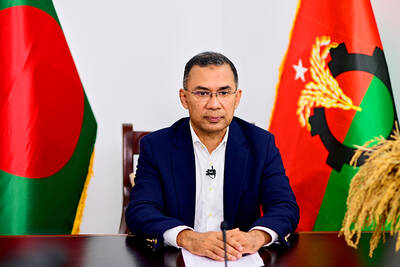
PEACE AT LAST? UN experts had warned of threats and attacks ahead of the voting, but after a turbulent period, Bangladesh has seemingly reacted to the result with calm The Bangladesh Nationalist Party (BNP) yesterday celebrated a landslide victory in the first elections held since a deadly 2024 uprising, with party leader Tarique Rahman to become prime minister. Bangladesh Election Commission figures showed that the BNP alliance had won 212 seats, compared with 77 for the Islamist-led Jamaat-e-Islami alliance. The US embassy congratulated Rahman and the BNP for a “historic victory,” while India praised Rahman’s “decisive win” in a significant step after recent rocky relations with Bangladesh. China and Pakistan, which grew closer to Bangladesh since the uprising and the souring of ties with India, where ousted Bangladeshi prime minister Sheikh Hasina
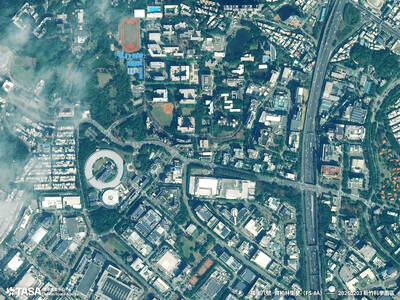
The Taiwan Space Agency (TASA) yesterday released the first images from its Formosat-8A satellite, featuring high-resolution views of Hsinchu Science Park (新竹科學園區), Tainan’s Anping District (安平), Kaohsiung’s Singda Harbor (興達港), Japan’s National Stadium in Tokyo and Barcelona airport. Formosat-8A, named the “Chi Po-lin Satellite” after the late Taiwanese documentary filmmaker Chi Po-lin (齊柏林), was launched on Nov. 29 last year. It is designed to capture images at a 1m resolution, which can be sharpened to 0.7m after processing, surpassing the capabilities of its predecessor, Formosat-5, the agency said. It is the first of TASA’s eight-satellite Formosat-8 constellation to be sent into orbit and


 RSS
RSS