


Cathay Pacific Airways Ltd plans to buy or lease as many as nine medium-sized passenger aircraft, expanding its fleet to take advantage of increasing demand for air travel.
Cathay is considering Boeing Co's 777-300 and Airbus SAS's A330-300 aircraft, which can seat between 335 and 480 passengers, said corporate development director Tony Tyler in an interview.
The Hong Kong-based carrier wants the planes delivered by 2007.
"We are in discussions with Boeing, Airbus and some leasing companies to discuss the acquisition or leasing of regional aircraft," Tyler said. "These discussions are already well advanced and we'll be able to announce them fairly soon."
Cathay, Singapore Airlines Ltd and other Asian rivals are expanding or upgrading their fleets as passenger traffic recovers from the SARS outbreak last year. The International Air Transport Association has said airlines worldwide may make a combined profit of US$2 billion to US$4 billion this year, compared with losses of over US$30 billion in the last three years.
Hong Kong-based Cathay also expects to complete its purchase of some used Boeing 747-400 planes soon, some of which will be converted into freighters, Tyler said.
"The market price for the 747-400 is falling and Cathay will be able to pick up cheap aircraft," said Jim Eckes, managing director of airline consultancy Indoswiss Aviation. "That's a smart deal and they can then put off the decision on getting the A380."
Toulouse-based Airbus SAS, which last year delivered more planes than Boeing, wants to win more Asian customers for its 550-seat A380 plane, which will compete with Boeing's 747-400 aircraft.
Cathay on Wednesday posted a smaller-than-expected drop in second-half profit as it cut costs, restored flights and ended fare discounts following the containment of the SARS virus. Net income fell 1 percent to HK$2.54 billion (US$326 million).
Travel demand in Asia is improving, with Cathay's bookings for March and April "looking very solid," Tyler said.

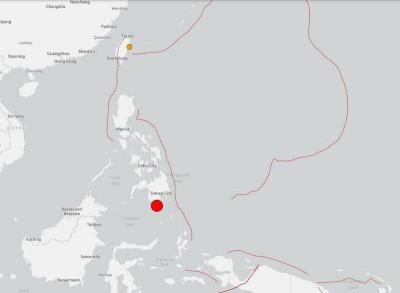
A magnitude 7.8 earthquake struck off the southern coast of Mindanao in the Philippines at 7:38am today, prompting the US Tsunami Warning System to issue an alert for neighboring countries, including Taiwan. The system issued a purple alert indicating a "tsunami threat." The potential threat zone includes Taiwan, the Philippines, Papua New Guinea, Yap and Palau. Philippine authorities were assessing the damage from the quake, with the office of civil defense seeking to verifying initial reports that 15 people had been killed and 129 injured in the region, mostly from falling debris. Arlene Hollero, disaster chief of Maasim town in the Philippines' Sarangani Province,
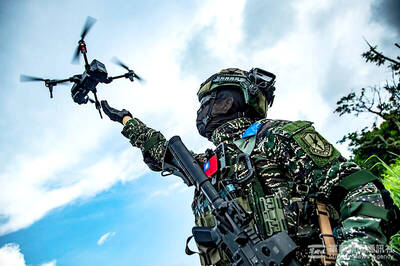
RESILIENCE: Taiwan plays a key role in semiconductors, energy, information infrastructure and advanced manufacturing, AIT Director Raymond Greene said Taiwan’s continued investment in deterrence and resilience remains vital, especially in uncrewed systems and other emerging technologies, American Institute in Taiwan (AIT) Director Raymond Greene said yesterday. Greene made the remarks at the annual National Strategic Summit on Supply Chain Resilience held by the Research Institute for Democracy, Society and Emerging Technology (DSET), a government-backed think tank. As Taiwan last year became the US’ fourth-largest trading partner and supply chain security is becoming more important, cooperation in emerging technologies continues to deepen between the two countries, he said. The US is committed to accelerating innovation, building key infrastructure, strengthening cooperation

The National Chungshan Institute of Science and Technology yesterday showcased its locally developed variants of the Vision 60 robotic patrol dog, which it plans to deploy on the nation’s outlying territories in the South China Sea. The variants were produced under the Joint Lab project — created by the institute and domestic companies — and assembled with domestically produced motors, lenses and artificial intelligence (AI) systems alongside licensed tech from the US, Missile and Rocket Systems Research Division deputy director Jen Kuo-kang (任國光) told the media event at a military base in Taipei’s Dazhi (大直) area. Taiwan has built up its strengths

RIGHT DIRECTION: Taiwan’s efforts to prevent forced labor include a proposal to ‘fully prohibit’ employers from withholding workers’ documents, an official said Taiwan is to establish a mechanism to restrict imports of goods linked to forced labor, the Executive Yuan said yesterday, after the US proposed imposing additional tariffs on Taiwanese goods over labor concerns. “The Ministry of Labor and the Ministry of Economic Affairs are to establish an interministerial review procedure,” Executive Yuan spokesperson Michelle Lee (李慧芝) said at a news briefing in Taipei. “The government is to use the Foreign Trade Act [貿易法] as the legal basis to restrict imports of goods produced with forced labor” and bring its supply chain governance more in line with international standards on human rights, resilience


 RSS
RSS