


China won't back down on a plan to force computer makers to adopt a new standard for encrypting wireless communications after Intel Corp said it will halt sales of its Centrino chip package in the nation.
Intel, the world's biggest chipmaker, will stop sales of the wireless communication device after balking at government demands for alterations before June 1. A quarter of all laptops sold in China last year used the chip, including those made by Legend Group Ltd, the country's largest personal computer maker.
"The government's position is unequivocal," said Wang Xilin, deputy director of the Standardization Administration of China, a unit of China's Cabinet, in a phone interview from Beijing. "June 1 is the deadline. That's not going to change."
Intel spent US$300 million promoting its Centrino chip package last year as the company tried to tap demand for laptops. The US government last week wrote a letter of complaint arguing China's December ruling is an unfair barrier to sales in the world's second-biggest personal computer.
Intel has been unable to produce a technical solution that uses the Chinese standards and works as well as the existing product, said Chuck Mulloy, a spokesman for the Santa Clara, California-based company.
Under the rule, overseas makers of computers and chips trying to sell devices in China that allow wireless communication must use a Chinese encryption software and make the products with designated mainland companies.
"There is a likelihood consumers will delay laptop computer purchases in China because top-of-the-line technology may not be available for a while," said Kitty Fok, a Hong Kong-based analyst at market researcher IDC.
In China, notebook computer sales will rise by half to 2.6 million units, or by 40 percent to US$3.5 billion this year, according to IDC. About 26 percent of all laptop computers sold in the country last year used the Centrino chip, IDC's Fok said.
Texas Instruments Inc, the largest maker of chips for cell phones, is also making chips that don't conform to the new Chinese standard and wants the rules changed, said Sharon Hampton, a spokeswoman for the Dallas, Texas-based company. The rule also affects imports of other devices including mobile phones personal digital assistants, scanners and network cards.
China is developing its own standards for video compression, digital television signals, and high-speed mobile-phone networks, as the government seeks to encourage domestic manufacturers to expand.
Consumers and businesses are choosing laptops over desktop PCs, and demand for notebooks with so-called wireless-fidelity, or Wi-Fi, Internet access is rising. Laptop sales will grow 25 percent this year compared with an estimated 6.5 percent growth in desktops, according to a January forecast by UBS.
Intel doesn't detail sales to China. The Asia-Pacific region accounted for 40 percent of the chipmaker's fourth-quarter revenue.
Intel will still be able to sell the main processor in the package, the Pentium M, Mulloy said. Intel is continuing talks with the Chinese authorities, he said.
"Intel will probably try to push harder for sale of Pentium M in China," Fok said.

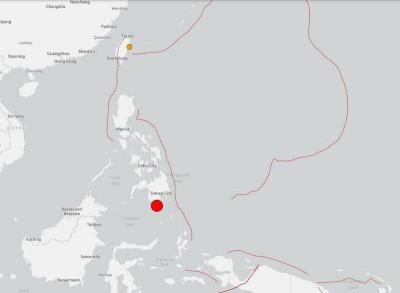
A magnitude 7.8 earthquake struck off the southern coast of Mindanao in the Philippines at 7:38am today, prompting the US Tsunami Warning System to issue an alert for neighboring countries, including Taiwan. The system issued a purple alert indicating a "tsunami threat." The potential threat zone includes Taiwan, the Philippines, Papua New Guinea, Yap and Palau. Philippine authorities were assessing the damage from the quake, with the office of civil defense seeking to verifying initial reports that 15 people had been killed and 129 injured in the region, mostly from falling debris. Arlene Hollero, disaster chief of Maasim town in the Philippines' Sarangani Province,

RESILIENCE: Taiwan plays a key role in semiconductors, energy, information infrastructure and advanced manufacturing, AIT Director Raymond Greene said Taiwan’s continued investment in deterrence and resilience remains vital, especially in uncrewed systems and other emerging technologies, American Institute in Taiwan (AIT) Director Raymond Greene said yesterday. Greene made the remarks at the annual National Strategic Summit on Supply Chain Resilience held by the Research Institute for Democracy, Society and Emerging Technology (DSET), a government-backed think tank. As Taiwan last year became the US’ fourth-largest trading partner and supply chain security is becoming more important, cooperation in emerging technologies continues to deepen between the two countries, he said. The US is committed to accelerating innovation, building key infrastructure, strengthening cooperation

The National Chungshan Institute of Science and Technology yesterday showcased its locally developed variants of the Vision 60 robotic patrol dog, which it plans to deploy on the nation’s outlying territories in the South China Sea. The variants were produced under the Joint Lab project — created by the institute and domestic companies — and assembled with domestically produced motors, lenses and artificial intelligence (AI) systems alongside licensed tech from the US, Missile and Rocket Systems Research Division deputy director Jen Kuo-kang (任國光) told the media event at a military base in Taipei’s Dazhi (大直) area. Taiwan has built up its strengths

RIGHT DIRECTION: Taiwan’s efforts to prevent forced labor include a proposal to ‘fully prohibit’ employers from withholding workers’ documents, an official said Taiwan is to establish a mechanism to restrict imports of goods linked to forced labor, the Executive Yuan said yesterday, after the US proposed imposing additional tariffs on Taiwanese goods over labor concerns. “The Ministry of Labor and the Ministry of Economic Affairs are to establish an interministerial review procedure,” Executive Yuan spokesperson Michelle Lee (李慧芝) said at a news briefing in Taipei. “The government is to use the Foreign Trade Act [貿易法] as the legal basis to restrict imports of goods produced with forced labor” and bring its supply chain governance more in line with international standards on human rights, resilience


 RSS
RSS