


■ Semiconductors
STMicro eyes China
STMicroelectronics NV, Europe's biggest chipmaker, may build a chip plant in China that would start production by 2005 to tap growing demand in Asia, the DigiTimes Web site reported, citing Chairman Pasquale Pistorio. The Geneva-based company would build or buy a plant that makes chips from 8-inch instead of 12-inch silicon wafers because China isn't ready for an investment in the latest technology, the report said, citing Pistorio. An investment in chipmaking in China would add to STMicroelectronics' existing chip-design and semiconductor assembly operations in the world's most populous nation, the report said.
■ Internet
NEC, seven others to link
NEC Corp's Biglobe, Fujitsu Ltd's Nifty Corp and six other Japanese Internet-service providers agreed to form an alliance to offer Internet-based phone services, the Mainichi newspaper reported. The companies, including Sony Corp's So-net and two Internet services operated by Nippon Telegraph & Telephone Corp, will let their customers call each other for free over the network to compete against a similar service offered by Softbank Corp's Yahoo BB high-speed Internet service, the report said, without citing anyone. The eight companies have separately begun their own services, the report said. They agreed yesterday to form a consortium and meet on a regular basis to build a communication system to respond to trouble including disruption of its voice service, the report said.
■ US economy
Consumer confidence fell
US consumer confidence fell this month to the lowest in more than a decade as heightened concern about an Iraq war and soaring energy bills threaten to slow spending and the economy. "The overhang of the war is clearly a damper on the economy," Treasury Secretary John Snow said after a speech in Columbus, Ohio. "When people are nervous they don't spend as much." The University of Michigan's index of sentiment fell to 75, the lowest since October 1992, when the economy had trouble creating jobs, from 79.9 in February. Confidence has declined every month this year and consumer demand is beginning to wane. The university's current conditions index, which reflects Americans' perception of their finances and whether it's a good time to make major purchases, fell to 87.1 from 95.4 in February. The latest reading also was the lowest since October 1992.
■ Breweries
Asahi goes to Beijing
Asahi Breweries Ltd, Japan's biggest brewer, will invest ?5 billion (US$42 million) to build a plant in Beijing to produce its best-selling Super Dry beer and other products sold under local brands, the Nihon Keizai newspaper reported. Asahi's new plant, the sixth the company will operate in China through joint ventures, will begin operations next year, the paper said, without citing anyone. The plant will have annual production capacity of 100,000kl and make beer in bottles, cans and barrels, the report said. Asahi's output from Chinese plants totaled 510,000kl last year, the report said. Asahi expects operating profit, or sales minus the cost of goods sold, to rise 5.3 percent to ?73 billion this year helped by increasing sales of low-malt products, the brewer said last month.

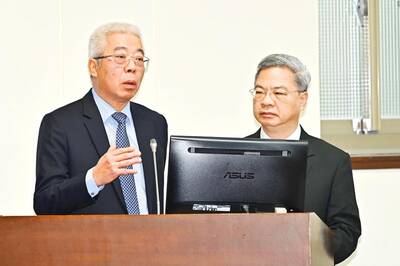
Taiwan has arranged for about 8 million barrels of crude oil, or about one-third of its monthly needs, to be shipped from the Red Sea this month to bypass the Strait of Hormuz and ease domestic supply pressures, CPC Corp, Taiwan (CPC, 台灣中油) said yesterday. The state-run oil company has worked with Middle Eastern suppliers to secure routes other than the Strait of Hormuz, through which about 20 percent of the world’s oil and liquefied natural gas typically passes, CPC chairman Fang Jeng-zen (方振仁) said at a meeting of the legislature’s Economics Committee in Taipei. Suppliers in Saudi Arabia have indicated they
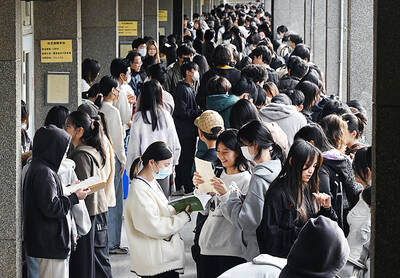
A global survey showed that 60 percent of Taiwanese had attained higher education, second only to Canada, the Ministry of the Interior said. Taiwan easily surpassed the global average of 43 percent and ranked ahead of major economies, including Japan, South Korea and the US, data from the Organisation for Economic Co-operation and Development (OECD) for 2024 showed. Taiwan has a high literacy rate, data released by the ministry showed. As of the end of last year, Taiwan had 20.617 million people aged 15 or older, accounting for 88.5 percent of the total population, with a literacy rate of 99.4 percent, the data
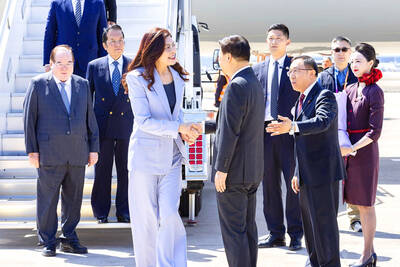
CCP ‘PAWN’? Beijing could use the KMT chairwoman’s visit to signal to the world that many people in Taiwan support the ‘one China’ principle, an academic said Chinese Nationalist Party (KMT) Chairwoman Cheng Li-wun (鄭麗文) yesterday arrived in China for a “peace” mission and potential meeting with Chinese President Xi Jinping (習近平), while a Taiwanese minister detailed the number of Chinese warships currently deployed around the nation. Cheng is visiting at a time of increased Chinese military pressure on Taiwan, as the opposition-dominated Legislative Yuan stalls a government plan for US$40 billion in extra defense spending. Speaking to reporters before going to the airport, Cheng said she was going on a “historic journey for peace,” but added that some people felt uneasy about her trip. “If you truly love Taiwan,

NEW LOW: The council in 2024 based predictions on a pessimistic estimate for the nation’s total fertility rate of 0.84, but last year that rate was 0.69, 17 percent lower An expected National Development Council (NDC) report expects the nation’s population to drop below 12 million by 2065, with the old-age dependency ratio to top 100 percent sooner than 2070, sources said yesterday. The council is slated to release its latest population projections in August, using an ultra-low fertility model, the sources said. The previous report projected that Taiwan’s population would fall to 14.37 million by 2070, but based on a new estimate of the total fertility rate (TFR) — the average number of children born to a woman over her lifetime — the population is expected to reach 12 million by


 RSS
RSS