


Drones buzzing around Singapore’s Changi Airport have caused 63 flights to be delayed or diverted in the past week, triggering an investigation and raising questions about the motives of the offenders.
The Civil Aviation Authority of Singapore yesterday said that 18 flights at the airport were delayed and seven were diverted the night before “due to bad weather and unauthorized drone activities.”
It had earlier confirmed drones were seen flying near the airport on Tuesday and Wednesday last week. That caused the intermittent closure of a runway, delaying 37 flights and diverting one arriving plane to Kuala Lumpur, Malaysia.
“A multiagency team, including the Civil Aviation Authority of Singapore, Changi Airport Group, Singapore Armed Forces and the Singapore Police Force, was activated for the search and locate operations,” the regulator said.
Investigations are ongoing.
No details on the number of drones involved and the perpetrators have been provided by the authorities.
Shortly after news broke of the drone activity at the airport, the Singaporean Ministry of Defence posted a photograph of a soldier pointing a jammer gun at a “rouge drone” on Facebook.
While the photo was not taken at Changi, it hinted at the anti-drone technologies that might be used to track down offenders.
Drones are largely controlled by operators via a radio control link, on a frequency that is similar to Wi-Fi. A jammer gun temporarily disables this connection.
“In absence of a control link, most drones are designed to switch into ‘fail-safe’ mode, and may either attempt to return to its original location or immediately land,” said Foong Shaohui, an associate professor who researches unmanned systems at the Singapore University of Technology and Design.
“It would be possible to identify the operators by analyzing the information stored in the drone” such as pictures and flight data, he added.
Some observers said the incursions, which happened on two occasions and less than a week from each other, could signal the involvement of more sophisticated groups.
Garuda Robotics chief executive Mark Yong took the vast media coverage on the dangers of flying drones around the airport into account.
“Since this is a repeat event ... there is a good chance that this is not an accidental airspace intrusion or an ignorant drone operator,” he said.
Unauthorized drone activity is dangerous around airports because of the risk of collision with planes that are taking off and landing.
Drones cannot be flown within 5km of airports or military bases in Singapore without a permit.
The offense carries a maximum penalty of a year’s jail term and a fine of S$20,000 (US$14,744).
Changi Airport is among the world’s busiest. It handled a record 65.6 million passengers last year, but its executives have named rising fuel prices and trade tensions as challenges going forward.
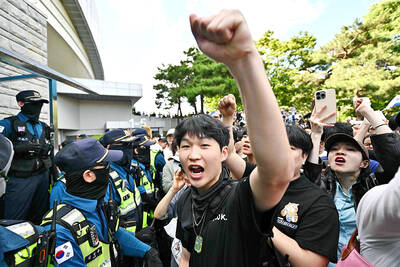
‘ABSURD MISTAKE’: The election commission said that there had been a failure to anticipate turnout after 14 polling stations ran short of ballot papers South Korean riot police yesterday cleared protesters from a Seoul polling station after a 35-hour blockade sparked by a shortage of ballot papers during local elections earlier this week. Wednesday’s election was the first nationwide vote since South Korean President Lee Jae-myung took office following the ouster of Yoon Suk-yeol over his short-lived martial law declaration. Lee’s ruling Democratic Party swept most races, but failed to flip the crucial Seoul mayoral seat. The South Korean National Election Commission apologized, blaming a failure to anticipate turnout after 14 polling stations in Seoul ran short of ballot papers. Some polling stations stayed open until 10pm to

France experienced its hottest spring on record, the French weather service said on Tuesday, after an exceptional early heat wave that also broke highs for the season in England and Wales. Meteo-France said the average nationwide temperature over March to May was 13.8°C — about 1.7°C above the norm, and surpassing records set in 2011 and 2020. “The warmest spring since records began in 1900,” it said in a bulletin. All three months were warmer than average, but the onset of an “unprecedented heatwave” late last month pushed the mercury to highs typically seen at the height of the summer. “Our country had never
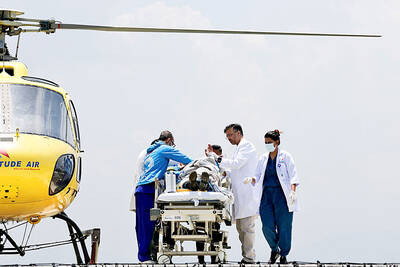
A Sherpa guide was found crawling to base camp on Mount Everest a week after he went missing and was reunited with his family, who had given up hope he would return. Dawa Sherpa was last seen on Friday last week descending the mountain, but he did not reach base camp even though his client did. The pair were among the last climbers on the mountain as the climbing season came to an end and the route was dismantled. Dawa was located by a cleaning crew on Thursday morning as he was crawling down the snowy slopes around the Khumbu Icefall, just above
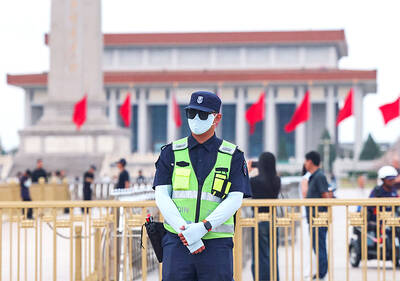
Chinese authorities are snuffing out any remembrance of the deadly 1989 military crackdown on student-led pro-democracy protests in Tiananmen Square, which happened 37 years ago yesterday, in a further tightening of a years-long campaign to erase what happened from public memory. Police told relatives of the victims they would not be allowed to visit a cemetery in Beijing on the anniversary of the crackdown, a person with knowledge of the matter said. Relatives of the victims visited the cemetery on the anniversary for more than 30 years to read memorial statements with police keeping watch, Amnesty International said. Hundreds of people,


 RSS
RSS