


New research suggests a worrying number of people in China may be infected with bacteria resistant to an antibiotic used as a last resort.
Researchers examined more than 17,000 samples from patients with infections of common bacteria found in the gut, in two hospitals in China’s Zhejiang and Guangdong provinces, over eight years. About 1 percent of those samples were resistant to colistin, often considered the last option in antibiotics.
The study, published on Friday in The Lancet journal, is one of the first to document the extent of drug-resistant infections in more than one Chinese province.

Photo: CDC via AP
For decades, China has used colistin in its agriculture industry to speed animals’ growth, but the drug was not used in people.
Scientists say the latest work is further evidence that overuse in animals can spread to people. Chinese officials earlier this year approved colistin for use in hospitals, raising fears that it could worsen the resistance problem.
“It will be very important to ration its use so that it’s only used when absolutely nothing else will work,” said Mark Enright, a professor of medical microbiology at Manchester Metropolitan University, who was not part of the research.
Health officials have long worried that colistin-resistant bacteria may spread more widely, setting the stage for superbug infections that would theoretically be impervious to medications. Only a small number of such cases worldwide have been detected, including in the US.
Rising concerns over drug-resistant germs have prompted the UN to encourage countries to cut back on antibiotic use and develop new medicines.
People infected with these resistant strains can usually be treated with current antibiotics, but doctors said that as these bacteria — which are already untreatable with last-resort drugs — acquire resistance to current drugs, the infections may become impossible to treat.
Experts also noted a surprise: the apparent ease with which the resistant gene spread between bacteria, including different species of bugs.
“It now looks like there’s potential for the resistance gene to move around and spread between different species of bacteria,” said Nigel Brown, a spokesman for Britain’s Microbiology Society, adding that it could lead to a jump in infections.
In a separate study also published in The Lancet, another group of Chinese researchers analyzed samples from patients with blood infections at 28 hospitals. About 1 percent had the colistin-resistant gene — a much higher figure than would be expected in developed countries.
Colistin’s use in hospitals should be restricted to avoid problems, said Yu Yunsong (俞云松), one of the study’s authors.
“This is a warning shot about the possible scenario where we don’t have very much left in the armory to treat [bacterial] infections,” Brown said. “I don’t think we are very close to that happening, but it is a remote possibility if we aren’t careful about how we use our antibiotics.”

Four contenders are squaring up to succeed Antonio Guterres as secretary-general of the UN, which faces unprecedented global instability, wars and its own crushing budget crisis. Chile’s Michelle Bachelet, Argentina’s Rafael Grossi, Costa Rica’s Rebeca Grynspan and Senegal’s Macky Sall are each to face grillings by 193 member states and non-governmental organizations for three hours today and tomorrow. It is only the second time the UN has held a public question-and-answer, a format created in 2016 to boost transparency. Ultimately the five permanent members of the UN’s top body, the Security Council, hold the power, wielding vetoes over who leads the

A humanoid robot that won a half-marathon race for robots in Beijing on Sunday ran faster than the human world record in a show of China’s technological leaps. The winner from Honor, a Chinese smartphone maker, completed the 21km race in 50 minutes and 26 seconds, said a WeChat post by the Beijing Economic-Technological Development Area, also known as Beijing E-Town, where the race began. That was faster than the human world record holder, Ugandan Jacob Kiplimo, who finished the same distance in about 57 minutes in March at the Lisbon road race. The performance by the robot marked a significant step forward

An earthquake registering a preliminary magnitude of 7.7 off northern Japan on Monday prompted a short-lived tsunami alert and the advisory of a higher risk of a possible mega-quake for coastal areas there. The Cabinet Office and the Japan Meteorological Agency said there was a 1% chance for a mega-quake, compared to a 0.1% chance during normal times, in the next week or so following the powerful quake near the Chishima and Japan trenches. Officials said the advisory was not a quake prediction but urged residents in 182 towns along the northeastern coasts to raise their preparedness while continuing their daily lives. Prime
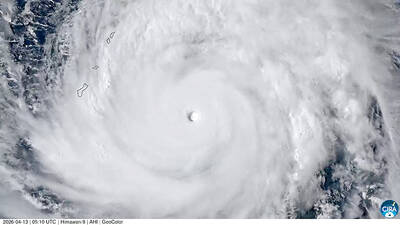
HAZARDOUS CONDITION: The typhoon’s sheer size, with winds extending 443km from its center, slowed down the ability of responders to help communities, an official said The US Coast Guard was searching for six people after losing contact with their disabled boat off the coast of Guam following Typhoon Sinlaku. The crew of the 44m dry cargo vessel, the US-registered Mariana, on Wednesday notified the coast guard that the boat had lost its starboard engine and needed assistance, Petty Officer 3rd Class Avery Tibbets said yesterday. The coast guard set up a one-hour communication schedule with the vessel, but lost contact on Thursday. A Coast Guard HC-130 Hercules aircraft was launched to search for the six people on board, but it had to return to Guam because of


 RSS
RSS