


China is giving shelter to more than 3,000 people who have fled Myanmar after fighting between the Burmese government and rebels, and stray shells have fallen inside Chinese territory causing minor damage, but no deaths, Chinese state media said yesterday.
Four armed ethnic groups have attacked security forces in the north of Myanmar, dealing a major blow to Burmese leader Aung San Suu Kyi’s top goal of reaching peace with ethnic minorities.
China, which has been alarmed by previous fighting along the porous border, has put its armed forces on high alert and called for all sides to exercise restraint.
The official China Daily newspaper said the injured people among the 3,000 Burmese citizens have been taken to a hospital in Yunnan Province, which shares a long border with Myanmar.
“The Chinese authority has responded swiftly and handled the situation appropriately,” Pan Xuesong (潘雪松), a spokesman for the Chinese embassy in Myanmar, told the newspaper.
Stray shells have fallen in Wanding, an important border crossing, causing some minor damage, state TV said.
The Global Times newspaper said a Chinese government building in Wanding had been lightly damaged.
The Chinese Ministry of Foreign Affairs on Monday said that at least one Chinese resident had also been injured.
The sudden escalation of fighting comes as the Burmese government grapples with a conflict in northwestern Rakhine State that has sent hundreds of Rohingya Muslims fleeing to Bangladesh, posing a new challenge to Nobel Peace Prize winner Aung San Suu Kyi, who swept to power last year on promises of national reconciliation.
Previous fighting along the border pushed thousands of people into China. Beijing was infuriated last year when five Chinese were killed when the fighting spilled over into Chinese territory.


Showcasing phallus-shaped portable shrines and pink penis candies, Japan’s annual fertility festival yesterday teemed with tourists, couples and families elated by its open display of sex. The spring Kanamara Matsuri near Tokyo features colorfully dressed worshipers carrying a trio of giant phallic-shaped objects as they parade through the street with glee. The festival, as legend has it, honors a local blacksmith in the Edo Period (1603-1868) who forged an iron dildo to break the teeth of a sharp-toothed demon inhabiting a woman’s vagina that had been castrating young men on their wedding nights. A 1m black steel phallus sits in the courtyard of

JAN. 1 CLAUSE: As military service is voluntary, applications for permission to stay abroad for over three months for men up to age 45 must, in principle, be granted A little-noticed clause in sweeping changes to Germany’s military service policy has triggered an uproar after it emerged that the law requires men aged up to 45 to get permission from the armed forces before any significant stay abroad, even in peacetime. The legislation, which went into effect on Jan. 1 aims to bolster the military and demands all 18-year-old men fill out a questionnaire to gauge their suitability to serve in the armed forces, but stops short of conscription. If the “modernized” model fails to pull in enough recruits, parliament will be compelled to discuss the reintroduction of compulsory service, German
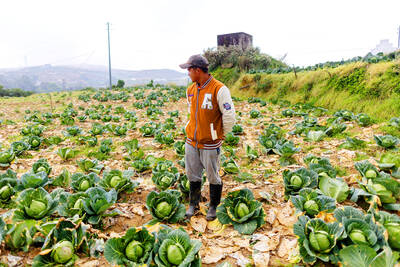
Filipino farmers like Romeo Wagayan have been left with little choice but to let their vegetables rot in the field rather than sell them at a loss, as rising oil prices linked to the Iran war drive up the cost of harvesting, labor and transport. “There’s nothing we can do,” said Wagayan, a 57-year old vegetable farmer in the northern Philippine province of Benguet. “If we harvest it, our losses only increase because of labor, transportation and packing costs. We don’t earn anything from it. That’s why we decided not to harvest at all,” he said. Soaring costs caused by the Middle East

Hungarian Prime Minister Viktor Orban’s officially declared wealth is fairly modest: some savings and a jointly owned villa in Budapest. However, voters in what Transparency International deems the EU’s most corrupt country believe otherwise — and they might make Orban pay in a general election this Sunday that could spell an end to his 16-year rule. The wealth amassed by Orban’s inner circle is fueling the increasingly palpable frustration of a population grappling with sluggish growth, high inflation and worsening public services. “The government’s communication machine worked well as long as our economic situation remained relatively good,” said Zoltan Ranschburg, a political analyst


 RSS
RSS