


Air pollution was fingered for the first time as a major contributor to death and disability caused by stroke, especially in developing nations, in a health review published yesterday.
Air pollution, both inside from cooking fires and outside from traffic fumes, ranked among the top-10 causes of stroke, along with better known risks, such as smoking, high blood pressure and obesity.
An international research team analyzed data from a swathe of other studies, reports and official statistics to create a mathematical model estimating stroke risk for 188 nations from 1990 to 2013.
“A striking finding of our study is the unexpectedly high proportion of stroke burden attributable to environmental air pollution, especially in developing countries,” said study co-author Valery Feigin of New Zealand’s Auckland University of Technology.
The authors said the study is the first to quantify the world’s stroke burden in terms of healthy years lost due to people becoming sick, disabled, or dying because of stroke.
About 15 million people worldwide suffer strokes every year, of which nearly 6 million die and 5 million are left disabled — including loss of vision or speech, paralysis and confusion.
Globally, though with huge differences between nations and regions, the top risk factors are high blood pressure, a diet low in fruit, being overweight, eating too much salt, smoking and not eating enough vegetables, the team said.
Ambient pollution came in seventh place and household air pollution from solid fuels in eighth. A diet low in whole grains and high blood sugar complete the top 10.
The researchers found that 90.5 percent of the stroke burden was attributable to “modifiable factors” — mainly behaviors such as smoking, eating too much sugar and not exercising enough, as well as the associated health problems, such as diabetes and heart disease, these choices result in.
Controlling lifestyle factors, which plays a much larger role in rich nations than poor ones, “could prevent about three-quarters of strokes worldwide,” Feigin said.
The study also listed air pollution as a “modifiable factor,” meaning that people or governments can do something to change it.
“These findings are important for education campaigns, evidence-based planning, priority setting and resource allocation in stroke prevention,” the team wrote in The Lancet Neurology.
“Air pollution has emerged as a significant contributor to global stroke burden, especially in low-income and middle-income countries, and therefore reducing exposure to air pollution should be one of the main priorities to reduce stroke burden in these countries,” they said.
In low and middle-income nations in Asia and Africa, almost one-fifth of stroke burden is attributed to household air pollution, while a similar percentage is blamed on ambient air pollution in China and India.
Air pollution might boost stroke risk by raising blood pressure, hardening blood vessels or causing them to become blocked.
The risk factor whose contribution shrank most between 1990 and 2013 was second-hand tobacco smoke, especially in developed nations, the team said.
The fastest-growing stroke risk was consumption of sugar-sweetened soft drinks.
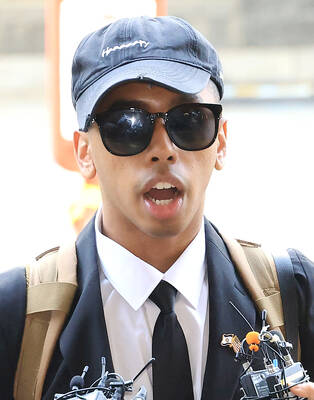
A US YouTuber who caused outrage for filming himself kissing a statue commemorating Korean wartime sex slaves has been sentenced to six months in prison, a court in Seoul said yesterday. Johnny Somali, 25, gained notoriety several years ago for recording himself doing a series of provocative stunts in South Korea and Japan, and streaming them on platforms such as YouTube and Twitch. South Korean authorities indicted Somali — whose real name is Ramsey Khalid Ismael — in 2024 on public order violations and obstruction of business, and banned him from leaving the country. “The court has sentenced him to six months in
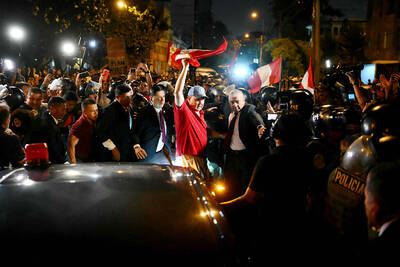
Former Lima mayor Rafael Lopez Aliaga, a Peruvian presidential hopeful, gathered hundreds of supporters in Lima on Tuesday and gave authorities 24 hours to annul the first round of the country’s election over allegations of fraud. Lopez Aliaga is locked in a tight three-way race with two other candidates for second place in Sunday’s vote. The election runner-up wins a ticket to June’s presidential run-off against front-runner Keiko Fujimori. “I am giving them 24 hours to declare this electoral fraud null and void,” said Lopez Aliaga, surrounded by a crowd of several hundred supporters. “If it is not declared null and void tomorrow,

PAPAL RETORT: Pope Leo told reporters that he has ‘no fear, neither of the Trump administration nor speaking out loudly about the message of the Gospel’ US President Donald Trump has feuded with Pope Leo XIV over the Iran conflict — setting off an unholy row that could have serious political implications for the Republican leader back in the US. Trump has drawn barbs even from some allies over the attacks on the US-born pontiff, who has criticized the Trump administration over its immigration crackdown, the intervention in Venezuela and the Iran war. The president risks alienating the religious right in November’s crucial US midterm elections. So far the unprecedented clash between the leader of the most powerful military on Earth and the head of the world’s 1.4 billion

A 16-year-old boy has been charged with murder and aggravated sexual abuse in Florida in the death of his 18-year-old stepsister on a Carnival Cruise ship, the US Department of Justice said on Monday. Timothy Hudson was initially charged in February and subsequently indicted on March 10, but the breadth of the case was not known until a seal was lifted on Friday last week, weeks after US District Judge Beth Bloom in Miami said that he would be prosecuted as an adult at the request of the government. Anna Kepner had been traveling on the Carnival Horizon ship in November last


 RSS
RSS