


Terry Petrovich asked her oncologist point blank: “Am I going to count on you to help me achieve a good death?”
To her relief, he told her he would have no problem prescribing a lethal dose of drugs under California’s new law allowing such prescriptions for the terminally ill.
However, many in California’s medical community are grappling with the law that goes into effect on Thursday. Some physicians have told their patients they are not willing to play a role in intentionally ending a person’s life.
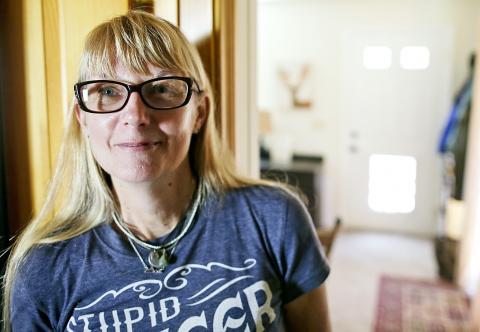
Photo: AP
Catholic hospitals will not provide the prescriptions because it goes against the church’s stance on the issue, according to the Alliance of Catholic Health Care, which represents 48 facilities, 27 of which provide hospice services.
However, the organization cannot bar its affiliated physicians from talking about it, or referring patients to medical offices willing to prescribe such drugs.
Petrovich was diagnosed in 2012 with stage four non-Hodgkin’s Lymphoma that has spread to her bone marrow.
“I’m not suicidal by any means,” said Petrovich, wearing a “Stupid Cancer Get Busy Living” T-shirt. “I want to keep hiking keep loving my dog, just keep living until I can’t anymore — and then I want that option.”
She fought for passage of the law after identifying with 29-year-old California resident Brittany Maynard, who was dying from brain cancer and moved to Oregon in 2014, the first state to make it legal, so she could take the drugs to end her suffering.
California has more safeguards than the four other US states — Oregon, Washington, Vermont and Montana — where it is allowed. Still there are concerns it will lead to hasty decisions, misdiagnoses and waning support for palliative care, in which dying people can be sedated to relieve suffering.
“I think everyone has that personal, ethical dilemma because we’re not really taught in medical school to cause someone’s death, and yet we certainly think society is moving toward wanting the option,” said Daniel Mirda of the Association of Northern California Oncologists.
Mirda opposed the bill because he did not think it was a doctor’s place to weigh in, but now he plans to decide on a case by case basis.
“The majority of physicians, it seems, are neutral, nervous, not comfortable prescribing it, but are not going to stop someone from seeking out another physician for help to do this,” he said.
California Hospital Association vice president of external affairs Jan Emerson-Shea said a terminally ill person is more likely to be prescribed the medicine when they are at home or in a hospice setting and not in a hospital.
It is not known when the first prescription could be written. Patients must be given six months or less to live, make two verbal requests within 15 days of each other and submit a written request.
After undergoing immunotherapy, Petrovich’s cancer appears stable and she is still working as the administrator of the Cabrillo National Monument in San Diego.
However, she is knows that her cancer might become aggressive and the treatments ineffective.
She does not want her daughter to see her suffer like her own mother who died from ovarian cancer.
“I just heard this heartache in her voice,” said Petrovich, recalling one of the last conversations with her 77-year-old mother, who was bedridden in diapers after two rounds of chemotherapy.
“She said Terry, if I could get up out of this bed and find a gun, I would kill myself, and that just like totally — I mean I still get goosebumps when I think of it — because it was just totally devastating for me that my mom could be in so much pain at the end stage of her disease, where she had done all the treatment that she could, there was no other option for her, but she was still completely aware of everything that was going on and there was nothing that she could do to get herself out of this pain,” Petrovich said.
Petrovich’s ex-husband died from blood cancer and their daughter learned “what a bad death looks like” at the age of 18, Petrovich said.
After the law passed, Petrovich talked to her daughter about her wishes. On the refrigerator at her home in Julian, east of San Diego, is the form giving her 33-year-old daughter the power to make medical decisions when she is not physically capable of doing so.
“I don’t want to be conscious fully, my mind fully there, but lying in my bed unable to move, unable to get up and go to the bathroom, unable to pet my dog,” Petovich said.
She does not know that she would ever take the drugs, but “I now have the reassurance that I don’t have to have a bad death. That’s really comforting.”

Four contenders are squaring up to succeed Antonio Guterres as secretary-general of the UN, which faces unprecedented global instability, wars and its own crushing budget crisis. Chile’s Michelle Bachelet, Argentina’s Rafael Grossi, Costa Rica’s Rebeca Grynspan and Senegal’s Macky Sall are each to face grillings by 193 member states and non-governmental organizations for three hours today and tomorrow. It is only the second time the UN has held a public question-and-answer, a format created in 2016 to boost transparency. Ultimately the five permanent members of the UN’s top body, the Security Council, hold the power, wielding vetoes over who leads the

A humanoid robot that won a half-marathon race for robots in Beijing on Sunday ran faster than the human world record in a show of China’s technological leaps. The winner from Honor, a Chinese smartphone maker, completed the 21km race in 50 minutes and 26 seconds, said a WeChat post by the Beijing Economic-Technological Development Area, also known as Beijing E-Town, where the race began. That was faster than the human world record holder, Ugandan Jacob Kiplimo, who finished the same distance in about 57 minutes in March at the Lisbon road race. The performance by the robot marked a significant step forward

An earthquake registering a preliminary magnitude of 7.7 off northern Japan on Monday prompted a short-lived tsunami alert and the advisory of a higher risk of a possible mega-quake for coastal areas there. The Cabinet Office and the Japan Meteorological Agency said there was a 1% chance for a mega-quake, compared to a 0.1% chance during normal times, in the next week or so following the powerful quake near the Chishima and Japan trenches. Officials said the advisory was not a quake prediction but urged residents in 182 towns along the northeastern coasts to raise their preparedness while continuing their daily lives. Prime
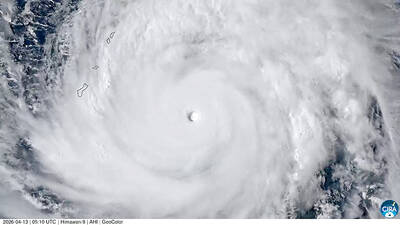
HAZARDOUS CONDITION: The typhoon’s sheer size, with winds extending 443km from its center, slowed down the ability of responders to help communities, an official said The US Coast Guard was searching for six people after losing contact with their disabled boat off the coast of Guam following Typhoon Sinlaku. The crew of the 44m dry cargo vessel, the US-registered Mariana, on Wednesday notified the coast guard that the boat had lost its starboard engine and needed assistance, Petty Officer 3rd Class Avery Tibbets said yesterday. The coast guard set up a one-hour communication schedule with the vessel, but lost contact on Thursday. A Coast Guard HC-130 Hercules aircraft was launched to search for the six people on board, but it had to return to Guam because of


 RSS
RSS