


Notorious Latin American narco trafficker Sebastian Marset, who eluded police for years, was handed over to US authorities after his arrest on Friday in Bolivia.
Marset, a Uruguayan national who was on the US most-wanted list, was passed to agents of the US Drug Enforcement Administration at Santa Cruz airport in Bolivia, then put on a US airplane, Bolivian state television showed.
“The arrest and deportation were carried out pursuant to a court order issued by the US justice system,” Bolivian Minister of Government Marco Antonio Oviedo told reporters.
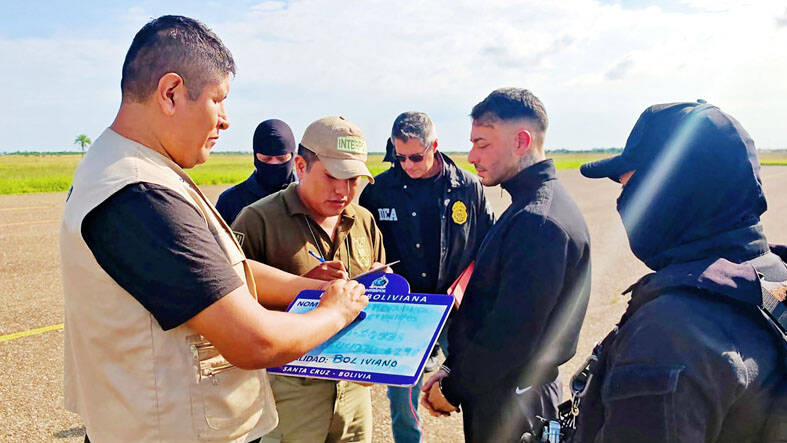
Photo: the Paraguayan National Anti-Drug Secretariat via AFP
The alleged kingpin was arrested in an upscale neighborhood of Santa Cruz, Bolivia’s economic capital, in an operation that mobilized hundreds of police officers.
Four other people were also arrested in the raids which come just days after Bolivia and 16 other countries joined an anti-cartel military alliance launched by US President Donald Trump.
The US Department of State’s Bureau of International Narcotics Matters welcomed Marset’s arrest on X, citing it as proof that “the Shield of the Americas is making our region safer and stronger.”
The most notorious drug baron in the southern part of South America, Marset has a US$2 million US bounty on his head for alleged money laundering.
The soccer-mad 34-year-old allegedly laundered the proceeds of his drug enterprise by purchasing and sponsoring lower-level professional soccer teams across Latin America and Europe — and even put himself in the starting lineups.
He was imprisoned in his native Uruguay for drug trafficking between 2013 and 2018, and later moved around South America, living a time in Bolivia and also Paraguay.
Both those countries had also issued warrants for his arrest.
The US issued a reward for his capture last year after what it called “the largest and most consequential organized crime investigation against cocaine trafficking in Paraguayan history.”
Marset is accused of leading a criminal network that imported more than 16 tonnes of cocaine into Europe.
The Paraguayan investigation reportedly revealed him asking advice in text messages on how to disappear the bodies of murdered enemies.
Head of Bolivian police Mirko Sokol on Friday told reporters more raids are planned in coming days, and hinted at corrupt cops without naming more accomplices.
“We have information on many people who have collaborated with Marset. It is very likely that there are police officers among them,” Sokol said.
A Washington Post profile from 2024 said Marset paid US$10,000 in cash to wear the No. 10 jersey worn by football icons Pele, Diego Armando Maradona and Lionel Messi during his teams’ games.
He stamped his drug shipments “The King of the South,” the Post added, and gave orders for cocaine to be stashed in shipments of cookies and soybeans.
He had been on the run since July 2023, when he fled his home in Santa Cruz, on the eve of a massive police operation to capture him.
Bolivian President Rodrigo Paz on Friday thanked “international organizations from various neighboring countries and the continent” for their cooperation in his capture.
Center-right Paz has sought to boost ties with the US since winning office last year in elections that ended two decades of socialist rule begun under Indigenous coca farmer Evo Morales.
Bolivia’s is the world’s third-largest producer of cocaine, which is made from coca leaves.
Marset is the second Latin American narco boss to be killed or captured in less than a month.
Last month, one of the US and Mexico’s most-wanted men, Nemesio “El Mencho” Oseguera, was killed by the Mexico military during an arrest raid.
US intelligence contributed to his capture.
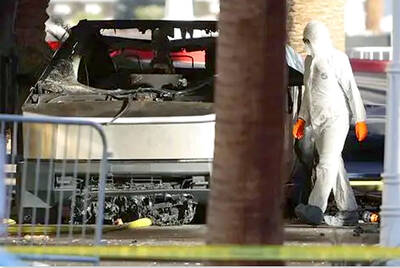
ACTIONABLE ADVICE: The majority of chatbots tested provided guidance on weapons, tactics and target selections, with Perplexity and Meta AI deemed to be the least safe From school shootings to synagogue bombings, leading artificial intelligence (AI) chatbots helped researchers plot violent attacks, according to a study published on Wednesday that highlighted the technology’s potential for real-world harm. Researchers from the nonprofit watchdog Center for Countering Digital Hate and CNN posed as 13-year-old boys in the US and Ireland to test 10 chatbots, including ChatGPT, Google Gemini, Perplexity, Deepseek and Meta AI. Eight of the chatbots assisted the make-believe attackers in more than half the responses, providing advice on “locations to target” and “weapons to use” in an attack, the study said. The chatbots had become a “powerful accelerant for
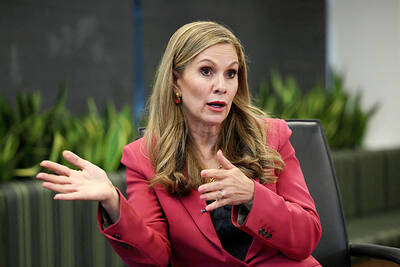
Australians were downloading virtual private networks (VPNs) in droves, while one of the world’s largest porn distributors said it was blocking users from its platforms as the country yesterday rolled out sweeping online age restriction. Australia in December became the first country to impose a nationwide ban on teenagers using social media. A separate law now requires artificial intelligence (AI)-powered chatbot services to keep certain content — including pornography, extreme violence and self-harm and eating disorder material — from minors or face fines of up to A$49.5 million (US$34.6 million). The country also joined Britain, France and dozens of US states requiring
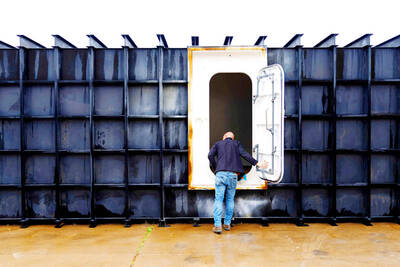
Since the war in the Middle East began nearly two weeks ago, the telephone at Ron Hubbard’s bomb shelter company in Texas has not stopped ringing. Foreign and US clients are rushing to buy his bunkers, seeking refuge in case of air raids, nuclear fallout or apocalypse. With the US and Israel pounding Iran, and Tehran retaliating with strikes across the region, Hubbard has seen demand for his product soar, mostly from Gulf nation customers in Bahrain, Qatar, Kuwait and the United Arab Emirates. “You can imagine how many people are thinking: ‘I wish I had a bomb shelter,’” Hubbard, 63, said in
STILL IN POWER: US intelligence reports showed that the Iranian regime is not in danger of collapse and retains control of the public, casting doubt on Trump’s exit Nearly every US Senate Democrat on Wednesday signed a letter sent to US Secretary of Defense Pete Hegseth requesting a “swift investigation” of airstrikes on a girls’ school in Iran that killed scores of children and any other potential US military actions causing civilian harm. Reuters reported on Thursday last week that US military investigators believe it is likely that US forces were responsible for the Feb. 28 strike on the school, as US and Israeli forces launched attacks on Iran. “The results of this school attack are horrific. The majority of those killed in the strikes were girls between the ages


 RSS
RSS