


A new gene that makes bacteria highly resistant to a last-resort class of antibiotics has been found in people and pigs in China — including in samples of bacteria with epidemic potential, researchers said on Wednesday.
The discovery was described as “alarming” by scientists, who called for urgent restrictions on the use of polymyxins — a class of antibiotics that includes the drug colistin and is widely used in livestock farming.
“All use of polymyxins must be minimized as soon as possible and all unnecessary use stopped,” said Laura Piddock, a professor of microbiology at Britain’s Birmingham University who was asked to comment on the finding.
Researchers led by Hua Liu from the South China Agricultural University, who published their work in the Lancet Infectious Diseases journal, found the gene, called mcr-1, on plasmids — mobile DNA that can be easily copied and transferred between different bacteria.
This suggests “an alarming potential” for it to spread and diversify between bacterial populations, they said.
The team already has evidence of the gene being transferred between common bacteria such as E coli, which causes urinary tract and many other types of infection, and Klesbsiella pneumoniae, which causes pneumonia and other infections.
This suggests “the progression from extensive drug resistance to pandrug resistance is inevitable,” they said.
“[And] although currently confined to China, mcr-1 is likely to emulate other resistance genes ... and spread worldwide.”
The discovery of the spreading mcr-1 resistance gene echoes news from 2010 of another so-called “superbug” gene, NDM-1, which emerged in India and rapidly spread around the world.
Piddock and others said global surveillance for mcr-1 resistance is now essential to try to prevent the spread of polymyxin-resistant bacteria.
China is one of the world’s largest users and producers of colistin for agriculture and veterinary use.
Worldwide demand for the antibiotic in agriculture is expected to reach almost 12,000 tonnes per year by the end of this year, rising to 16,500 tonnes by 2021, according to a report by the QYResearch Medical Research Centre released earlier this year.
In Europe, 80 percent of polymixin sales — mainly colistin — are in Spain, Germany and Italy, according to the European Medicines Agency’s Surveillance of Veterinary Antimicrobial Consumption (ESVAC) report.
For the China study, researchers collected bacteria samples from pigs at slaughter across four provinces, and from pork and chicken sold in 30 open markets and 27 supermarkets in Guangzhou between 2011 and last year. They also analyzed bacteria from patients with infections at two hospitals in Guangdong and Zhejiang.
They found a high prevalence of the mcr-1 gene in E coli samples from animals and raw meat. Worryingly, the proportion of positive samples increased from year to year, they said, and mcr-1 was also found in 16 E coli and Klesbsiella pneumoniae samples from 1,322 hospitalized patients.
David Paterson and Patrick Harris from Australia’s University of Queensland, writing a commentary in the same journal, said the links between agricultural use of colistin, colistin resistance in slaughtered animals, colistin resistance in food, and colistin resistance in humans were now complete.

Four contenders are squaring up to succeed Antonio Guterres as secretary-general of the UN, which faces unprecedented global instability, wars and its own crushing budget crisis. Chile’s Michelle Bachelet, Argentina’s Rafael Grossi, Costa Rica’s Rebeca Grynspan and Senegal’s Macky Sall are each to face grillings by 193 member states and non-governmental organizations for three hours today and tomorrow. It is only the second time the UN has held a public question-and-answer, a format created in 2016 to boost transparency. Ultimately the five permanent members of the UN’s top body, the Security Council, hold the power, wielding vetoes over who leads the

A humanoid robot that won a half-marathon race for robots in Beijing on Sunday ran faster than the human world record in a show of China’s technological leaps. The winner from Honor, a Chinese smartphone maker, completed the 21km race in 50 minutes and 26 seconds, said a WeChat post by the Beijing Economic-Technological Development Area, also known as Beijing E-Town, where the race began. That was faster than the human world record holder, Ugandan Jacob Kiplimo, who finished the same distance in about 57 minutes in March at the Lisbon road race. The performance by the robot marked a significant step forward

An earthquake registering a preliminary magnitude of 7.7 off northern Japan on Monday prompted a short-lived tsunami alert and the advisory of a higher risk of a possible mega-quake for coastal areas there. The Cabinet Office and the Japan Meteorological Agency said there was a 1% chance for a mega-quake, compared to a 0.1% chance during normal times, in the next week or so following the powerful quake near the Chishima and Japan trenches. Officials said the advisory was not a quake prediction but urged residents in 182 towns along the northeastern coasts to raise their preparedness while continuing their daily lives. Prime
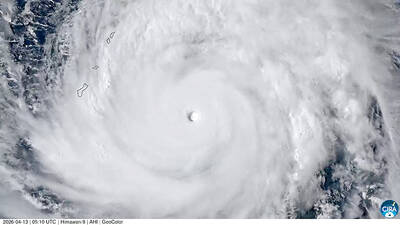
HAZARDOUS CONDITION: The typhoon’s sheer size, with winds extending 443km from its center, slowed down the ability of responders to help communities, an official said The US Coast Guard was searching for six people after losing contact with their disabled boat off the coast of Guam following Typhoon Sinlaku. The crew of the 44m dry cargo vessel, the US-registered Mariana, on Wednesday notified the coast guard that the boat had lost its starboard engine and needed assistance, Petty Officer 3rd Class Avery Tibbets said yesterday. The coast guard set up a one-hour communication schedule with the vessel, but lost contact on Thursday. A Coast Guard HC-130 Hercules aircraft was launched to search for the six people on board, but it had to return to Guam because of


 RSS
RSS