


New HIV infections in India could rise for the first time in more than a decade because states are mismanaging a prevention program by delaying payments to health workers, the UN envoy for AIDS in Asia and the Pacific said.
India’s efforts to fight HIV have for years centered around community-based programs run for people at high risk of contracting the virus, such as sex workers and injecting drug users. The results won praise globally — annual new infections fell consistently and, overall, were reduced by more than half between 2000 and 2011.
However, Indian Prime Minister Narendra Modi in February cut the federal AIDS budget by a fifth and asked states to fill the gap, even though their poorly-run bureaucracies were already slow in releasing funds to their AIDS prevention units.
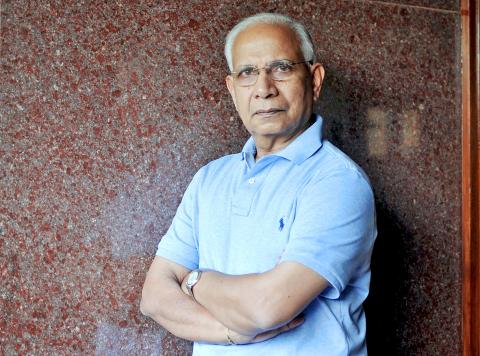
Photo: Reuters
As a result, staff salaries have been delayed for months and prevention activities have slowed down.
The decision was part of a wider strategy to decentralize social spending and focus central government resources on building roads and railways to boost economic growth.
In an interview with Reuters, the UN secretary-general’s special envoy for AIDS in the Asia-Pacific region, J.V.R. Prasada Rao, warned “primitive” management by states would “ruin the program.”
“When the new infections start rising, all the good work that has been done will be washed away,” said Rao, who said he based his view on interactions with several federal and state AIDS officials in the last six months.
Reuters reported in March that government data and letters obtained under right to information legislation showed state treasuries were delaying payments and thousands of health workers had gone unpaid for months.
In letters seen by Reuters, some states have cited a lack of clarity about how much they need to contribute to the program under the new arrangement as a reason for delayed payments and overall shortage of funds. Experts and state health officials also blame delays on slow bureaucratic processes.
An official at the federal AIDS control department, part of the health ministry that oversees the program, said delays in states disbursing funds were still widespread, with payments in some cases three months late.
The AIDS control department official said there was a risk of a rise in new infections if the delays continue, but added such a scenario was at least a year away.
The health ministry did not respond to requests for comment on Rao’s remarks.
Top officials in the ministry were concerned about the slowdown in releasing funds, according to letters seen in March and May.
India’s free HIV/AIDS drugs program, launched more than two decades ago, has been highly successful.
The World Bank estimates India’s policy of targeting sex workers averted 3 million infections with HIV, the virus that causes AIDS, between 1995 and this year. Still, UNAIDS estimates India accounted for most of the 340,000 new infections in the Asia-Pacific region last year.
India’s last nationwide AIDS estimates were released in 2012. Data for the next assessment is still being collected.
Under the new funding arrangement, states are given a larger share of federal taxes, but are no longer obliged to earmark funds for social schemes.
Rao said the flow of funds has improved marginally in recent months after complaints from AIDS workers, but he urged states and politicians to do more.

KINGPIN: Marset allegedly laundered the proceeds of his drug enterprise by purchasing and sponsoring professional soccer teams and even put himself in the starting lineups Notorious Latin American narco trafficker Sebastian Marset, who eluded police for years, was handed over to US authorities after his arrest on Friday in Bolivia. Marset, a Uruguayan national who was on the US most-wanted list, was passed to agents of the US Drug Enforcement Administration at Santa Cruz airport in Bolivia, then put on a US airplane, Bolivian state television showed. “The arrest and deportation were carried out pursuant to a court order issued by the US justice system,” Bolivian Minister of Government Marco Antonio Oviedo told reporters. The alleged kingpin was arrested in an upscale neighborhood of Santa

ACTIONABLE ADVICE: The majority of chatbots tested provided guidance on weapons, tactics and target selections, with Perplexity and Meta AI deemed to be the least safe From school shootings to synagogue bombings, leading artificial intelligence (AI) chatbots helped researchers plot violent attacks, according to a study published on Wednesday that highlighted the technology’s potential for real-world harm. Researchers from the nonprofit watchdog Center for Countering Digital Hate and CNN posed as 13-year-old boys in the US and Ireland to test 10 chatbots, including ChatGPT, Google Gemini, Perplexity, Deepseek and Meta AI. Eight of the chatbots assisted the make-believe attackers in more than half the responses, providing advice on “locations to target” and “weapons to use” in an attack, the study said. The chatbots had become a “powerful accelerant for

SCANDAL: Other images discovered earlier show Andrew bent over a female and lying across the laps of a number of women, while Mandelson is pictured in his underpants A photograph of former British prince Andrew and veteran politician Peter Mandelson sitting in bathrobes alongside late sex offender Jeffrey Epstein was unearthed on Friday in previously published documents. The image is believed to be the first known photograph of the two men with Epstein. They are currently engulfed in scandal in the UK over their ties to their mutual friend. The undated photograph, first reported by ITV News, shows King Charles III’s disgraced brother and former British ambassador to the US sitting barefoot outside on a wooden deck. They appear to have mugs with a US flag on them
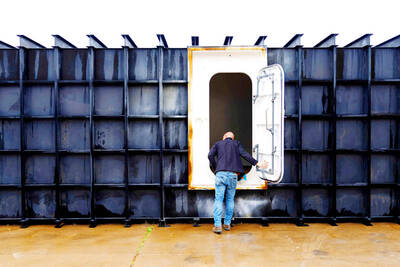
Since the war in the Middle East began nearly two weeks ago, the telephone at Ron Hubbard’s bomb shelter company in Texas has not stopped ringing. Foreign and US clients are rushing to buy his bunkers, seeking refuge in case of air raids, nuclear fallout or apocalypse. With the US and Israel pounding Iran, and Tehran retaliating with strikes across the region, Hubbard has seen demand for his product soar, mostly from Gulf nation customers in Bahrain, Qatar, Kuwait and the United Arab Emirates. “You can imagine how many people are thinking: ‘I wish I had a bomb shelter,’” Hubbard, 63, said in


 RSS
RSS